

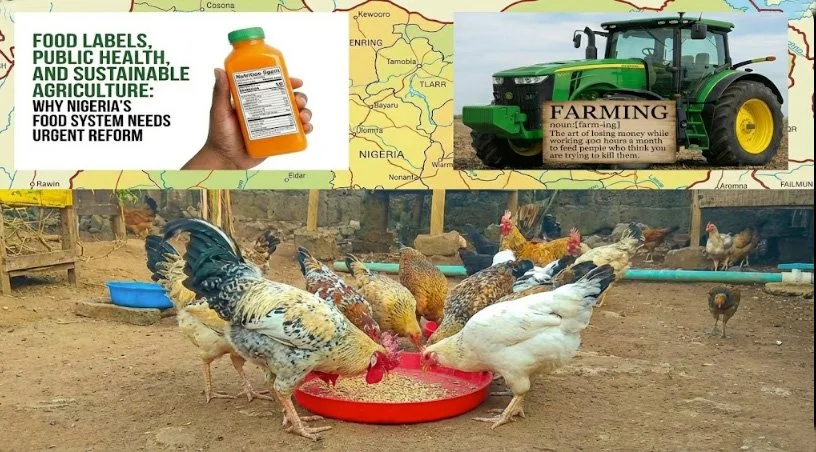
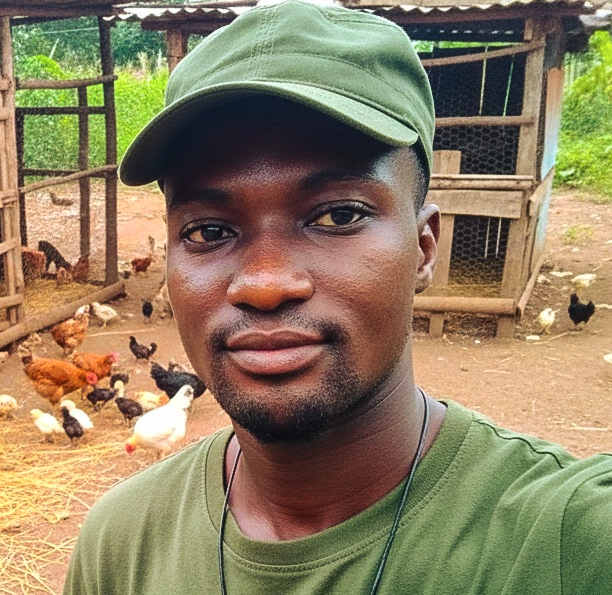
Information technologist, renewable systems specialist, building construction manger, NGO founder and ... chicken farmer?
At just 32 years old, John Adeolu has built an astonishingly multifaceted career in Nigeria. He has operated as a manager at GPS Limited, delivering information technology and GIS services (including real-time data collection, management and analysis using Kobotoolbox and QGIS), business management consulting, and general equipment supplies. He has managed complex building construction projects, utilizing his tech acumen to negotiate materials, maintain 100% compliance with safety and regulatory standards, and improve reporting efficiency by 40% through seamless software integration.
He is the co-founder and program manager of the Smartlife Initiative, an NGO building momentum for youth in education, healthcare, and environmental conservation.
As editor of the Naija Agric Insights newsletter, he writes on specialized topics. Recent headlines include: “Nigeria’s agricultural sector is facing a deepening structural crises driven by massive post-harvest waste” and “When prices move in opposite directions: what falling cocoa prices and easing food inflation reveal about Nigeria’s agricultural economy.”
And, we still haven’t gotten to John Adeolu’s primary, ongoing gig: CEO of Givare Farms, a poultry enterprise specializing in indigenous breeds such as Fulani chickens, Hausa chickens, and village-specific strains.
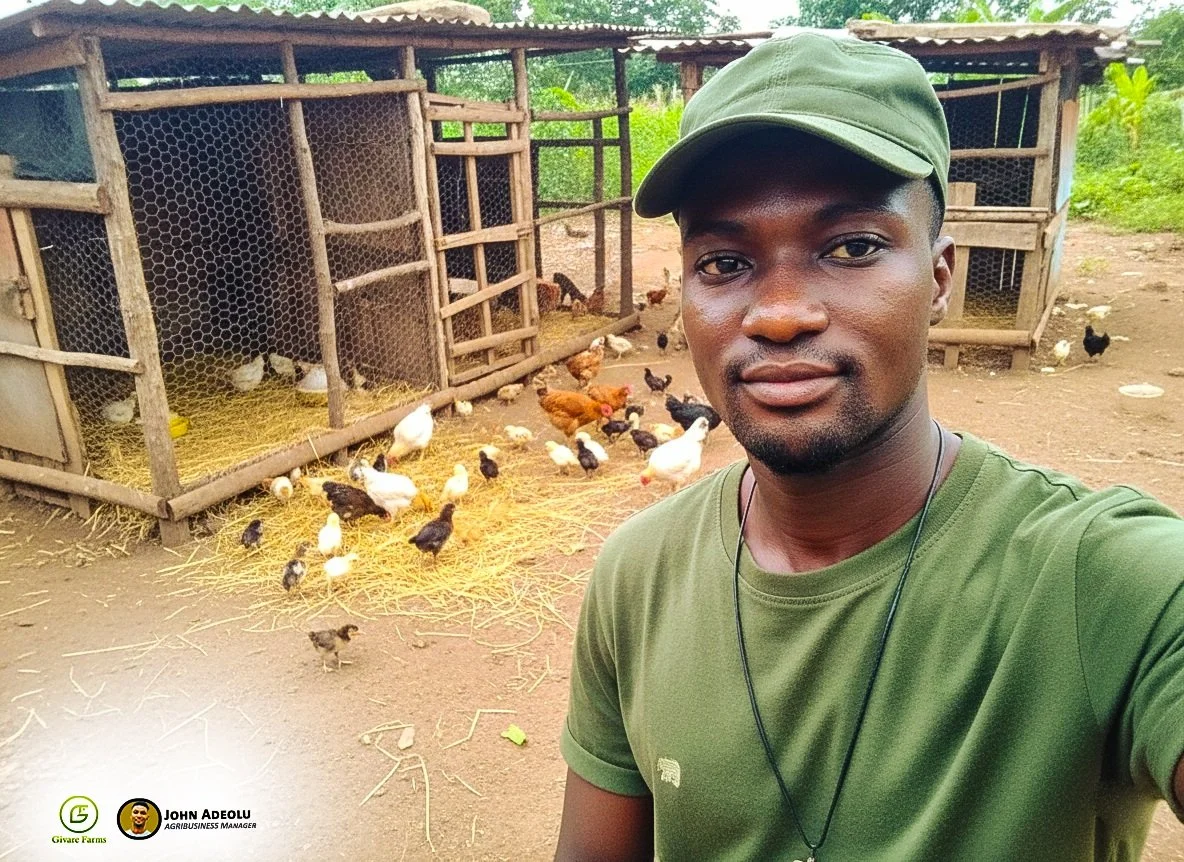
John Adeolu and various ecotypes of chickens
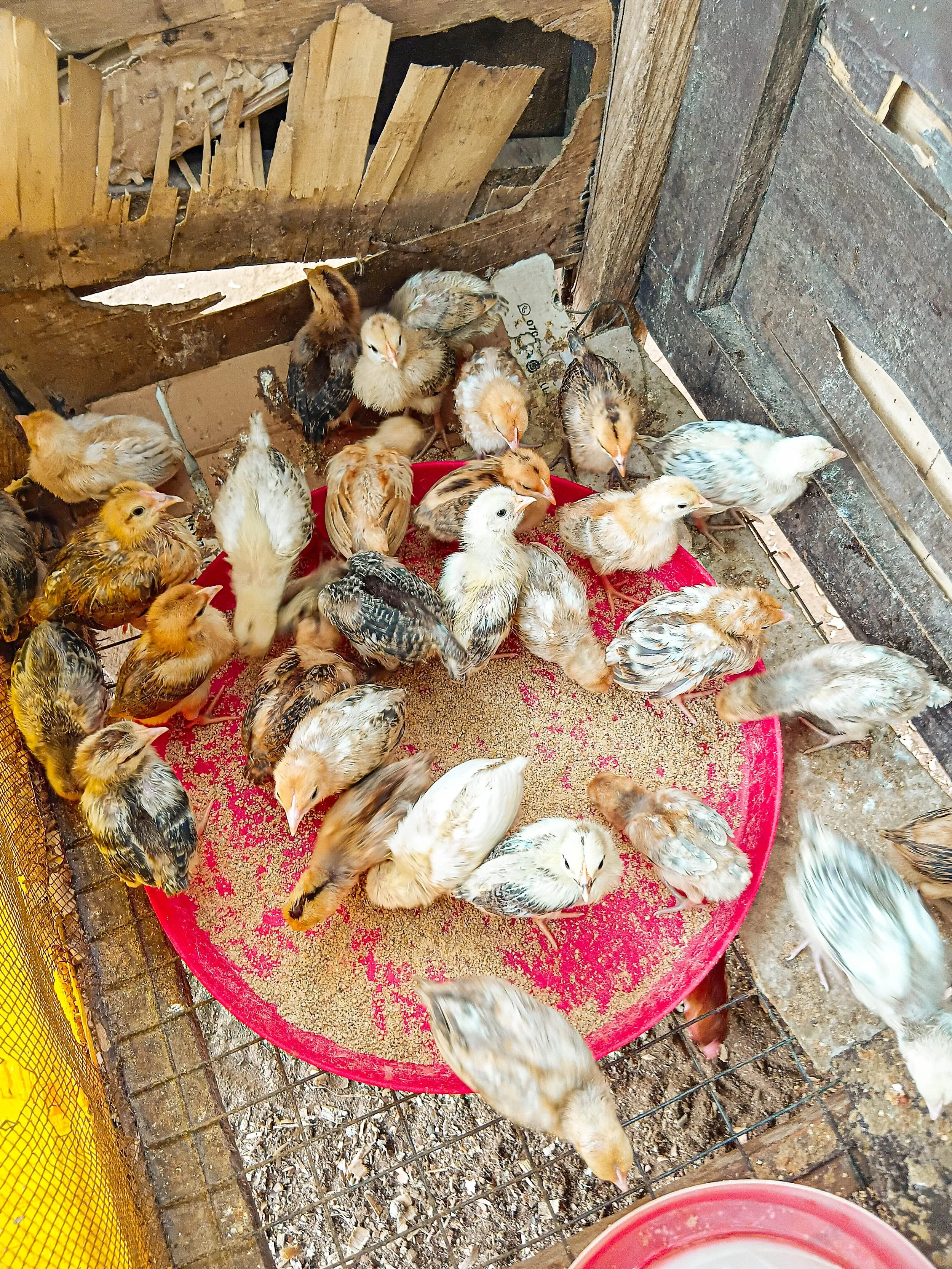
Photos provided by Adeolu

Views of John Adeolu’s alma mater, the Federal University of Technology at MInna, (Gidan Kwano campus), Niger State, Nigeria
Left to right: School of Information and Communication Technology, School of Environmental Technology, and University Library. Photos: OtuNwachinemere via Wikipedia
Adeolu’s entry into the urban tech sector solidified his agricultural philosophy. While working as an IT project manager for a World Bank-assisted agricultural project, he developed digital solutions for farmers—tools that improved market access, tracked transactions, and provided vital climate data.
Through this data-driven perspective, he looked back at the indigenous farming systems of his youth and recognized their unparalleled value. Before terms like "agroecology," "regenerative agriculture" and “free range” became trendy buzzwords in the West, traditional West African farmers—like his grandfather—were already mastering crop rotation, cover cropping, and minimal tillage.
This realization birthed Givare Farms in 2017. Named after a Scandinavian root word associated with generosity, the farm is a testament to Adeolu's mission to contribute to food security while preserving local genetics. He works closely with distinct ecotypes—the active, prolific Yoruba chickens with their sweet, rich flavor; the calmer, taller Fulani strains; and the Hausa ecotypes. He advocates for these indigenous breeds not just for their resilience to local diseases, but for their deep cultural significance.
"The broader challenge is that many people have become overly reliant on modern hybrid breeds, neglecting traditional agricultural practices and the cultural knowledge embedded in them," Adeolu explains, noting the difficulty of convincing local farmers to prioritize long-term sustainability over the quick cash of fast-growing commercial hybrids. "Yet, culture and agriculture are inseparable: there is no culture without agriculture, and there is no meaningful agriculture without respecting cultural heritage."
When I was completing production of the article on artist Daniel Minter and was beginning work on the article on John Adeolu, that consecutive order seemed serendipitous. Minter had recalled his mother’s beloved guinea fowl which he depicted patterned with the Adire print indigo textiles of the Yoruba people. And a human and chicken form beautifully, almost hauntingly, enmesh in a panel of Minter’s Quantum Exchange triptych.
Both Minter’s visual art and Adeolu’s agricultural science are inextricably linked by the spiritual influence of the indigenous chicken.
In detailing the role of the chicken in West African cultures, Adeolu describes rites that might raise the eyebrows of some of our readers. It's the kind of imagery that historically fueled racist, colonial notions of African "primitivism."
But let’s be entirely frank about the relativity of that word, “primitive.” At this writing on March 3, 2026, U.S. President Trump is waging military action against Iran without any semblance of a clear strategy, and killing innocent civilians. Meanwhile political commentators are saying “follow the money” to point out how the Trump family stands to gain financially from Trump’s war of choice.
When weighed against the ancient, universal human tradition of appropriating animal attributes to channel courage, seek justice, or bring peace to a troubled mind, as in some of the rite Adeolu cites, contemporary forms of oppression and strife by technologically advanced nations around the world seem much more dangerous and primitive.
This brings us to the core of how John Adeolu operates in the pragmatic present and the spiritual past.
"Many people have become overly reliant on modern hybrid breeds, neglecting traditional agricultural practices and the cultural knowledge embedded in them," Adeolu explains, noting the difficulty of convincing local farmers to prioritize long-term sustainability over the quick cash of fast-growing commercial hybrids. "Yet, culture and agriculture are inseparable: there is no culture without agriculture, and there is no meaningful agriculture without respecting cultural heritage."
Adeolu explains how indigenous chickens are a vital spiritual and cultural bridge within the Yoruba heritage:
From what I have seen, these birds are central to how we appease the Orishas to seek protection, justice, or prosperity.
I’ve observed that for followers of Ogun, the god of iron, an annual sacrifice of a chicken is essential. It’s done to ensure that one is shielded and empowered throughout their daily life. Similarly, with Sango, I’ve seen how chickens are used to calm the temperament of those from his lineage. There is a powerful ritual where the priest decapitates a live chicken with his mouth and drinks the blood; this is a deep, traditional way to appease Sango’s spirit and bring peace to the person’s mind.
One of the most striking roles of the indigenous chicken is in the delivery of justice. With Orisha Ajangbila, I know that a male chicken is used to fish out a liar between two people. It is believed that the person lying will not survive beyond seven days after the ritual. We also have Orisha Aro, where a laying hen is used in rituals to confirm a child's true parentage, to know for sure if a child is born within wedlock, or not.
In the area of family and livelihood, the indigenous chicken is indispensable:
I’ve seen women seeking the 'fruit of the womb' go to Orisha Olomoyoyo. They use a hen that has already hatched chicks, sacrificing both to ensure they can conceive and give birth safely.
During the planting season in June or July, farmers perform rituals to Orisha Oko with chickens to ensure their crops produce a bountiful harvest.
In places like Ogbomosho, specifically in the Ile-Otun house, they appease Alaso-funfun. Because this deity forbids anything red, I’ve seen them strictly use white chickens, white bean cakes, and salt during the dry season rituals.
When informed that conscientious Americans prefer "free range" chickens because of the abhorrent conditions in "factory farming," a system designed to produce high volumes of meat, dairy, and eggs at the lowest cost by confining large numbers of animals in crowded, indoor environments like cages or crates, Adeolu said this about his chickens: “We are intentional about giving them space to roam and behave naturally because it improves their health and the quality of the produce overall.”
Having observed agricultural systems in Canada and the United States, Adeolu recognizes that the key to unlocking West Africa's agricultural potential lies in systems thinking. While 40–60% of the African farming population consists of smallholder farmers, many still view farming as isolated tasks. Adeolu is on a mission to change that, integrating production, processing, logistics, and marketing into a coordinated framework.
In these ways, John Adeolu seems entirely at home in both the traditional realm of Yoruba culture and the leading-edge, universal realm of science and technology as both realms synergistically benefit from his multifaceted sources of wisdom.
This versatile, young professional is from Ogbomoso, an agricultural region in Oyo State, Nigeria. “I watched my grandfather go to the farm every day,” Adeolu recalls.
“He owned several hectares of land where he cultivated mainly yam and maize, some of which were traded to the northern part of the country. My father was also deeply involved in farming, so agriculture naturally shaped my upbringing. At home, we reared poultry, local chickens, goats, and other livestock.
Our way of life was mostly traditional. We lived within Nigerian cultural traditions, from our daily routines to what we wore. However, our exposure to urban life came through trade. My family transported farm produce especially eggs and live chickens to Lagos. Through this connection, we gradually encountered more modern influences, including improved farming practices and mechanized methods.
Nature itself was a big part of my childhood. Our home compound had many trees, coconut trees, mango trees, and other plants. As children, we spent our days playing outdoors, climbing trees, and exploring. I especially loved climbing mango trees; the local mango variety we had was incredibly sweet. There was also a river not too far from our house where we went to swim, which made nature feel like an everyday companion in my life.
I developed a strong personal connection to farming because I watched my parents devote themselves to it. I discovered that whenever I spent time with poultry or other livestock, I felt joy and fulfillment in caring for them.
The farming Adeolu family could afford to send the children to college and John chose the Federal University in Minna where he earned a BT (bachelor of technology) in project management. He went on to earn a post graduates diploma and certificates in specialized management and international transport and logistics at other institutions.


Panel from the Ecollective article on Daniel Minter and his Quantum Exchange that evokes the spirit of traditional West African cultural affinity for chickens.
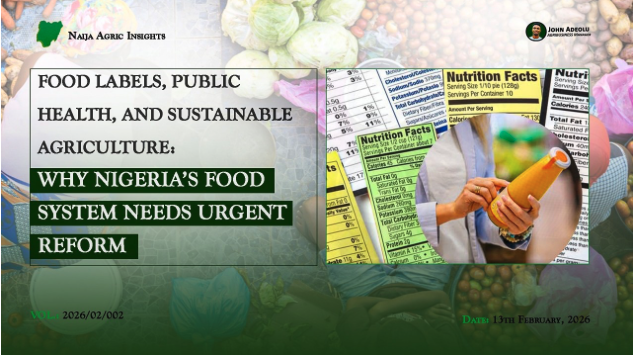
Graphics from Adeolu’s Naija Agric Insights newsletter

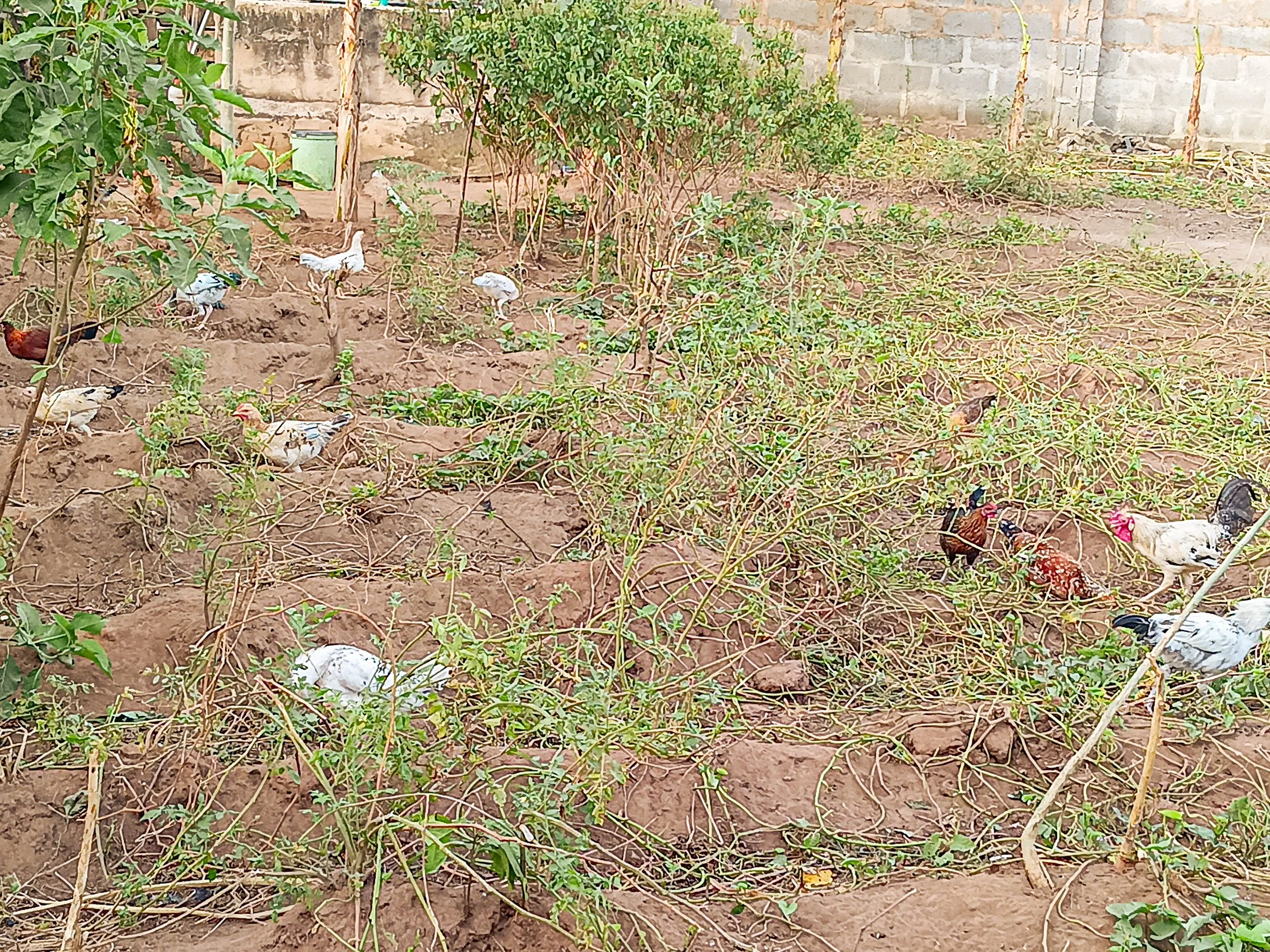
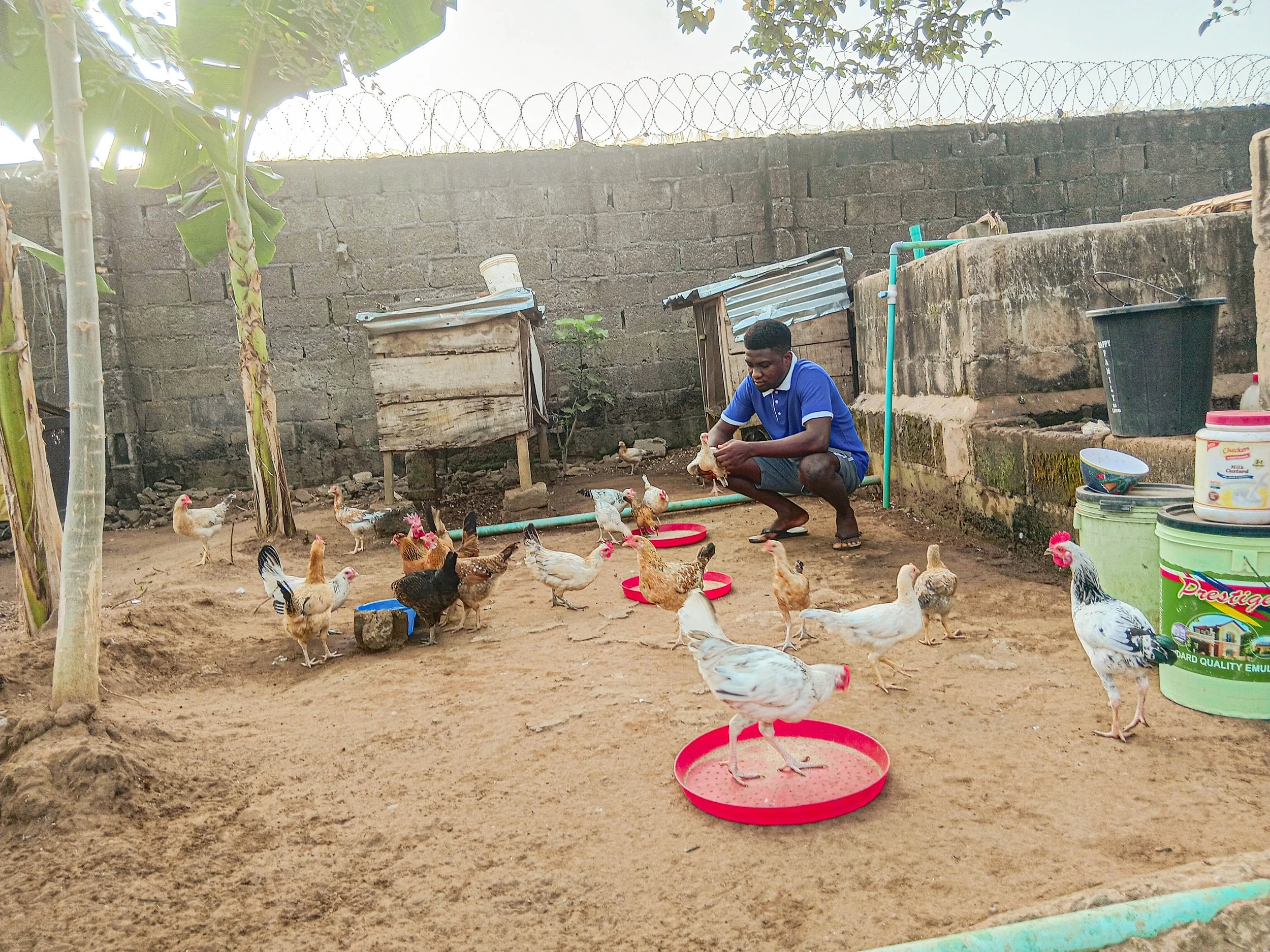
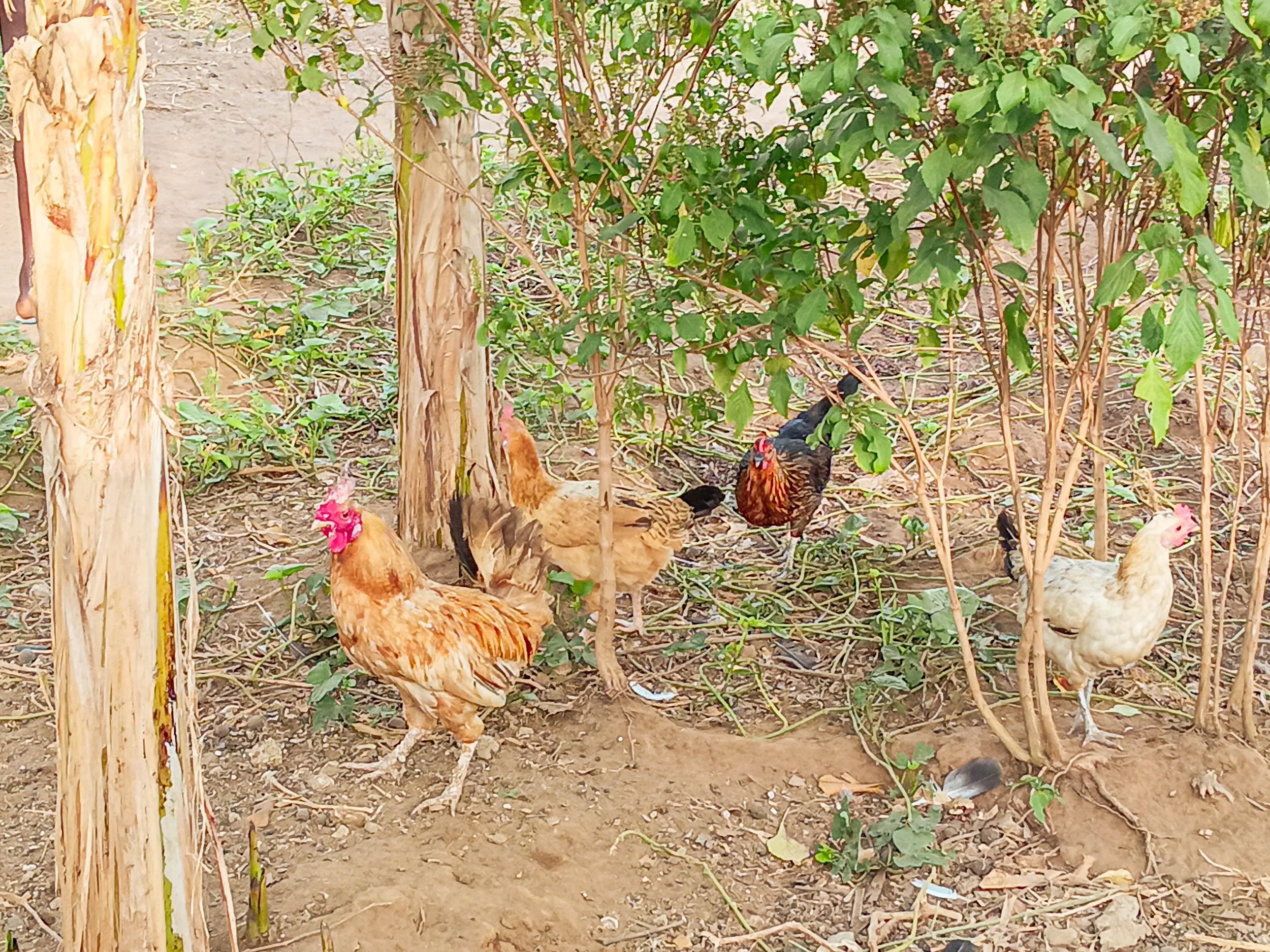
Freely roaming chickens on Givare Farms
Free-range Yoruba ecotype chickens
Preserving indigenous poultry genetics
Culture, ecology, and the future of sustainable African agriculture
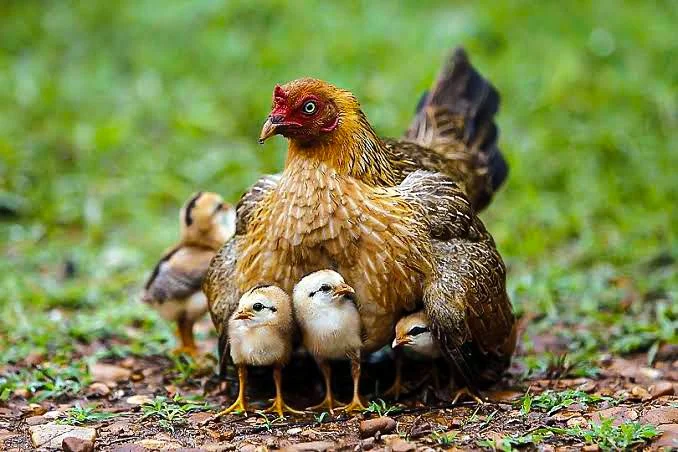
Fulani chickens and chicks
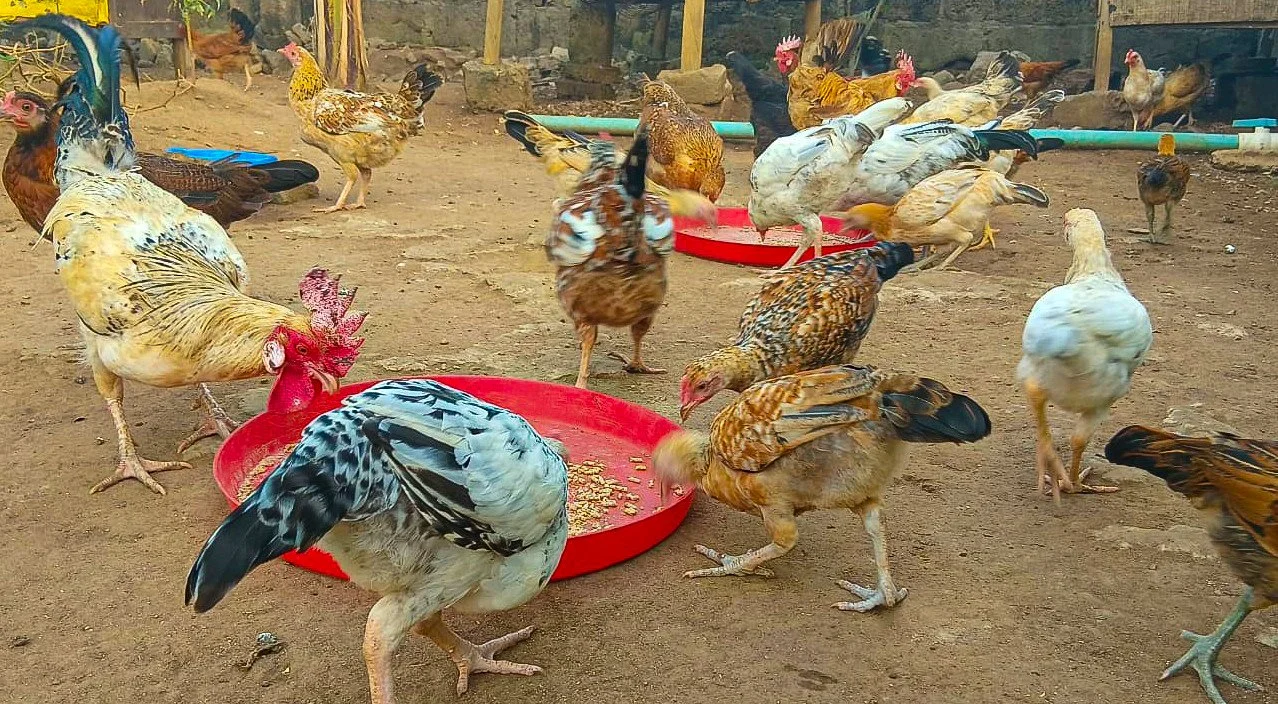
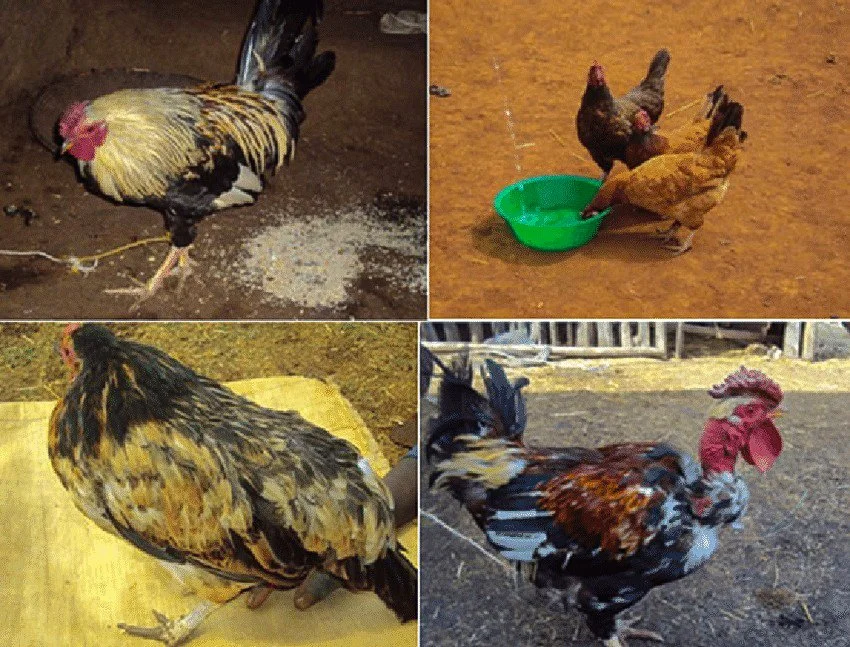
Diverse plumage types of local Nigerian chickens.
John Adeolu at work and play with his chickens
Peregrinating poultry at Givare Farms
John Adeolu
Across much of Nigeria and the wider African continent, agriculture is not merely a production system; it is a cultural inheritance, a survival strategy, and a relationship with the land. My work with smallholder farmers has increasingly revealed a simple truth: sustainability in African agriculture will not come from replacing local systems with imported models, but from protecting and strengthening the biodiversity and knowledge already embedded within our communities. One of the most powerful examples of this lies in the preservation of indigenous chicken breeds.
For decades, development programs have encouraged African farmers to adopt imported hybrid poultry, often presenting them as symbols of progress and efficiency. These birds grow quickly, lay more eggs, and fit neatly into industrial production frameworks. Yet beneath this promise of productivity lies a deeper risk. When indigenous chickens are replaced or indiscriminately crossbred, farmers lose genetic resilience, ecological integration, and cultural continuity. What appears to be modernization can quietly become a process of biological and cultural erosion.
My work seeks to challenge this trajectory by promoting the conservation and sustainable use of indigenous poultry breeds not as relics of the past, but as foundations for the future.
Indigenous African chicken breeds: a living genetic archive
Africa possesses extraordinary poultry diversity shaped by centuries of environmental adaptation and human selection. In Nigeria alone, several major ecotypes and countless local strains exist, many of which remain undocumented in formal livestock registries.
Among the most recognized are:
Yoruba ecotype chickens
Found primarily in southwestern Nigeria, Yoruba ecotype chickens are well adapted to humid climates and fluctuating feed availability. They possess strong brooding instincts, allowing natural reproduction without hatchery dependence. Their scavenging efficiency makes them ideal for integrated farming systems where birds convert household waste and crop residues into valuable protein.
Fulani chickens
These birds are common in pastoral and agro-pastoral systems across northern Nigeria and the Sahel. They exhibit exceptional heat tolerance and mobility, traits shaped by the pastoral traditions of Fulani communities. Fulani chickens often accompany livestock movements, reflecting the integrated nature of pastoral livelihoods.
Hausa indigenous chickens (not shown)
Widely distributed across northern Nigeria, Hausa chickens are valued for their hardiness and disease tolerance. They thrive in low-input systems where commercial breeds would struggle.
Their survival traits make them particularly important in regions where veterinary services and feed supply chains remain unreliable.
Other Nigerian indigenous types
Beyond these prominent ecotypes, numerous village-specific strains exist across Nigeria’s regions. These birds may differ in plumage color, body size, egg characteristics, and behavioral traits. Such variation represents a vast reservoir of genetic diversity, much of which has never been formally studied but holds immense adaptive potential.
Across Africa more broadly, comparable indigenous poultry populations exist in Ethiopia, Kenya, Tanzania, Ghana, and South Africa, each shaped by local ecology and culture. This diversity represents one of the continent’s most underappreciated agricultural resources.
Across Africa more broadly, comparable indigenous poultry populations exist in Ethiopia, Kenya, Tanzania, Ghana, and South Africa, each shaped by local ecology and culture. This diversity represents one of the continent’s most underappreciated agricultural resources.
Cultural significance of indigenous chickens
Indigenous chickens occupy a unique place in African societies. They are not simply farm animals; they are participants in social life.
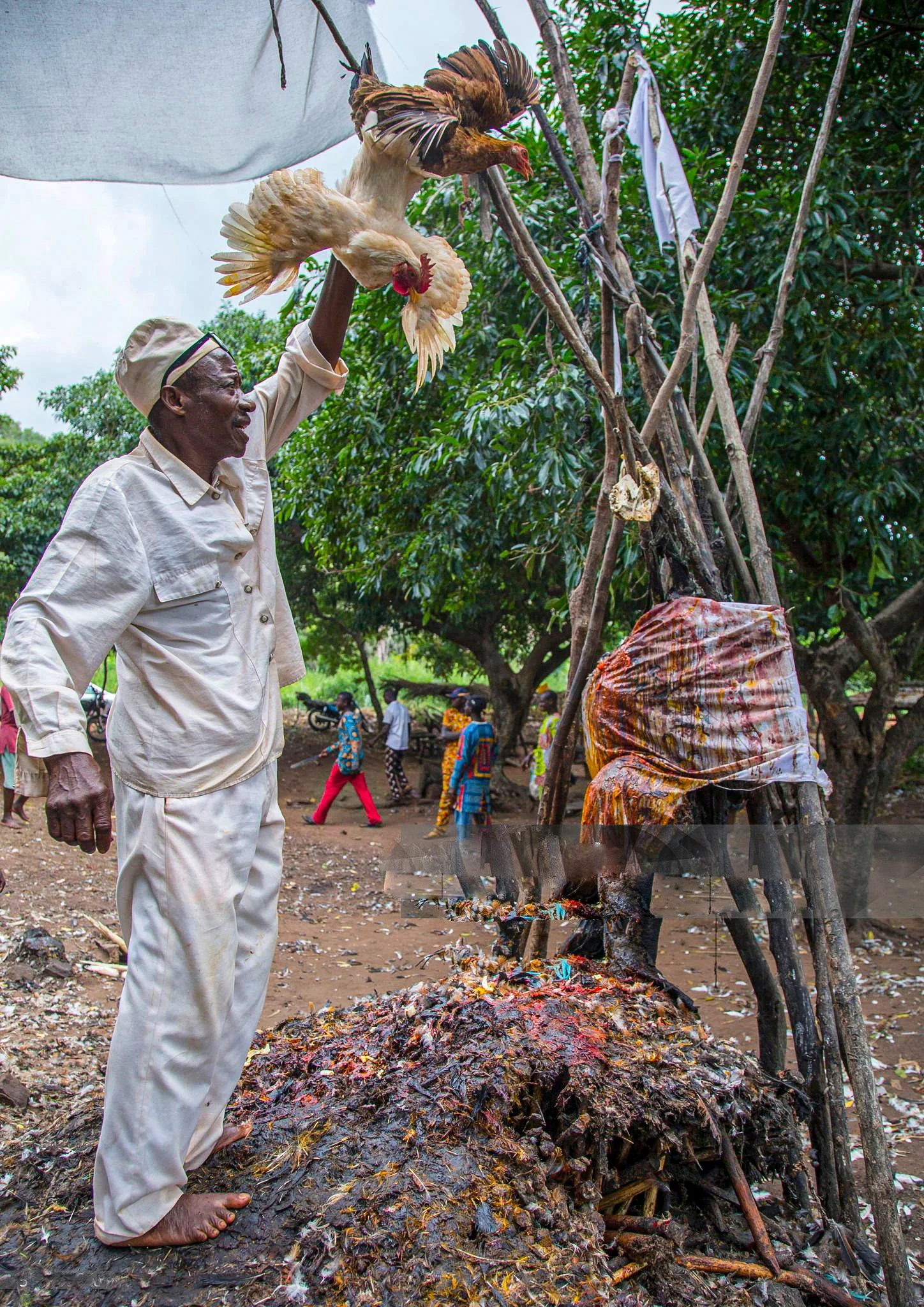
In many Nigerian communities, local chickens are used in marriage rites, naming ceremonies, harvest festivals, and traditional worship practices. They function as symbols of goodwill, reconciliation, and hospitality. Certain plumage colors may be preferred for specific rituals, reflecting long-standing cultural associations.
Benin, West Africa: the slaughter of a chicken in a ritual sacrifice.
Local chickens also operate as informal financial assets. For many rural households, especially those led by women, a small flock represents accessible savings. Birds can be sold quickly to cover school fees, health emergencies, or food shortages. This flexibility makes indigenous poultry central to household resilience.
Culinary traditions further reinforce their importance. Many Nigerian dishes rely specifically on the flavor and texture of indigenous chicken meat, which is widely perceived as richer and more nutritious than commercial broilers. In this sense, local chickens support both food security and cultural identity.
When these breeds disappear, communities lose more than livestock. They lose part of their social structure, food heritage, and ecological knowledge.
Ecological contributions of indigenous poultry
Indigenous chickens are naturally integrated into mixed farming systems. Unlike industrial birds that require controlled housing and commercial feed, local chickens function as ecological participants.
They convert kitchen waste, weeds, insects, and crop residues into food. Their manure improves soil fertility, enhances microbial activity, and supports nutrient cycling. In smallholder farms, chickens effectively redistribute nutrients across fields, contributing to long-term soil health.
This ecological integration aligns with agroecological principles increasingly promoted in global sustainability research. Studies supported by organizations such as the Food and Agriculture Organization emphasize that biodiversity strengthens resilience in farming systems. Indigenous livestock populations, including poultry, provide adaptive capacity against disease outbreaks and climatic stress.
Encouraging farmers to preserve pure indigenous lines therefore becomes not only a conservation effort but a practical sustainability strategy.
Economic stability through low-input systems
The economic argument for imported poultry often focuses on output per bird. However, this metric rarely accounts for input costs or system risk.
Hybrid birds typically require formulated feed, vaccines, specialized housing, and reliable electricity. For smallholder farmers operating under volatile markets and weak infrastructure, these requirements can create financial vulnerability.
Indigenous chickens, by contrast, thrive in low-input environments. They reproduce naturally, forage effectively, and survive with minimal intervention. While their growth rates may be slower, their cost-benefit balance often favors long-term stability rather than short-term output.
Development economists increasingly recognize that low-input livestock systems provide stronger livelihood resilience for resource-constrained farmers. Indigenous poultry systems exemplify this principle.
Linking poultry preservation to soil regeneration
One of the most promising aspects of indigenous poultry systems lies in their contribution to soil restoration. Many African soils are experiencing nutrient depletion and erosion. Chemical fertilizers offer short-term solutions but can degrade soil structure over time and remain unaffordable for many farmers.
Indigenous chickens provide a biological alternative. Through rotational scavenging and manure collection, their droppings can be incorporated into composting systems that restore soil fertility and improve moisture retention.
Compost heap enriched with poultry manure
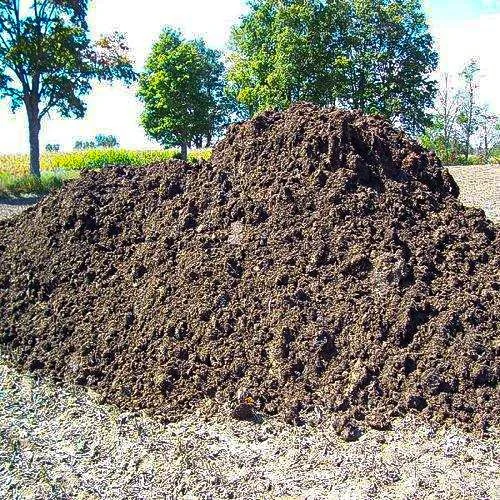
This approach reflects regenerative agriculture principles that emphasize nutrient cycling, organic inputs, and integration between livestock and crops. By positioning indigenous poultry within soil health strategies, conservation efforts become directly linked to productivity improvements.
Challenges facing indigenous breed preservation
Despite their importance, indigenous chickens face multiple pressures. Urbanization and commercialization often encourage farmers to adopt standardized breeds. Development programs sometimes unintentionally reinforce this trend by prioritizing industrial production models.
Uncontrolled crossbreeding also gradually erodes genetic purity. Without documentation or structured breeding programs, local strains can disappear within a few generations.
To address this, my work focuses on farmer education, cooperative breeding initiatives, and documentation of indigenous traits. When farmers recognize the long-term ecological and economic value of their birds, preservation becomes a locally owned process rather than an externally imposed agenda.
Global relevance of local African solutions
The preservation of indigenous poultry breeds is not solely an African concern. Around the world, industrial agriculture has narrowed genetic diversity in crops and livestock. This homogenization increases vulnerability to disease outbreaks and climate instability.
African indigenous poultry systems offer a counter-model. They demonstrate how biodiversity, cultural knowledge, and ecological integration can form the basis of resilient agriculture. As sustainability debates expand globally, these lessons deserve wider recognition.
Sharing this work with international audiences, including readers in the United States through platforms such as the emerging Ecollective journal, offers an opportunity to ensure African perspectives shape global environmental conversations.
Personal commitment to sustainable agricultural futures
My engagement with farmers has shown me that sustainability is not an abstract concept; it is a lived reality shaped by daily decisions about seeds, animals, and land. Indigenous chickens represent a powerful entry point into this broader conversation. They embody genetic resilience, ecological integration, cultural meaning, and economic stability.
Preserving them is therefore not nostalgia. It is strategy.
As climate pressures intensify and agricultural systems face increasing uncertainty, the adaptive strength embedded within indigenous livestock may become one of our most valuable assets. Protecting these resources today ensures that African farmers retain the tools needed to shape their own sustainable futures.
Sustainable agriculture in Africa will not emerge solely from technological imports or productivity metrics. It will grow from systems that preserve biodiversity, respect culture, and strengthen ecological cycles. Indigenous chicken breeds embody these principles.
They are carriers of genetic diversity, symbols of cultural continuity, contributors to soil health, and anchors of rural economic resilience. Preserving them is therefore not simply about livestock management; it is about safeguarding the foundations of sustainable African food systems.
My work continues to focus on ensuring that farmers recognize the strength already present within their local resources. Sustainability, in the end, is not something we introduce from outside. It is something we protect, cultivate, and allow to thrive from within.
John Adeolu is an agricultural practitioner, project management graduate, and sustainability advocate working to advance resilient farming systems across Africa. His work focuses on indigenous livestock preservation, soil health, and smallholder economic stability. Through field engagement, research, and digital outreach, he promotes agricultural approaches that strengthen biodiversity while improving rural livelihoods. He contributes to conversations on sustainable agriculture, food sovereignty, and climate adaptation in African contexts.
Editor’s note: John Adeolu is joining the Ecollective as an advisor and a contributing writer covering an array of environmental topics.