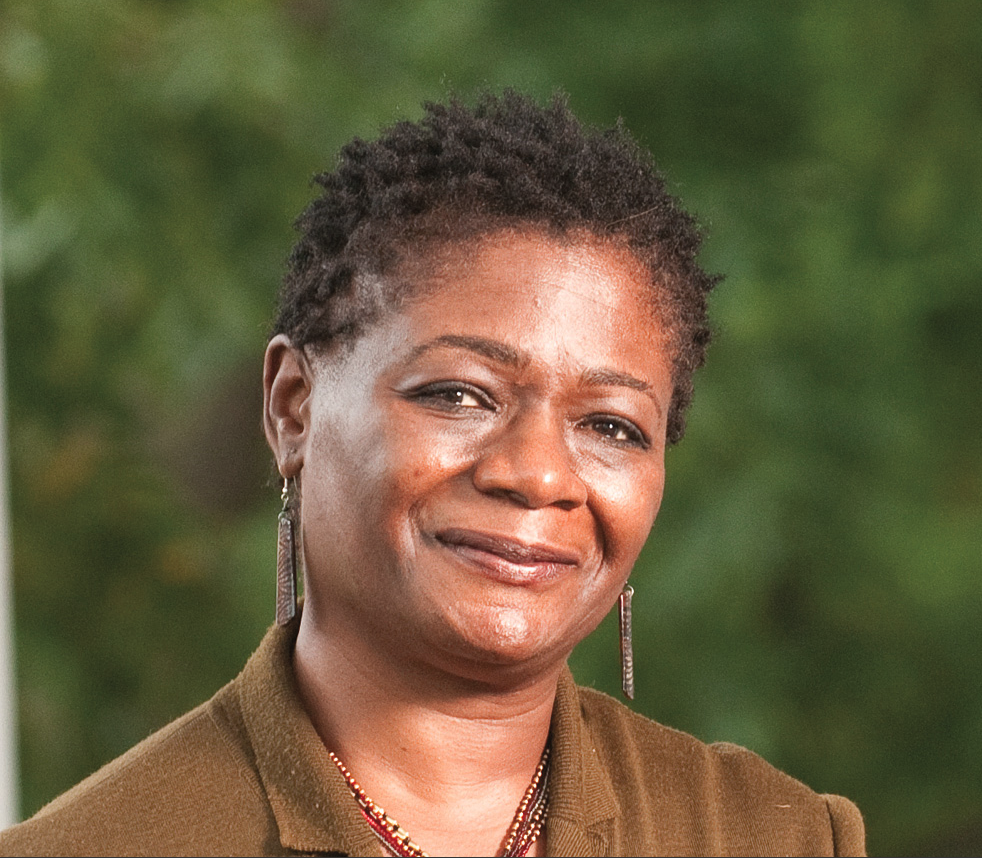
Relations between black women’s natural hair preferences and holism in Richmond VA during the late 1980s was the subject of my thesis study, and Sabrina Johnson was one of the key participants in the research. Johnson is shown here in a photo from the Summer 2012 online magazine of the University of Mary Washington. In the profile accompanying the photo, she said she sometimes kicked off her heels and walked barefoot across the campus, and listed among her favorite pursuits: “love” of mountains, the beach and camping. Sabrina Johnson was associate vice president for human resources at the university.
Photo: Doug Buerlein
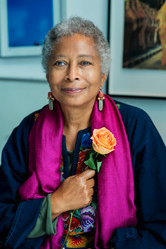
The hair and holism research prominently cited writer Alice Walker. Residing in rural Northern California has crystallized a deeply ecowomanist worldview for Alice Walker where the natural world and the self are spiritually inextricable. Surrounded by redwoods and her own gardens, Walker interacts with the earth as a sanctuary and mirror that suffers, heals, and breathes in parallel with communities, particularly black women. She has written about her commitment to affirming the natural state of her hair. And by tending to the land, she reclaims the historically fraught agrarian roots of her Southern, African American heritage in a reciprocal relationship with nature acting as a vital co-creator of her identity, reinforcing her belief that genuine self-actualization and the struggle for human rights should be rooted in a strong, compassionate reverence for the earth.
Photo of Alice Walker from the author’s page of her publisher, Simon & Schuster.
The protoenvironmentalism of black women’s committed natural hair preferences and philosophy
“We are coming together to make one and I’m in my position.”
— Joyce Peterson statement from the author’s research on hair and holism.
October 12, 2026, dusk.
I just pulled the garbage bin from my back yard to the street curb to be emptied by a sanitation department truck in the morning. I paused there for a few moments. The natural surroundings in this leafy cul de sac are endlessly inviting because they do not have a constructed individual personality like human beings and are not lifeless like the manufactured forms on the street and in my house.
So it is through the natural world that I’m loosening my primary, tightly-grasped but actually ungraspable identity as the fleeting appearance of a “character” shaped by ephemeral conditions in a realm that functions like a stage.
Well-known documented examples of this loosening transformation are Buddhist sages and Vedantic masters including Ramana Maharshi whose personal ego dissolved entirely, leaving only a pure awareness that he recognized and revered in the physical form of Arunachala hill.
As the natural world and the natural physical self cohere, the human desire to hold on to “the character” of individual identity lessens.
My recognition of his process formally began with a study about black women who stopped allowing their bodies to be sites of intervention and began treating them as ecosystems worthy of preservation.
In the 1970s and ‘80s, Sabrina Johnson, Joyce Peterson, Chandra Washington, Deborah Needham/Sha-tt Peran, Janine Bell, Joyce Williams, Gletsa Faggins and other black women in Richmond VA recognized that in choosing natural hair styles, they were becoming more whole.
In the late 1980s I interacted with these women during thesis research for a William and Mary MA degree in American studies awarded in 1990. Interviews with a core group of 12 respondents were conducted orally and recorded on audio tape and conversations were held with a number of other natural haired women in Richmond. Their intertwined natural hair care and culture was a protoenvironmentalist expression, a proclivity evolving into more explicit forms of environmental consciousness.
The thesis also covered an extensive history of black women’s hair-related behavior from African antiquity though the rise of the hair-straightening convention in the United States, an investigation of theories and findings in anthropology, sociology, psychology and philosophy on the creation and projection of personal personas, and a survey of how black women’s hair styles function as public symbols in modern U.S. society.
I was convinced of the “hair and holism” relations that I was investigating and believed that a black woman’s permanent commitment to straightened hair is disruptive to a full self realization that can evolve into personal transcendence. Today I’m not so sure. But first, let’s review the research findings.
Being in open-ended process, the women interviewed for the study were growing in ways which connect self to community, community to humanity, and humanity to planet Earth. The ultimate self-self interaction occurs when the unconscious and conscious dimensions of the self grow together to produce, in Jung's term, the "Self." More than the sum of its parts, the Self exists in dynamic relation with the Whole.
In her sleek, close-cropped ‘fro, Deborah Needham (Sha-tt Peron), described her natural persona in terms of flexibility and flow. Even within the walls of the large insurance firm where she worked as a manager, she was sensitive to the rhythms of the planet.
On June 15, 1988, Sha-tt Peron explained her affinity with the seasons:
“The solstice is coming. At this time I plan for the coming yearly cycle—not on January 1st. It (personal cycle) follows nature. In the summer, plant the seed. In the fall and winter, the seed is germinating, and in the spring, it flowers forth. This is the way nature works. You are not going against the cycle. You are going with it.”
At the time of our initial interview in 1987, Chandra Washington gave me a resume that showed wide-ranging capabilities centered around a nucleus of skills and interests in broadcast media, holistic health and healing, the arts and recovering African traditions.
In addition to her work as an electronic media specialist, she taught advanced level African dance classes at Virginia Commonwealth University; contributed to a newsletter on nutrition, produced a public program on techniques of natural healing and performed with two "world beat" ensembles: the Richmond-based "Ululating Mummies" and the Philadelphia-based "Sun Ra and his Arkestra."
In 1979, Washington had realized that her straightened hairstyle was a "contradiction" to her developing interest in a healthy lifestyle.
"I wanted to come clear with myself: being real and getting into natural foods at the same time I changed my hair. It is unnatural and inconsistent or anyone or anything to alter its natural state. It's dangerous, in terms of your understanding of self, in terms of health – chemical straighteners do become absorbed through the pores of the scalp – and in terms of being manipulated by society because of one's weakness to conform."
At the time, Washington was wearing her natural hair parted in the center and cornrowed in two braids which extended from the front to the back of her head. Soon after, she devised a new style: lively twists in front; a closely cut, contoured Afro in back.
The last time I saw Washington, I had travelled to her apartment across town to pick up a box of oranges. We were learning about what “organic” produce meant (basic: not grown with herbicides or pesticides; the deeper knowledge of agroecology came later).
Joyce Williams wore locks. She told me she had high blood pressure six years before and that she relieved it through healthy diet, an independent work style as manager of the Richmond-based Awareness Arts Ensemble, and a natural orientation in all areas of her life.
“I don't eat flesh or frozen products. I like to use as many natural products as I can. My shoes are handmade. I make scarves that I wear on my hair. I like anything that's made by human hands rather than machines because it's sturdier. My money goes a lot further by buying articles that are going to last me, than (buying) for style. I'm not into style. I crochet scarves, purses and vests. I am at peace with myself in lots of ways.
The texture of my hair is much stronger than when I put chemicals on it. It doesn't cost me anything to care for it other than washing it every day. And it feels great. I make my own shampoo; just cactus and water. Out of 36 years, after the last four years of my life, I can truly say that I know Joyce.”
I met Gletsa Feggans, like Chandra Washington and Joyce Williams, at Fare Share, a Richmond member-owned cooperative grocery that stocked organically-grown produce, whole grains and other natural whole foods.
Feggans had begun letting hair "lock" about a year previous and enjoyed the tactile involvement with her hair which she massaged once a day. She devised total looks (clothes, accessories) around her hair style and wore caps that she crochets.
"I'll spend hours to get it (hair) right. I try to be creative. I study my hair. Feel the little coils and ringlets." Feggans, 24, wanted her evolving persona to express her appreciation of her delightfully ‘kinky’ hair, her African heritage, and her beliefs in an unpretentious, natural lifestyle. She added:
"I believe that every aspect of me is my identity."
During a meeting with arts administrator and African dance performer Janine Bell, I commented on the well-integrated aspect of her overall persona (items made from natural materials, handcrafted items) and asked her to describe what she was wearing.
“My locks are secured with beads of dough that are soaked in myrrh oil and so they are scented. They're in several strands that open up so I can wear them around ray waist, around my neck, or however. Shell earrings that are triangular, and (around neck) round shell beads and a cowrie shell pendant. The dress is in a light khaki color with huge pockets in blue. It's 100 per cent cotton gauze that's very easy to wear. Around my waist is a kente cloth (band of hand-woven strips from Ghana) in shades of deep blue, green, red, gold and black. The bracelets are made out of bamboo and lacquered wood in earthly colors.”
Joyce Peterson is a member of a group that believes that one step leading to evolution of a planetary culture is the healing and unification of African-descended people throughout the diaspora: the Rastafarians. Their principles are reflected in their vegetarian diet and in their regard of the hair as a spiritual property. They believe that hair straightening interferes with the hair's ability to function as a physical projection of the spirit.
"Sister Joyce" (as she is known to her friends) summarizes her spiritual evolution within the context of the development of her natural hair orientation:
“I feel more comfortable here. Before, I felt like I was in outer space. Life is spiritual; it only looks like it's physical. We are coming together to make one and I'm in my position.”
Hair extensions made of human and synthetic hair were just becoming prevalent during the research period and were not worn by any of the women in the thesis study. However the thesis did quote Alice Walker’s concerns about extensions.
In her essay "Oppressed Hair Puts a Ceiling on the Brain" in Living by the Word, Alice Walker describes her rationale to stop wearing braided hair extensions made from the hair of Korean women.
“One day... it occurred to me that, in my physical self there remained one last barrier to spiritual liberation, at least in the present phase… . I was always thinking about (my hair). So much so that if my spirit had been a balloon eager to soar away and merge with the infinite, my hair would be the rock that anchored it to earth. I realized that there was no hope of continuing my spiritual development, no hope on future growth of my soul, no hope of really being able to stare at the universe and forget myself entirely in the staring (one of the purest joys!) if I still remained chained to thoughts about my hair.
If we respect natural ecosystems, shouldn’t we stop routinely concealing the nature growing directly out of our own scalps?
The conclusion to the thesis approved in 1990 follows. For easy perusal, long paragraphs were divided into shorter ones but the wording remains the same. Two parenthetical comments in green font have been added and, for emphasis, the final sentence is in a larger font.
The route to ultimate knowledge lies through knowing oneself. A shared principle of all of the "humanistic" schools of thought within the social sciences, philosophy and theology is that each person has a unique purpose to fulfill: to "know thyself." In so doing, each person brings humanity closer to a collective destiny: the experience of ourselves as all different, all the same.
"All different, all the same": there is no paradox in this concept; it is a description of a unified duality. Day turns into night, night turns into day. Summer turns into Winter through Fall. Life turns into death, death allows for new life. Diversity allows for unity. (Today I would write: “Unity allows for diversity.” The ultimate unity is the open, pure consciousness that allows forms to manifest and dissolve in the ever-changing exchange that constitutes the physical reality.)
Although conventional opinion has held that the harmonious social assimilation of blacks and whites in the United States is achieved as blacks are able to physically blend in with the majority culture, the cumulative evidence of the 75 year old hair straightening convention indicates the fallacy of this idea.
Yes, with slick, restrained, heat-processed hair on our heads, African American women were able to walk more confidently into a "Negrophobic" early 20th century society, however, despite all of our hopeful strivings, an entrenched "underclass" of black people formed, comprised of the most physically Africoid members of the African American community. The apartheid-like social stratification of whites, coloreds, and blacks is undesirable and dysfunctional, as are black folks' efforts to look less Africoid than we are.
Freedom for African physical traits to be is a fundamental aspect of the means to personal empowerment for black people. We should not try to deny the actuality of our physicality and we should not be expected to make this denial for social acceptance or economic advancement. When we do, we suppress the flow of imagery and other vital energy from the mythoform; we deny the creation of "affecting presences." (See explanation in the right column).
Today from a holistic perspective, it is apparent that to the extent that African American women are alienated from ourselves, African Americans are alienated from each other, and this alienation affects our functioning in society and the world.
Fulfilled and expressed self-knowledge is the basis upon which humanity can build an integrated, organic global culture, one unified through appreciation of the cultural and physical diversity of its component groups as well as through recognition of its underlying unity. A visual representation of this phenomenon is the mandala, a figure composed of multifaceted forms radiating from the unity of a singular, circular core.
East Indian philosopher Sarvepalli Radhakrishnan describes the phenomenon in this way:
"These two elements of selfhood, uniqueness (each-ness) and universality (all-ness), grow together until at last the most unique becomes the most universal. "
The “most unique and universal” black woman is the most self-realized from the inside out and then further infinitely inward and outward as the individual merges with the all.
To the unjaundiced eye in a non-commodified world, there would not be more white women with long hair than black women with short hair regarded as beautiful. Long hair of all textures became an entrenched fetish in the black world.
Today although I still say a hearty “amen” to the thesis conclusion, I can view the pull of hair artifice through a more flexible analysis. The drive to adorn, to attract and to seek comfort within the norms of society is a deeply rooted human impulse, a survival strategy designed to make us feel secure on the world's stage as well as the biological, evolutionary impulse to procreate and sustain the species. I understand why so many adapt to this drive. Adapt to the drive to survive!
In the thesis research, a set of questions was designed to ascertain hair-related perceptions of black women who straightened their hair was was administered by a black male teacher to 15 straightened-haired black women employees of the Richmond Public Schools.
The “you have to see it, to be it” principle can be applied to black women’s perception of straighter and longer hair forms being more attractive than our hair in its natural state. Younger generations of black women in the United States have grown up with the most influential black women being those who have persistently committed to hair forms that do not look like the hair emerging from the follicles: Beyonce, Serena Williams, Michelle Obama, Kamala Harris (who wore Afro-puffs as a child), Rihanna, Oprah Winfrey.
And with regard to Beyonce, we should consider the huge significance of faux blonde Bey being the most internationally-recognized exemplar of African and African diaspora women’s beauty. There’s also the racial ambiguity and hair question. For example, does Kamala Harris (Indian mother; substantially mixed-race father) represent the reasonable, yet vexed, observation that straightened hair is not an incongruous look for black women with predominantly non-black ancestry?
The observation is vexed because the question becomes: where to draw the line between congruency and incongruency of artificially straight and other unnatural hair forms vis-a-vis facial features and other traits in the broad spectrum of black women’s DNA-shaped physical appearance?
It seems logical to say that natural hair textures are more congruent, and therefore complimentary, to the archetypal features of black peoples of sub-Saharan Africa but their features range broadly. Better to narrow the ‘congruency’ parameter to West Africa, the origin of most black people in the Americas? But most of us are racially and ethnically mixed to varying extents. Better to limit congruency to black people of predominant non-black ancestry and the question is still vexed. Better to base the hair and holism thesis on artifice not congruency? But where to draw the line between wellness and harmful artifice?
The hair and holism thesis is not indisputable.
Yet, as I stood in the dusk of my cul-de-sac, loosening the grip on my own constructed "character," I sensed that the core truth of my research remains relevant. Genuine lasting self-realization does not come from complying with current, conventional beauty notions for women but from remembering that we are inherently, biologically and spiritually, at one with the Earth and the universe. What does an inherently unique appearance look like when developed from the inside out?
Juliette Harris
The 111-page thesis based on the hair and holism research, “Natural Hair Styling: A Symbol and Function of African American Women’s Self-Creation,” can be accessed here. (I was using the married name, “Bowles,” at the time.)
Mirror, mirror on the wall,
Why does my hair snap back into a wiry ball?
What seems like the riddle of nappy hair is not.
The enigma is easy to figure out if you just think: art!
Poem from the Tenderheaded book
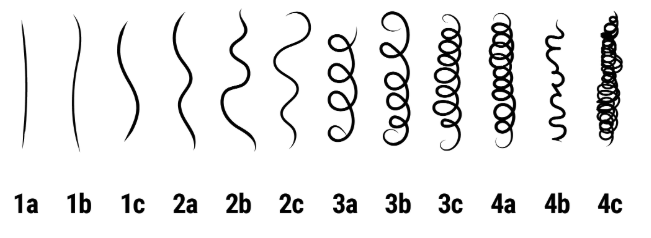
Generously textured hair is most expressive when it speaks it its own voice.
The unrestricted curvature of the hair is perfectly suited to the art of malleable molding and sculptural shaping.
And the unshaped single coil itself, an energetic circle that pulls out into a spring: a wonder of nature!
Hair curvature chart on Africa Imports site
In the humanistic anthropology of Robert Plant Armstrong, the “affecting presence” refers to a cultural artifact or aesthetic work (in this case, natural hair styling) that does not merely symbolize an idea or serve as an inert tool, but functions as a living subject possessing agency, emotional immediacy, and an intrinsic, felt power. Closely intertwined with this is the “mythoform,” which is the deep, structural mythic consciousness and core metaphysical values given tangible, perceptible aesthetic shape. The relationship between the two is essentially that of vital energy and embodied structure: a mythoform provides the formal cultural syntax through which collective sensibilities are materialized, and when successfully realized, that formal creation acts as an affecting presence—an object that confronts the viewer not as a passive representation, but as an animate, affective being infused with cultural reality.
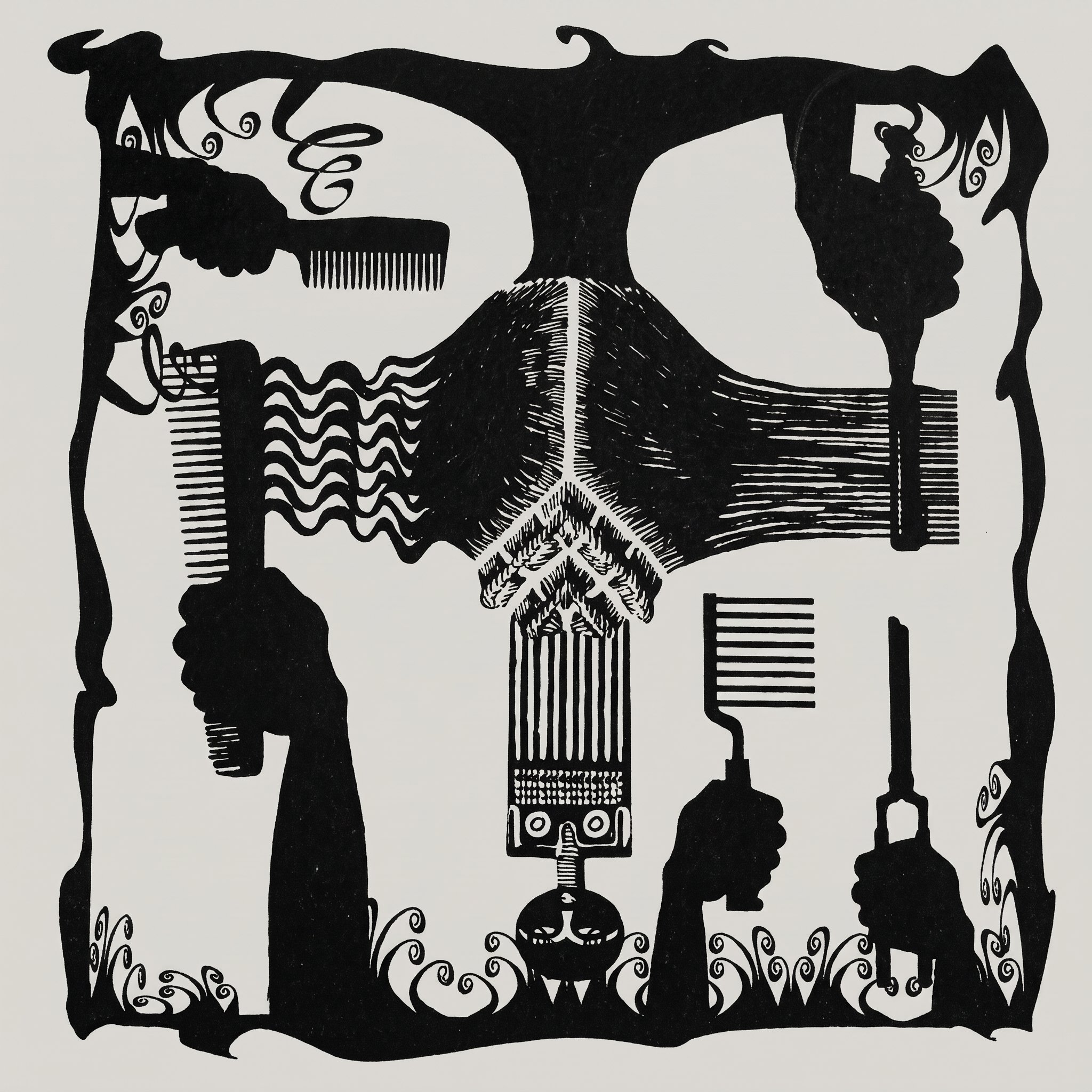

Pen and ink drawing and detail from drawing by Daniel Minter for the Tenderheaded book co-edited by Pamela Johnson and Juliette Harris.
Then Essence magazine senior editor Pamela Johnson and I grappled with thorny black hair questions in the Tenderheaded compendium of essays by numerous writers, artwork, graphics, photography, historical items, folklore, and observations by the co-editors which probed the hard problem of black women’s hair care and beauty and celebrated its joys.
Contemplating the second Civil War in the United States
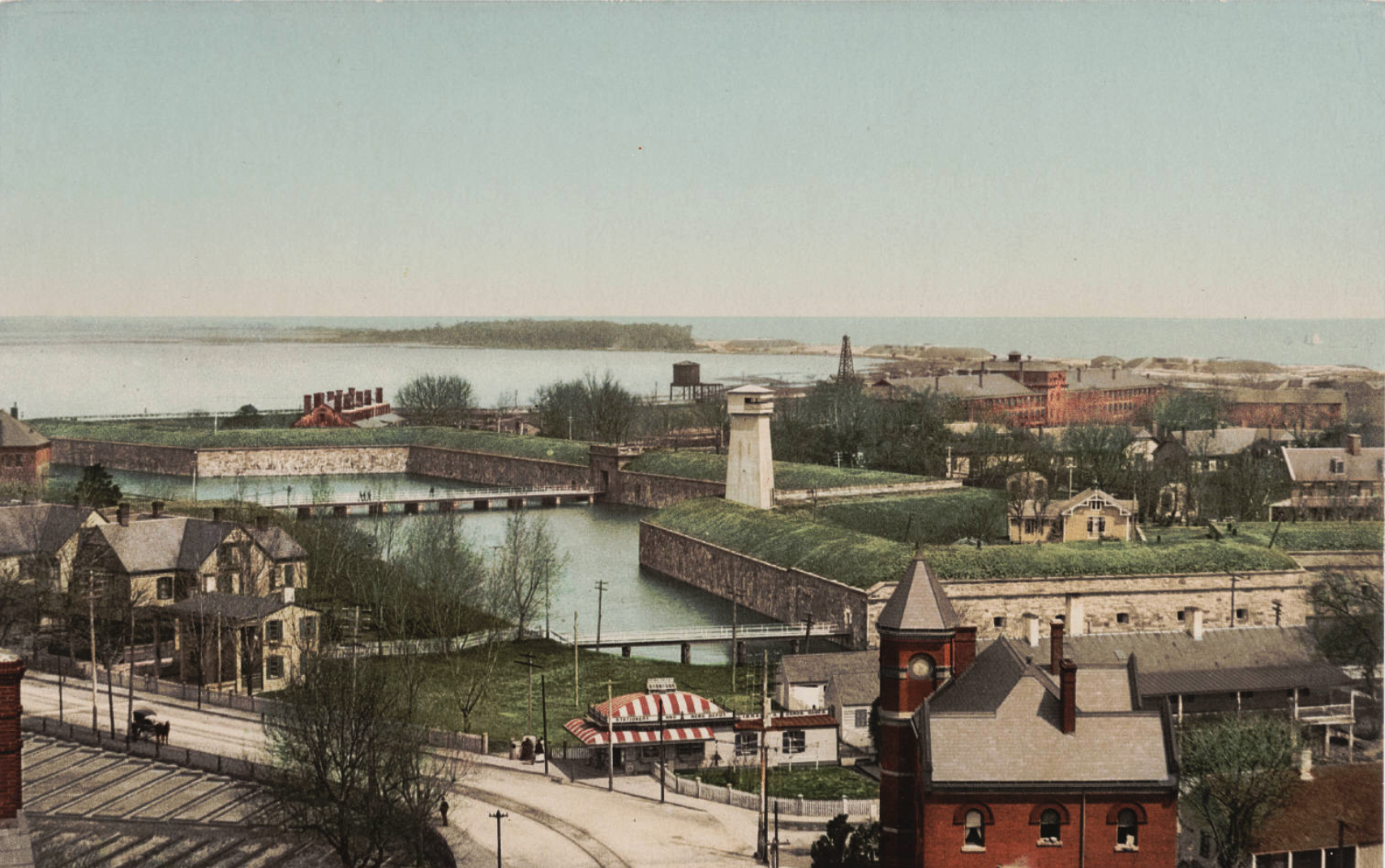
Old postcard of Old Point Comfort at Fort Monroe (note the grass-covered moats) across from the Phoebus and Buckroe Beach sections of Hampton VA. Detroit Photographic Company, circa 1897-1924 - public domain.
July 4, 2026
Ominous signs of a second civil war becoming more imminent
From my home at the very tip of the Virginia peninsula, history is not an abstraction; it is the ground I trod and the water that shapes the shoreline seen from my porch. And now it’s where I’m feeling vibrations of the “drum beats of war” that reverberated here when it was part of the Confederacy that seceded from the Union and the Union military conducted major southern strategies from a federal fort across Mill Creek on the Virginia peninsula tip.
Just a short walk away is Strawberry Banks, where Captain John Smith first set foot into the New World and surveyed the land before sailing 35 miles up the James River to establish Jamestown. A short walk away in another direction is Old Point Comfort (shown above), where the first enslaved Africans disembarked in North America in 1619, and Fort Monroe, Freedom’s Fortress, a defining landmark of the Civil War.
On this Independence Day holiday, climate change is a glaring, inconvenient truth of this 250th anniversary, a mounting catastrophe temporarily overshadowed by a more immediate, chilling irony: the plausibility of a second civil war.
It plays out in the mind like the opening montage of a dystopian sci-fi horror film. It begins with the polls. In the heat of July 2026, analysts project that Republicans will maintain control of the Senate in the upcoming midterm elections.
Dissolve to November: against the odds, Democrats narrowly sweep both chambers, taking the House and clearing the hurdle for the Senate. Cut to the immediate aftermath: Donald Trump floods the airwaves, operating in league with a handful of addled but omnipotent tech magnates. They present manufactured “proofs” of the stolen midterms election. Trump adamantly insists the election was “rigged as hell.” With loyalist minions in Congress and factions within the military moving to enforce these fabrications, the unthinkable erupts. A contemporary civil war breaks out, one reminiscent of 1775-1776 when a rag-tag coalition of citizens rose up against a materially and technologically superior authoritarian regime and, in another way, the War Between the United States (April 12, 1861, to May 26, 1865).
We find a resolution for this new battle for the Republic in the Gullah Geechee canon. This is a framework rooted in regenerative justice and keen moral clarity, exemplified by “Down by the Riverside,” the enduring ‘Negro spiritual.’
To “lay down my sword and shield” is not a surrender to oppression but a conscious refusal to let mental and physical violence consume the soul.
We witnessed this moral profundity in on June 19, 2016 among church family of Charleston’s Mother Emanuel AME. At the court sentencing for the perpetuator of a horrendous massacre, the survivors and relatives of the 10 victims (nine killed, one injured) were simultaneously able to hold two powerful, but not necessarily parallel, thoughts. They thought the 21 year-old white supremacist shooter should be punished to the full extent of the law while looking directly at him and offering grace: they were praying for his soul and they forgave him. That response is an application of African creole theory and philosophy, a subject illuminated by Kendra Hamilton’s study of the literatures, languages, lineages, and landscapes of the Gullah Geechee Coast. (Also see the Ecollective’s review of Hamilton’s book.)
Sometimes, grounded (grassroots) people can see most clearly in a crisis precisely because of their relative freedom from the blinders of hard bound egoic identifications and excessive material accumulation.
One battle after another
The 2026 Civil War in the United States flares up in mounting tits for tats. The swiftly-raised “people’s forces” opposing the regime are armed with a moral superiority that no Trump loyalist tech magnate’s algorithm can replicate. The people’s forces are aided by long-time DC area residents who know the Capitol and Pentagon inside out at every level including hidden passages, scores of military brass fired by Hegseth, ingenious hackers, and battalions of young men and quite a few women who have craved valor in video games and are glad to now have a real way to show it.
When the smoke clears and Congress convenes in January 2027 under Democratic control, we immediately struggle to avert other looming crises. Foremost among them are the persistence of people stuck at the bottom of a U.S. social and economic hierarchy that needs a bottom in order to maintain the top, and the ravages of climate change and other damages to human and external ecosystems after two years of Trump administration assaults on environmental regulations.
If we are to honor the promise of this nation on its 250th birthday, our campaign for democracy must include leadership from people who see clearly from the heartmind and wage love by all means necessary. — J.H.
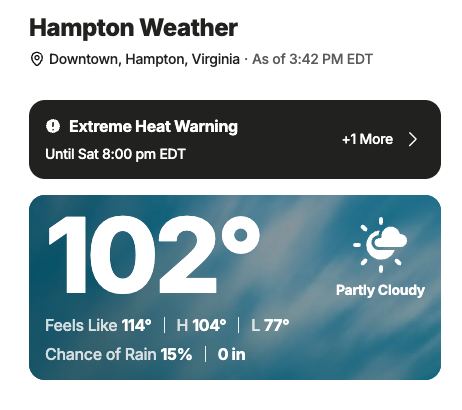
Today, on the semiquincentennial of the Declaration of Independence, it is 102°F outside. The meteorologists say it feels like 114°F. We are throwing a birthday party for a nation while, in the nation’s capital, the atmosphere is boiling. Global warming conditions including high temps and flooding are happening simultaneously but not in the same place. Hot spots and deluges are constantly cropping up in various places.
One of today’s ominous signs
On July 4, 2026, as evening approaches, the New York Times reports from a chaotic scene on the National Mall as several hundred people refuse to evacuate to shelter in nearby federal buildings including the Smithsonian Museums because of oncoming severe weather:
An officer is sternly repeating the evacuation order over a bullhorn, and the crowd is booing. Many have begun chanting “U.S.A., U.S.A.” One man blamed the situation on “liberals in the weather service,” adding, “I think this is baloney.”
These people would believe the election was rigged if Democrats manage to gain a majority in Congress after the November 2026 midterm elections.
Scroll down for remaining section contents
The call
In the first part of this two part exploration, scholar Kendra Hamilton challenges the "spiritual ecology" genre by proposing a more inclusive "spirituals (plural) ecology" that centers her people’s own experience of the land.
What is Western civilization?
A visionary perspective on what a "second Reconstruction" might look like if it were truly inclusive of its hemispheric ancestral roots. It bridges the gap between historical memory, like the image of Phillis Wheatley’s mother in the poet’s imagination, and the structural reforms needed in contemporary governance based on environmentalist principles.
Reality behind the illusion. Soil veritas
In response to the perceived collapse of modern democracy and the deceptive "passing show" of political manipulation, this essay advocates for a radical return to the natural world as the only authentic foundation for spiritual and societal renewal. By rejecting the ego-driven constructs of capitalist extraction and "pretty poisons," the authors, a community of eco-conscious writers, seek to reconnect human identity with the "Presence" or the underlying spiritual source found in nature.
Redemption of Justice Clarence Thomas down by the riverside
Saved by Saint Ettaphine.
Assemblage by
Ecollective staff
Part I: The Call of Hamilton’s March 10, 2026 manifesto,
“From Spiritual Ecology to Spirituals Ecology”
Kendra Hamilton was disappointed when she didn’t get the fellowship to travel to a Devonshire monastery, and as inspiration for her nature writing, soak up the painterly English countryside. She submitted with her fellowship application, “Second Summer,” a lilting yet brooding essay on the social and environmental climates of a small college town in South Carolina.
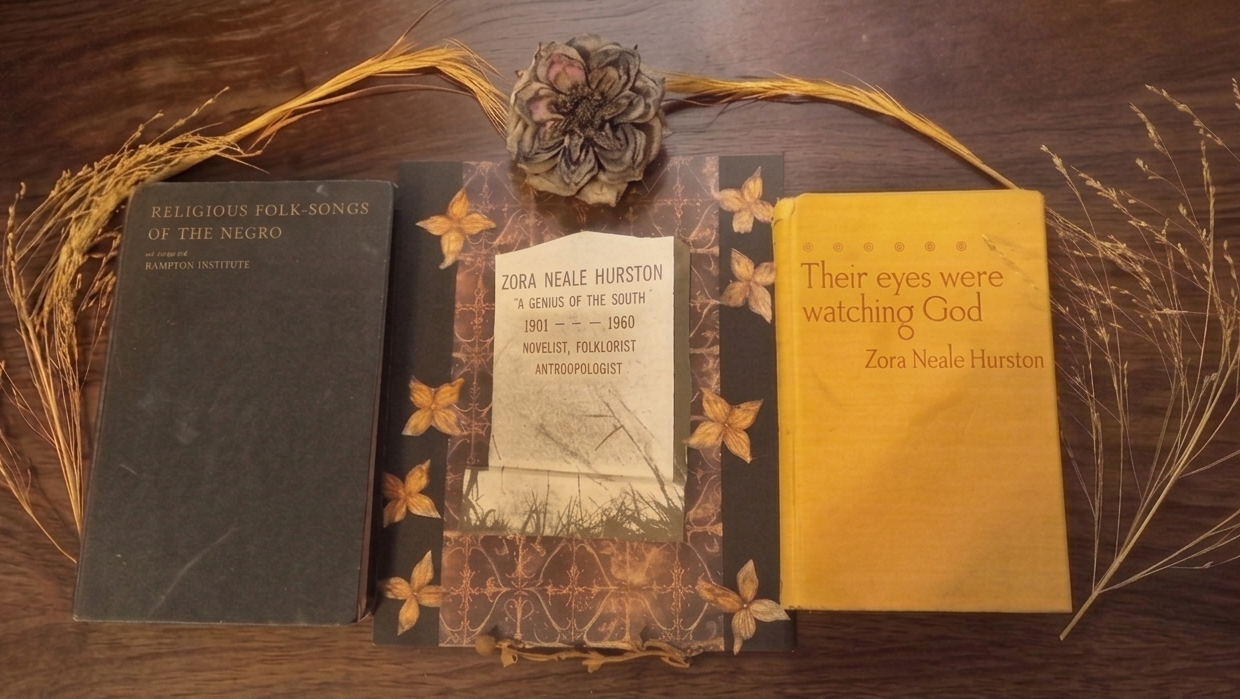
Hamilton is a gifted writer whose reflections on various environments and most notably the Gullah-Geeche coastal plan corridor, are shaped by extensive study (PhD in English and literary studies). She finds the contemporary spiritual ecology writing genre lofty although of course her erudite self could write that way. She’s more like what Alice Walker called Zora Neale Hurston: “A genius of the South.”
In “From Spiritual Ecology to Spirituals Ecology: a manifesto for thinking global, but writing local on the trail of Sherman's March,” Hamilton reflects on her rejection from the "spiritual ecology" fellowship, with the upshot being a clearer conception of what “spiritual ecology” means for her as a Southern black woman writing within the broader eco lit tradition.
Hamilton’s essay develops as she drives along the route of General Sherman’s march to Atlanta. She was headed to present a talk in a Southern gothic lecture series on vodun/voodoo, hoodoo, and the film Sinners, and to visit other sites imbued with symbolism, mythos and ethos of the Southern studies discipline that she teaches at Presbyterian College.
Along the way, encountering ghosts of her ancestors and other spirits, she became so overwhelmed that she “sobbed until (she) had no more tears to give.”
By journey’s end, Hamilton realizes that, for her own self, a genuine spiritual connection to the land cannot exist if it ignores these ancestral spirits and the painful history of a land where Confederate statues still defiantly stand on town squares.
So Hamilton proposes her own manifesto: a “spirituals (plural) ecology,” not a “spiritual (singular) ecology” and one that not only recognizes the songs of her Gullah Geechee heritage but is radical in its inclusivity and aims:
"That’s not to say that spirituals ecology doesn’t have a lot in common with the other kind. It does. Both, for example, consider all creation possessed of the spark of divinity. But spirituals ecology is distinguished by its determination to decolonize the spiritual, embrace the wisdom of Kongo, indigenous, Euro-pagan peoples and more, while specifically dedicating itself to healing 'the hidden wounds' of the Columbian Encounter and all the crimes of invasion, conquest, and extraction that followed in its wake."
The correct date of Hurston’s birth is 1891.
Alice Walker commissioned the tomb stone for Hurston’s grave.
Photo of tomb stone is from the Special and Area Studies Collections, George A. Smathers Libraries, University of Florida, Gainesville.
Kendra Hamilton’s Escaped from Cultivation Substack bio: “Food, flowers, feminism. Poet. Professor. Birder. Woman of many aprons. Have hoe will garden. But don’t touch my chef’s knife”).
“O, landscape of my birth
because you were so good to me as I grew
I could not bear to lose you.”
—Alice Walker
Entrance to Alice Walker tribute at the Georgia Writers Museum. Photo: Kendra Hamilton

What is “Western civilization”?
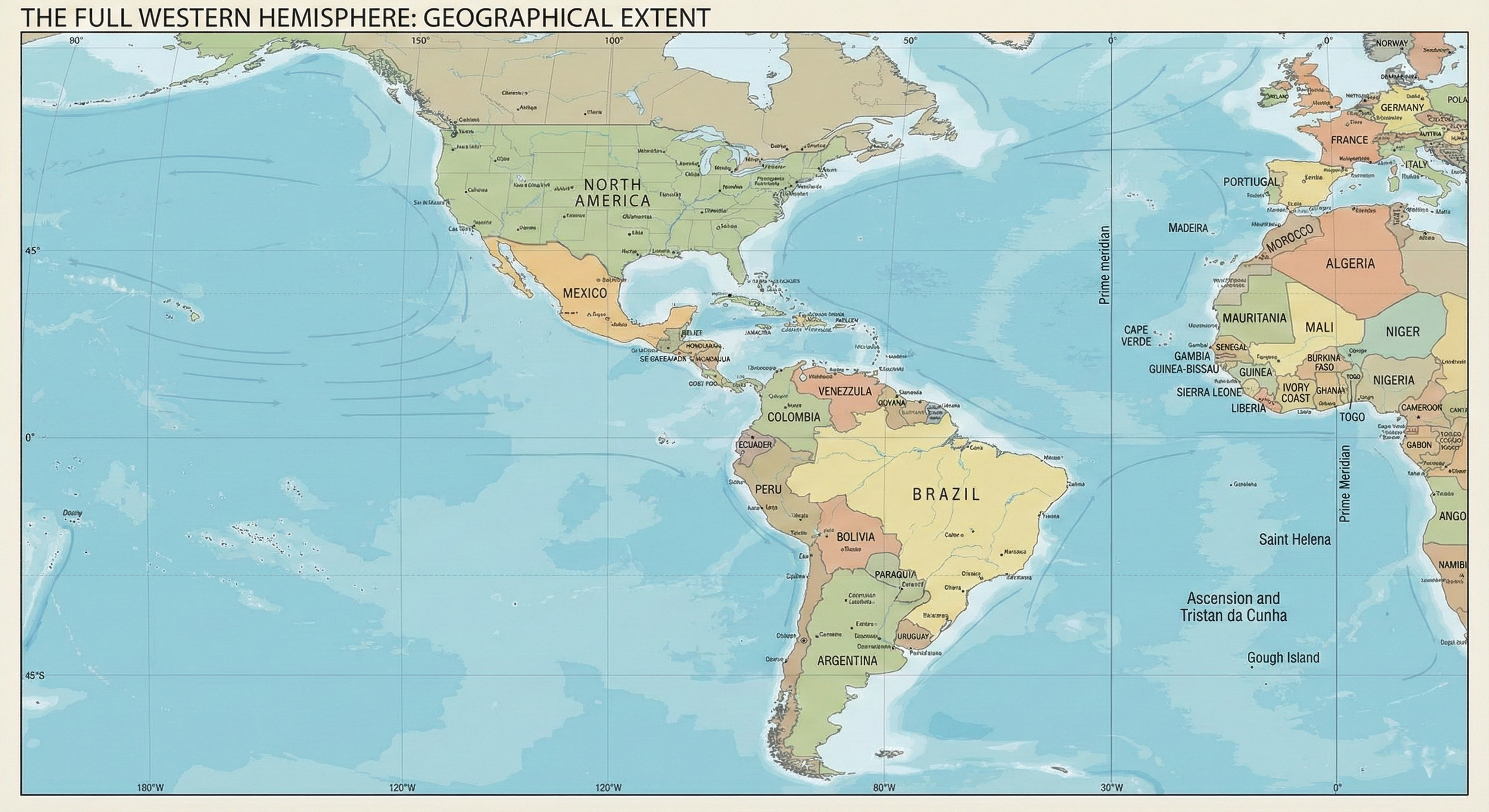
Most maps of the Western Hemisphere do not show the full extent of the African terrain in the hemisphere.
This map does.
Map of Western Hemisphere based on the geographic data listed at the end of this article and rendered for the Ecollective.
Looking East to find West
Mapping a Second Reconstruction drawing from African wisdom traditions
January 22, 2026
In 1916, G. Herbert Renfro, a black attorney and bibliophile, published a slim volume of Phillis Wheatley’s poetry in Washington, D.C. In a biographical sketch, Renfro conveyed a rare, shimmering fragment of the poet’s earliest memory of Africa: the sight of her mother every morning as she would "pour out water before the rising sun." This simple, sacred act, a ritualized offering of love and respect for the natural world, exemplifies the sensibilities of our West African foremothers.
As we consider a contemporary U.S. society in need of deep healing, we are drawing directly from such graceful, ancestral practices. It is our intent to allow their spirit to inform our own sensibilities as we envision models of repair applicable to our current moment.
As those who spoke of dominating the “Western Hemisphere” from (Greenland to Venezuela and Canada to Cuba, regaining the Panama Canal, reinforcing corrupt complicities with El Salvador and potentially all of the Americas) were referring to the “Western Hemisphere” as being “our hemisphere,” meaning the entire landmass of the Americas and waters including what we still call the Gulf of Mexico), we wondered why these imperialists and even many of their critics seemed to conceive of the Western Hemisphere as just being the Americas when we all know that “the West” also means Western Europe.
Surveying the situation, we learned that Western Africa is also part of the Western hemisphere.
In our close-up view, the cultivation of rice in the South Carolina coastal plain ceases to be merely a story of "New World" plantation economics and becomes a narrative of hemispheric continuity. The "Rice Coast" of West Africa (spanning from Senegal and the Gambia down to Sierra Leone and Liberia) and the coastal plain of South Carolina and Georgia share an ecological history although the U.S. is further north.
But the story does not end in the Gullah Geechee coastal plain or with its harvest. The memory of the Middle Passage is carried not only in the soul but in the seeds of the earth, and the full map of the West redraws itself in our conception.
The Western Hemisphere has been deeply African in its agriculture (cotton, peanuts, yams, greens, okra, in addition to rice), its inventions, music, arts, crafts, religion, landscaping, intellect and spirit.
The founding fathers of the United States readily absorbed the benefits of African labor and cuisine and outwardly rejected other African attributes, although they were shaped in varying degrees, including subliminally, by these African Atlantic influences.
West African ‘best practices’ of community, justice, economic exchange, and spiritual affinities with the natural world are a bountiful resource for planning the second Reconstruction.
The first Reconstruction (the decade following the Civil War) was sabotaged by a return to punitive racial control. The second Reconstruction should be fully equitable in its hemispheric vision.
It’s a vision informed by principles such as how African communities historically managed disputes and maintained public safety through what we now call restorative justice, a principle prioritizing social harmony and the repair of relationships over punitive incarceration. Instead of jails, these systems relied on communal participation, mediation, and reparation to reintegrate offenders and prevent future conflict.
Our consideration of African wisdom models of repair coincided with a discussion about how MAGA is restructuring U.S. society on Stacey Abrams’ January 13, 2026 podcast. The esteemed legal scholar Melissa Murray proposed a riveting fix. "We really have to think about whether this is the Constitution we need," she told Abrams, noting how it is compromised in various ways including in its support of minority rule.
And in another discussion about the ICE disruptions in Minneapolis, we learned that if the state of Minnesota charges the agent who shot Renee Good, the U.S. Constitution makes it difficult for state authorities to prosecute federal officers for actions taken while on duty.
Melissa Murray concludes that “there are structural impediments to a truly democratic system in society that we have to think seriously about — how the Constitution affects (the impediments) and how it might be fixed." Of course part of the pragmatic brilliance of the Constitution is its capacity for being amended. Political historian Heather Cox Richardson is recommending fixes as well as strategies and insider information.
In the post-MAGA reconstruction, constitutional, environmental and other fixies should include finally looking East to find the rest of the West.
We cannot build a democratic system using undemocratic means; the planning process itself must be inclusive and equitable, contend the U.S. developers of regenerative systems inspired by West African principles outlined in the rest of this article.
The restorative future we seek begins with the recognition of the water poured before the sun: a commitment to repair that is as old as the earth and as necessary as the light.
For more about African - U.S. hemispheric relations in the Ecollective, see:
The Africans who made Carolina gold worth its weight in gold.
The wata brings, the wata teks
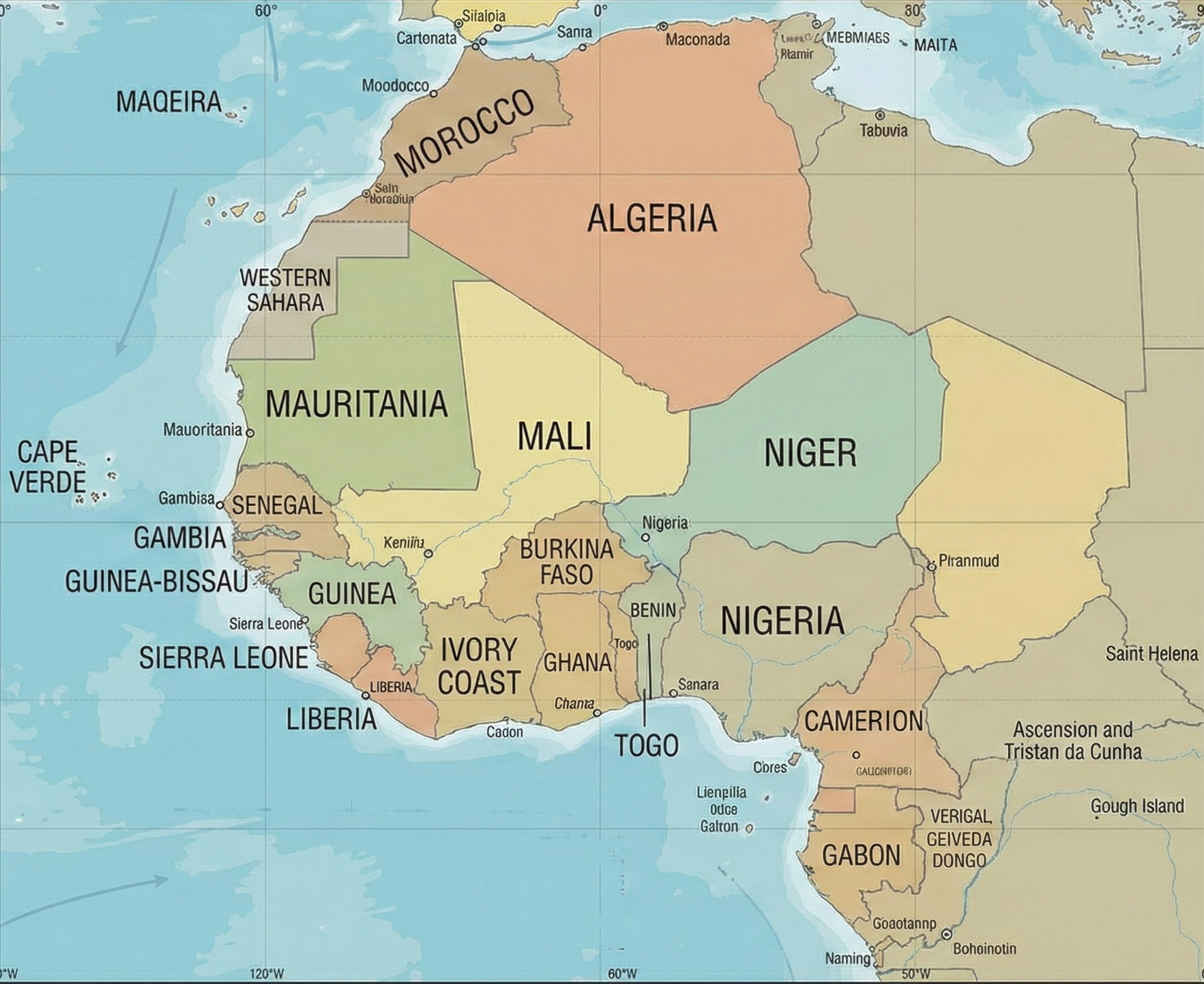
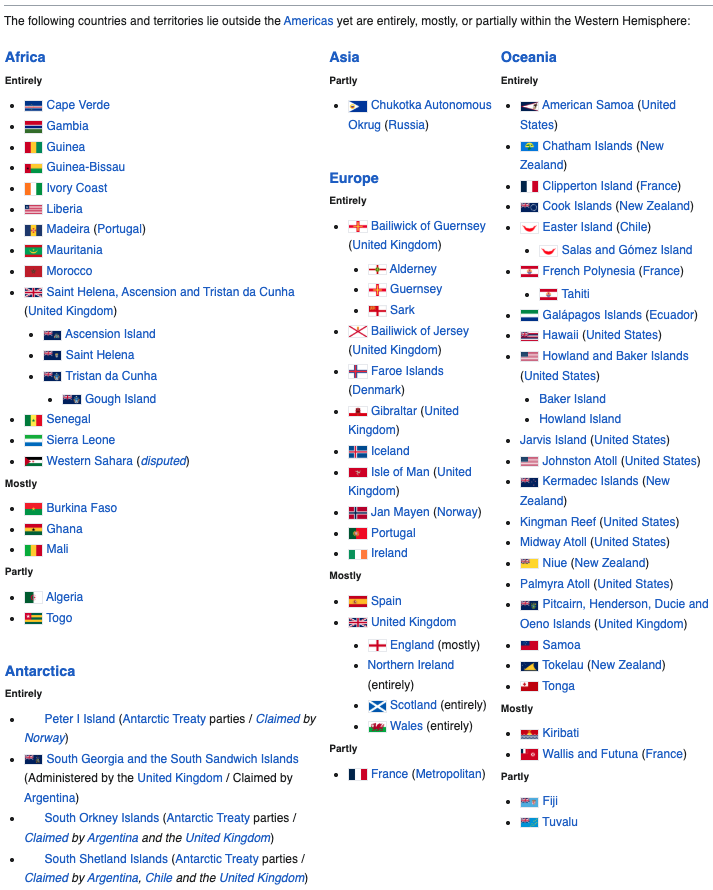
Below: map showing the African nations fully within the Western Hemisphere. The Western Hemisphere includes numerous other states partially within the hemisphere. The transAtlantic trade of enslaved Africans included peoples from the Sahel to Angola and inward to Central Africa. African nations that are partially within the Western Hemisphere” are listed in the chart below.
West African traditions of crime prevention and resolution, regenerative agriculture, and regenerative economies as sources of inspiration for a reconstructive vision of the United States of America
Even though they developed under different circumstances than ours, some of the principles of West African social and political traditions can inspire our approaches for fulfilling the potential of U.S. democracy and civil society. And some of the agricultural practices can be more directly applied or modified.
West African "agriscience" includes soil regeneration techniques that predate modern "permaculture" and enrich our composting.
Zaï technique (Burkina Faso/Sahel) A traditional method of rehabilitating degraded drylands. Farmers dig small pits (zaï) and fill them with organic matter (compost/manure) to attract termites. The termites digest the matter, creating nutrients and tunnels for water infiltration.
Anthropogenic dark earths (Liberia/Ghana): communities in West Africa (such as the Loma people) created super-fertile soils around their settlements through the accumulation of domestic waste, charcoal, and ash. These soils are carbon sinks and highly productive.
For a listing of additional West African agroecologies, see “These Roots Run Deep” section of the Black Earth Wisdom edited by Leah Penniman.
Sacred forests (Osun-Osogbo and others): some West African communities maintain "sacred groves" where hunting, logging, and farming are strictly forbidden. These act as traditional biodiversity banks and conservation zones.
Earthen architecture: West African vernacular architecture (like the Great Mosque of Djenné or traditional compounds in Northern Ghana) is inherently self-sustaining. Materials are sourced locally (clay, shea butter, straw), provide superior thermal cooling without electricity, and eventually return to the earth without pollution. Architects like Francis Kéré (Burkina Faso) are modernizing these indigenous techniques.
In the U.S., policing is often an external force imposed upon a community by the state. In many West African traditions, internal force emerging from the community allow the community to regulate itself.
The Palaver Reconciliation Model is a distinct legal and social institution. Unlike Western adversarial courts (guilt vs. innocence), the Palaver focuses on consensus. Discourse continues until social harmony is restored, not when a verdict is handed down.
Yoruba Omoluabi philosophy, a moral system for leadership (Nigeria): While "Ubuntu" is famous in Southern Africa, the Yoruba concept of Omoluabi is its West African cousin. It describes a person of "good character" whose existence is defined by community integrity
Akan Queen Mothers’ Courts (Ghana): In Asante culture, the Asantehemaa (Queen Mother) presides over a court specifically designed for domestic and non-capital disputes. These courts prioritize preserving family lineage and relationships over punishment, often using "shame" and "apology" rather than incarceration.
Masquerades as "spiritual law enforcement" and public safety mechanisms. While the masking practices themselves are too culture specific for adaptation to our current public safety and legal systems, we can draw principles from these practices. And some of the practices could be actually be applied or adapted for close-knit community and extended family contexts.
The most critical element of the masquerade is anonymity. When an initiate dons the mask (e.g., Egungun of the Yoruba or the Kankurang of the Mandinka), they cease to be a neighbor, a cousin, or a farmer. They become the spirit/ancestor. The Spirit cannot be bribed, intimidated, or accused of personal bias and allows the community to police itself without fracturing social bonds.
"Night Watchmen" of Benin & Togo: the Zangbeto (often looking like a moving haystack) of the Ogu people is the most direct example of a traditional police force. Historically, and still today in many areas, the Zangbeto patrols the streets at night. They are not just guards; they are judges. Because the Zangbeto is feared and revered as a spiritual entity, suspects are more likely to confess or return stolen goods. They also handle civil disputes. If a landlord is abusing a tenant or a husband is abusing a wife, the Zangbeto may appear in front of their house to drum and sing, effectively "shaming" them into compliance with social norms.
The Ekpe (Leopard) Society: The Government of the Cross River. In the Calabar region of Nigeria and into Cameroon, the Ekpe (or Mgbe) society historically functioned as the police, the court, and the executive branch combimed. Before colonial courts, if someone reneged on a debt, the Ekpe would place its insignia on the debtor's property, effectively impounding it. No one would dare touch the property until the debt was resolved. Laws were not written in books; they were promulgated by the Ekpe. To disobey the Ekpe was to disobey the highest authority of the land. This ensured trade could flourish and contracts were honored without a standing army.
The Gelede (Yoruba) and specific Igbo masquerades, use satire as a policing tool. During festivals, the masquerades will sing songs or perform skits that specifically call out people in the community who have been acting greedily, arrogantly, or immorally. This public airing of grievances serves as a "social pressure valve." It checks the power of chiefs and wealthy individuals who might otherwise be above the law. It reinforces the circular economy of behavior—if you take too much socially, the community will extract your status publicly.
African American historian and philosopher Molefi Kefe Asante advocates the holistic practice of nommo: using language and story to actively define and transform reality. It views words as inseparable from action, relying on communal participation and co-creation—rather than passive listening—to build unity and transcend dualistic thinking. The word “nommo” is from the Dogon astronomical culture.
Economics: here we turn to traditional means of exchange that inform the contemporary theory of generative justice in which labor is not alienated from manufacture and consumption. The theory is being developed into a practice supporting community-based economics by Ron Eglash and Audrey Bennett and their colleagues and former students Kwame Porter Robinson, Lionel Peter Robert and Micheal Nayebare. (See: "Computing for Community-Based Economies: A Sociotechnical Ecosystem for Democratic, Egalitarian, and Sustainable Futures," The Information Society, 2025).
Also see the Ecollective article on Audrey Bennett.
Eglash’s broader body of work establishes the Adinkra production system as the definitive West African model for this economic theory. (He also cites a model of Iroquois agriculture and economic equity.)
In the traditional textile village of Ntonso, Ghana, the production of Adinkra cloth operates as a "generative" economy rather than an "extractive" one. Eglash uses this to demonstrate how value can circulate within a community rather than being siphoned off.
The production relies on a network of local artisans—carvers who make the calabash stamps, dyers who boil the badie bark, and stampers who apply the symbols.
Unlike a factory system where a distant owner profits from the workers' labor, the value in Ntonso is "unalienated." The profits from the cloth return directly to the families and guilds that produced it. The intellectual property (the symbols) is "open source" to the community but culturally protected from outsiders, ensuring the cultural value also remains local.
Theprocess is historically sustainable, utilizing locally sourced herbal dyes and renewable materials, creating a circular loop between the "natural computing" of the environment and the "social computing" of the village.
Just as the Adinkra artisans maintained a 'generative' cycle—where labor, biodiversity, and profit returned to the community source, Eglash and his colleagues propose that modern computing can be designed to replicate this circular flow. They maintain that we must move from the 'fighting heads' of extractive capitalism to a 'shared stomach' sociotechnical ecosystem.”
In linking this background and experimental work in Detroit (often with local farmers and artisans) to modern technologies, Eglash and Bennett explain that while automation, AI, and mass production currently tend to exacerbate wealth inequality, environmental damage, and labor exploitation, these same technologies can be reimagined to support community-based economies. The goal is to shift from an "extractive" economic model (where value is removed from communities) to a "generative" one (where value circulates back to the people and environments that created it).
List of nations and territories beyond the Americas and within the Western Hemisphere
Adinkra patterns of econnectivity and conscientiousness include the conjoined alligators symbolizing why we should not be selfish. We all share a central stomach (i.e., vital core).
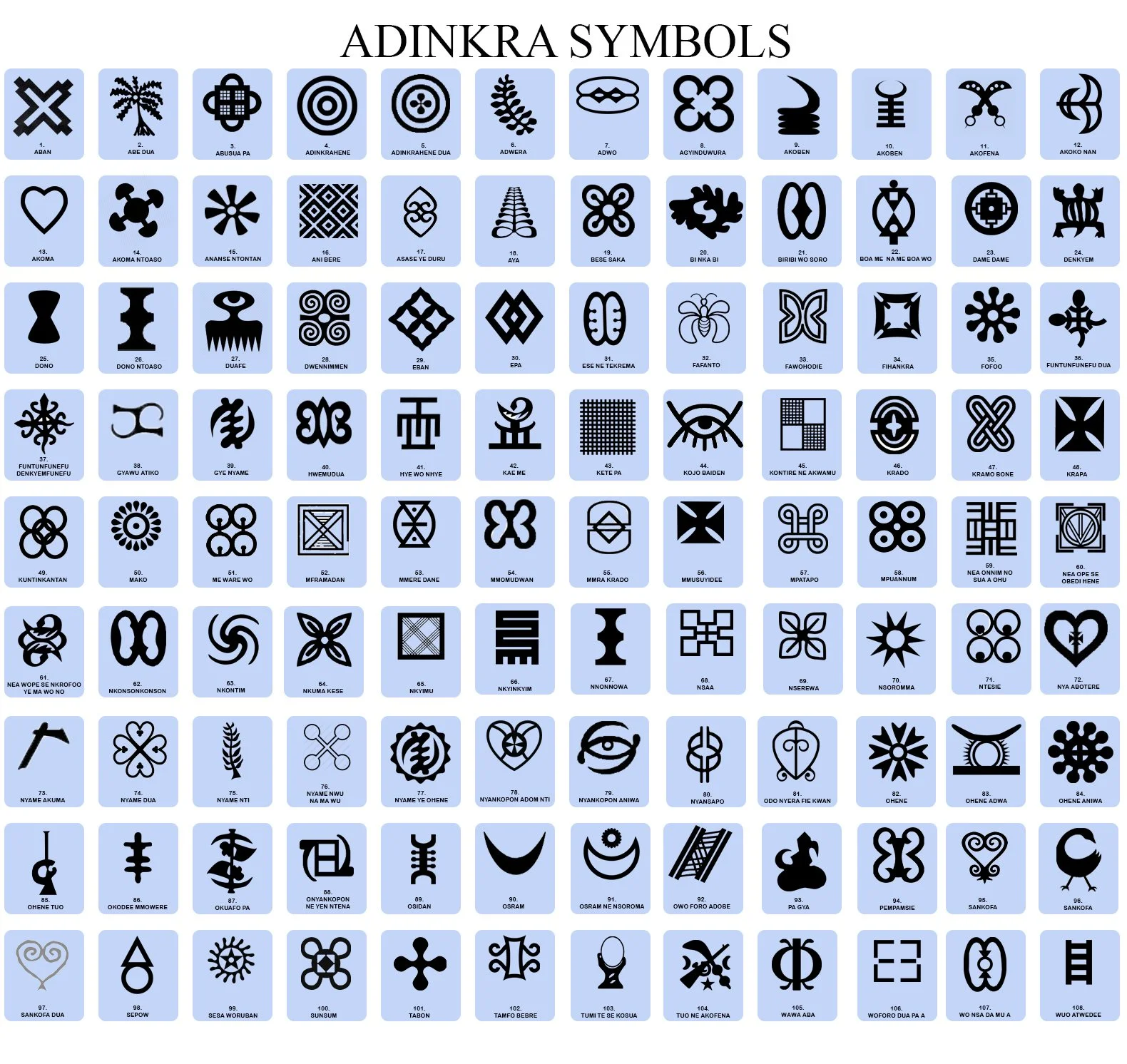

Alligator with conjoined stomach.
i nourish you - you nourish me.

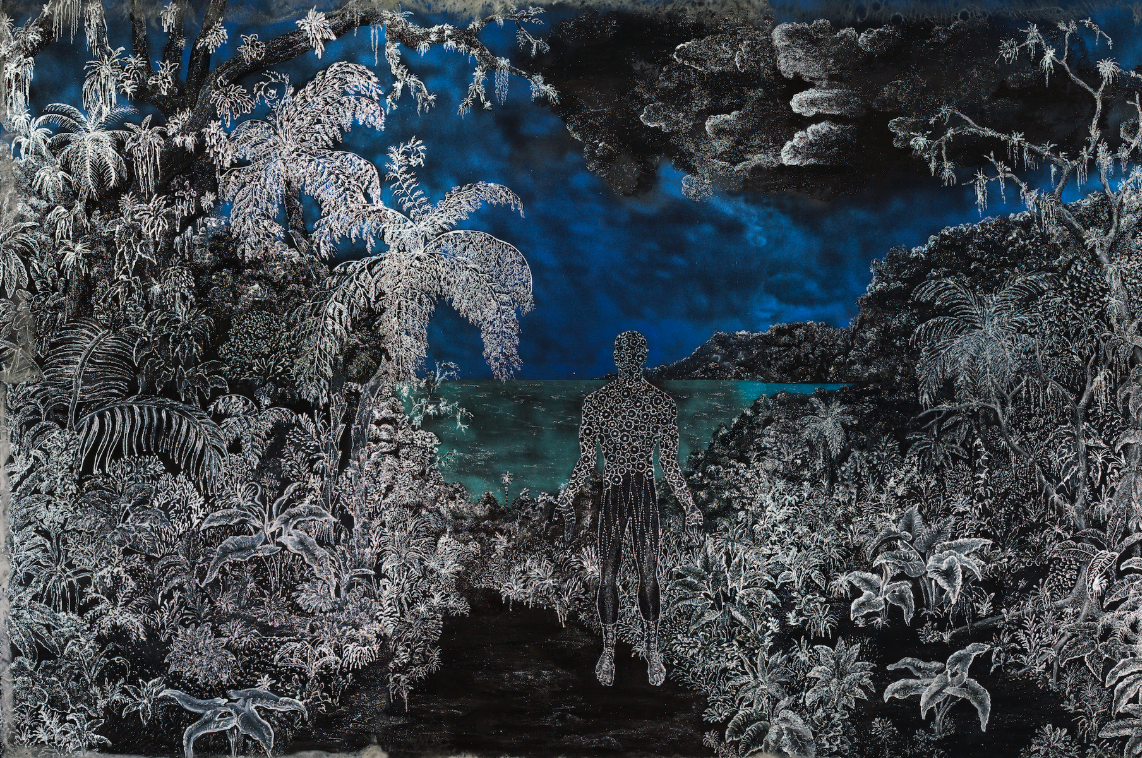
After Heade—Moonlit Landscape by Edouard Duval-Carrié, mixed media on aluminum, 96 × 144,” 2013
Photo courtesy of the artist

October 14, 2025
These are surreal and challenging times, and in such times, as we are called to witness what may well be the death throes of our democracy, the choice to anchor our imaginations and our activism in soil may seem … impractical: the whim of overprivileged, out of touch, cock-eyed idealists.
But we believe there could be nothing less practical, and nothing more soul-denying, than to drink too deep from the well of the “passing show”: the entire societal construct in this long unfolding, since 1492, of the “pretty poisons,” the political knife-fighting, gangsterism, now with “gaslighting,” AI manipulation and deep fakes adding to the confusion.
Instead we look to the natural world for a truth entirely devoid of ego, as we grope toward honoring the understanding that our ego selves are the conditioned actors on the stage, not the underlying and all-pervasive Presence.
Beyond being the source of all of our sustenance, the natural world is the only sure material vehicle for approaching the Presence. (The non-material approach is through meditation: surrender and release.)
We hold precious knowledge from our foremothers of many traditions, who understood that our outer self (the biome and larger biosphere), our mindbody (the intermediary self), and our inward being are all inextricably connected to Nature as manifestation, spirit and source. Cut off from that self-in-Nature, we are diminished no less than we would be if cut off from our own inner selves.
As a community of writers and creators, we ask, who speaks for the voiceless? The vegetal, animal and mineral creation that is being stripped to the studs by the relentless capitalist extraction? Thus, we offer this as a space for distinguishing between what’s illusory, what’s relatively real, and what’s truly real. Such knowledge has never been more necessary and, seemingly, never so short in supply.
As writers, we specialize in imagination; as eco-conscious writers, moreover, we imagine a supersensory connection developing among us, our readers in this space, and the truth of the underlying Presence.
We look to the ground beneath our feet and, even in this land that was stolen, that saw alien peoples from distant places violently grafted upon the native rootstock, we are learning how to read the authentic signs and synchronicities in “nature” and understand the very nature (essential characteristics) of the natural world that includes humans.
Our highest aim is to share our enchantment—with gardens no less than rivers, mountains, trees, forests, animals and the other earthly elements that can help us connect with the timeless, the shapeshifting, the imaginal. As Cynthia Bourgeault writes in Eye of the Heart, A Spiritual Journey into the Imaginal (2020):
“… when all the intellectual attractions have been stripped away, and [the imaginal realm] is allowed to speak in its own native tongue, what it speaks of, with surprising simplicity and directness, is beauty, hope and a mysteriously deeper order of coherence and aliveness flowing through this earthly terrain connecting it to the infinite wellsprings of cosmic creativity and abundance … .”
In drawing inspiration from the natural world, we are mindful of the necessary cycles of creation and destruction—the ferocity of wild animals and storms and the tenderness of new growth and maternal love—all love. Within this dynamic, human beings have a unique agency to optimize the creative aspects and minimize unnecessary harm from the destructive aspects, if only we choose to exercise it.
We maximize the creative agency in grounding ourselves in the authentic reality of the natural world and in human community offering mutual support and creative abundance. In doing so, we not only fortify ourselves during perilous times, we are envisioning how a more equitable participatory democracy can be built and how regenerative economies can be developed with the consequent flourishing of environmental systems and people.

Into this vanishing
where everything can end or start,
you postpone returning
for a bit, as you rise and rise
into the holy hush of pines,
leaving your old cable car
creaking far behind.
Excerpt from Neeman Sobhan’s “Season’s End/Abetone" in her collection, Calligraphy of Wet Leaves (2015)
Photo: Chris Gordon/Unsplash
Redemption of Justice Clarence Thomas down by the river side
Read as you float down to South Carolina.
Ride down the river with Ettaphine Tyler as she heads back home.

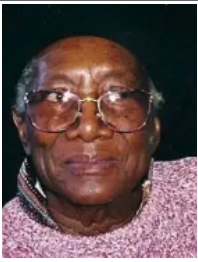
Ettaphine Tyler, born in Florence, South Carolina in 1907.
Joined the ancestors in 2011.
Welcome home, brother Clarence!
We’ll welcome Justice Clarence Thomas back home and baptize him in South Carolina's Combahee river where that great gunboat raid freed almost 800 enslaved people.Call in the elders of the Gullah nation to reclaim Brother Clarence in waters sacralized by the memory and spirit of Aunt Harriet. Blasphemy you say!
But the viability of democracy pivots on Supreme Count rulings as we approach multiple constitutional crises so “we who believe in freedom” in the memory of Ella Baker cannot rest. How did Justice Clarence Thomas become so antagonistic, so seemingly devoid of conscience? And can he be saved?
Not a chance, you say!
But hold up! Here comes Brother Clarence now, dressed in a white gown. He does like gowns.When he was a young boy, we were striving to be bronze versions of the American Dream in Savannah's Cuyler-Brownville community of doctors, teachers, proper preachers, black business people in a bustling section of grocery stores, restaurants and beauty shops. Clarence Thomas was from the outskirts of town, a place called Pin Point. Growing up, Thomas was disdained by both black and white folks, says Kendra Hamilton in Romancing the Gullah and referring to the Thomas biography, Supreme Discomfort. Thomas went to a segregated black Catholic High School and aspired to don the Catholic priest gown. But the school's white rector dashed that dream, saying Clarence’s Geeche Gullah dialect would never make the grade. And particularly cruel was how this baby — black grandmas called almost grown and grown children "baby" as an expression of poetic affection -- how this grandma’s baby Clarence was teased as being “ABC” (America's blackest child) by other black youth.From Savannah about 107 miles up the coast to Charleston, Dubose Heyward imagined us living in an abandoned, dilapidated mansion called Catfish Row but the real action was in North Charleston where other bronze American dreamers were dis-remembering the appreciation of distinctive African facial features and deep melanin. Because back out in the backwaters, when the livin’ was easy for some, and particularly for the baby whose white daddy was rich and mulattress mama, “good lookin’ " -- back out there on the land, away from the prying eyes of civilized society, black and yella gals got plucked to serve the master’s and his sons’ voracious appetites and birthed black self-directed shame.Slurs like “ABC” had their counterparts in racist terms referring to impoverished or rural white bumpkins who were called “red necks” and "white trash" by white southern aristocracy and who were consigned to live on the disgraceful "Tobacco Row."Gullah saving graces include being unswervingly "spiritual" people -- people like Toni Wynn's surrogate grandmother Ettaphine Tyler from South Carolina. Miss Ettaphine lived to be 103. Her parting words were, "Always remember to be kind." Toni Wynn recalls Miss Ettaphine's sterling qualities, including being a life-long gardener in this essay.(will insert link to Toni's page)
Welcome Clarence home and reconnect him with his Geechee Gullah roots.Baptize him to save him and our democracy too.
The ceremony down by the riverside will include testimonies.Can I get a witness?
on that great gettin’ up mornin’

Doris Ulman, Preparing for Baptism, c. 1929-1931 (public domain)
“Always remember to be kind.”
Ettaphine Tyler’s final words to her surrogate granddaughter, Toni Wynn
Doris Ullman, Baptism,1930 “Down by the Riverside" is an African American spiritual with roots dating back before the Civil War. The antebellum origin makes the “ain’t gon study war no more” declaration particularly metaphorical while signifying a profound clarity of goodness and mercy.
Sister Rosetta Tharpe sings “Down by the Riverside” here.

Down in the murky Combahee waters
strains of old songs …
Deep river, my home is over Jordan. deep river I want to cross over into camp ground
Ain’t goin study war no more
Brother Clarence is dipped backwards into the waters and lays his weary burden down
… roll, ol’ Jordan, roll…
The waters send shivers through his body
and expel them as ripples into the river
As his head is lifted Clarence sees a dragonfly circling above
dragonfly destroyer of ego and winged ambassador with 360 degree vision
Clarence remembers how to read signs in nature
yes dragonfly a winged blessing
As Clarence is healed from the transgressions of the Catholic rector and the taunting folks, black and white, who dashed his aspirations, destroyed his confidence, prodded him from the spiritual path and from his own wavering trust in it, so healed are we.
Love save us all!
Can I get a witness?