
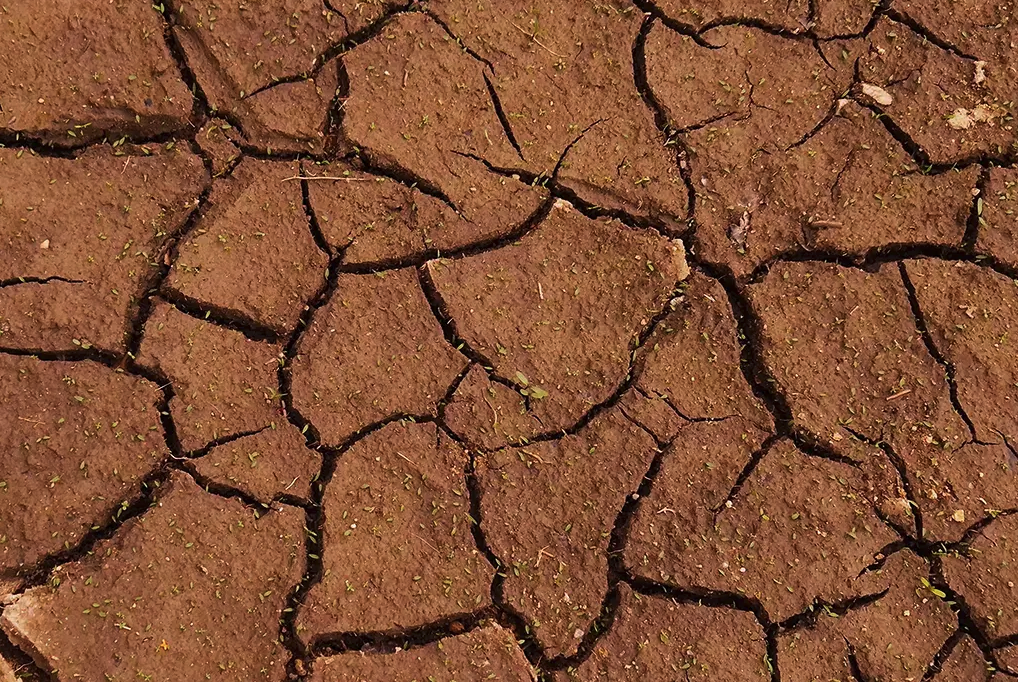
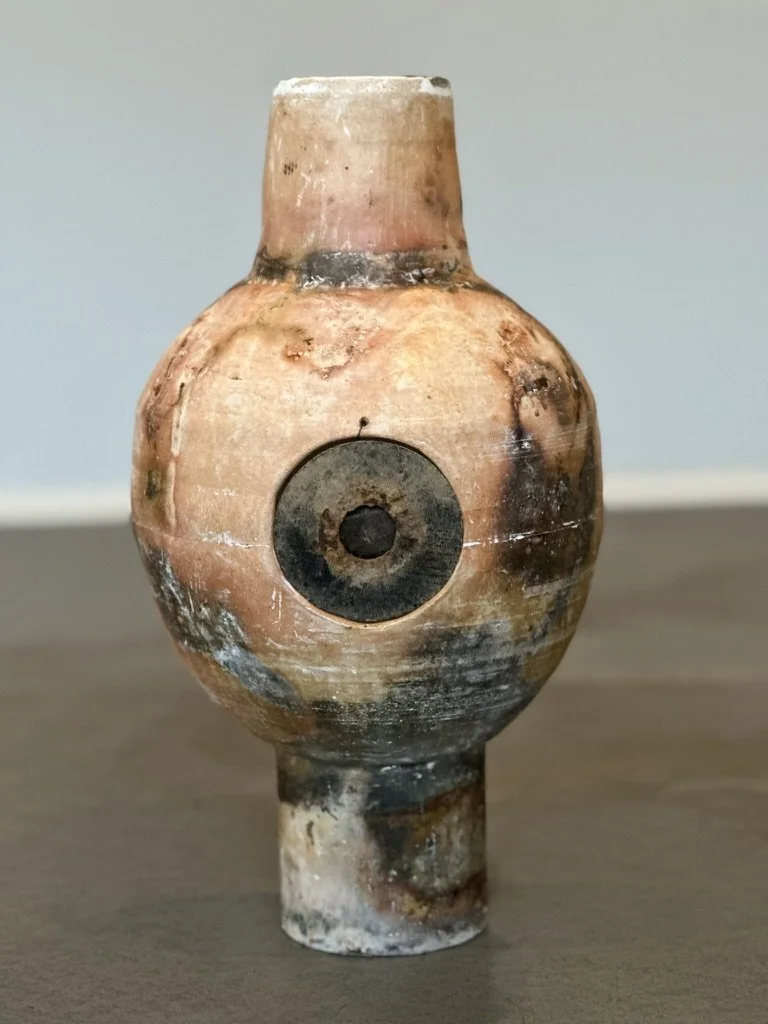
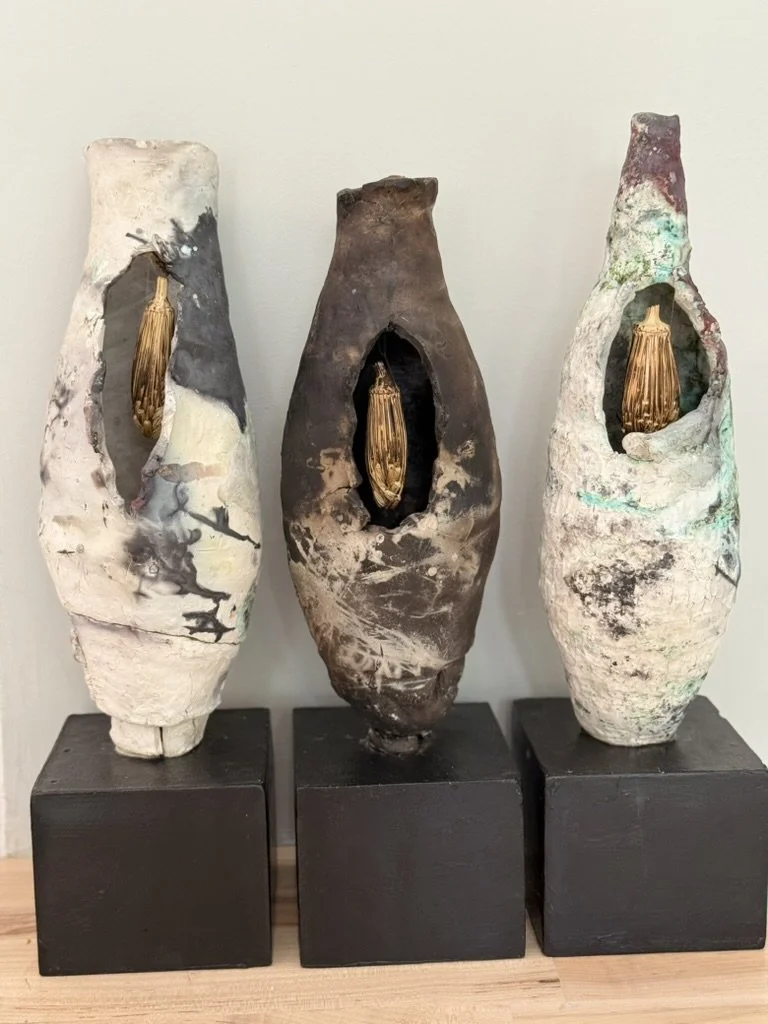
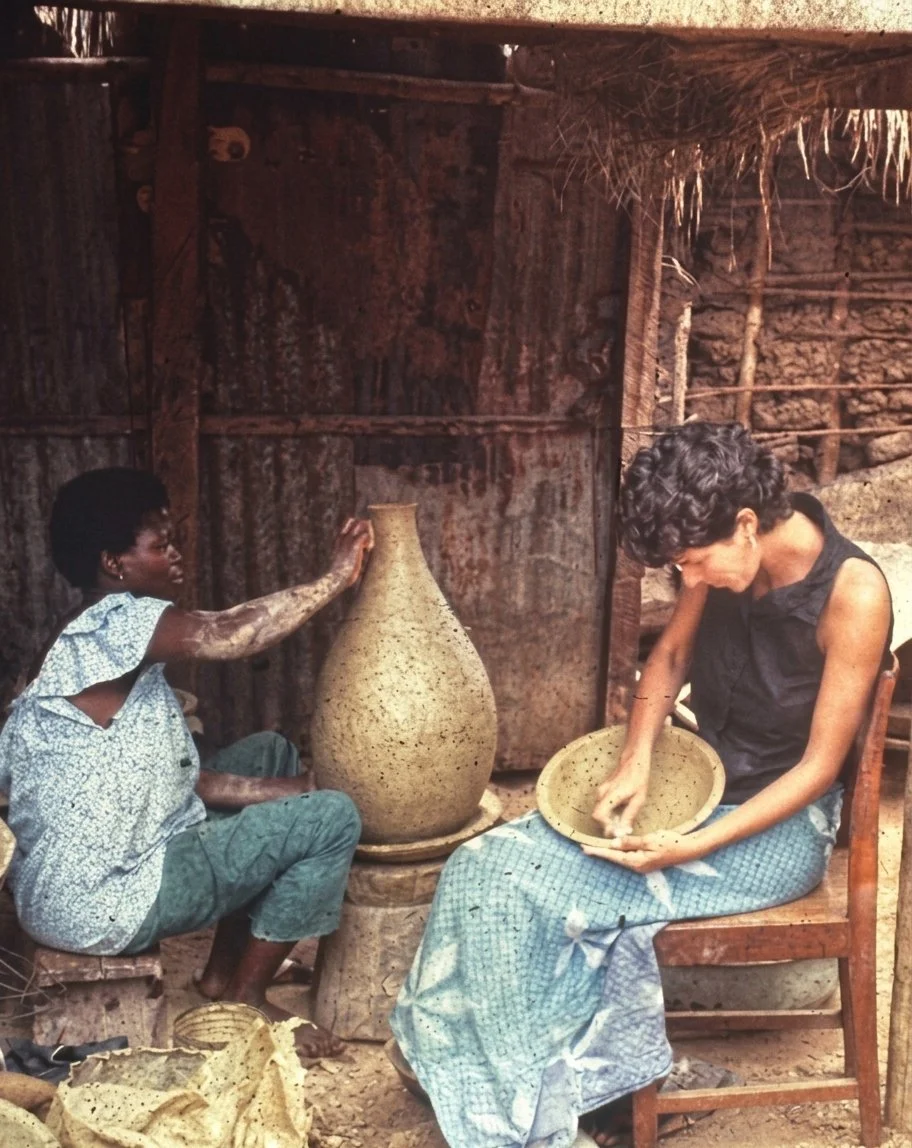
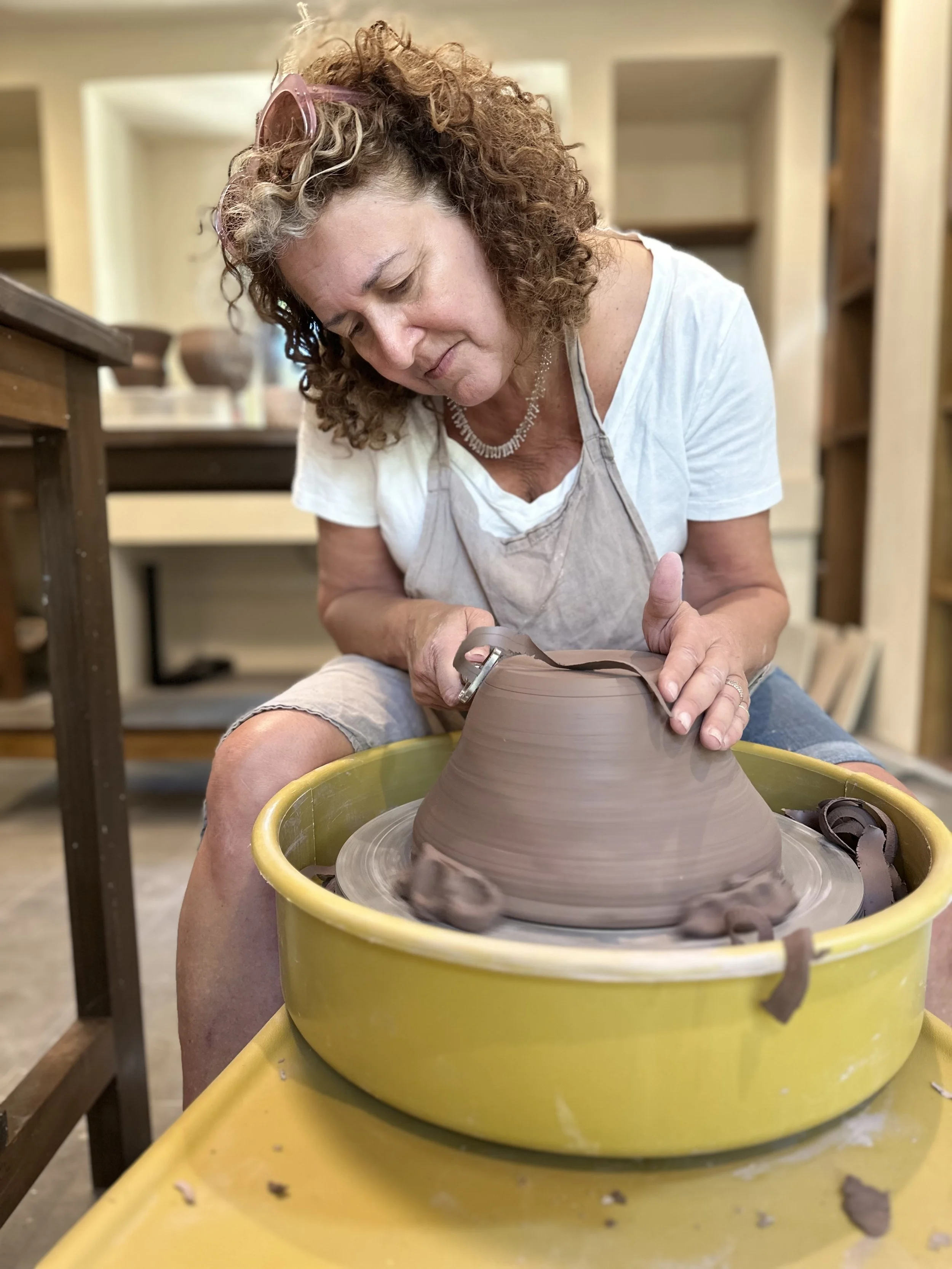
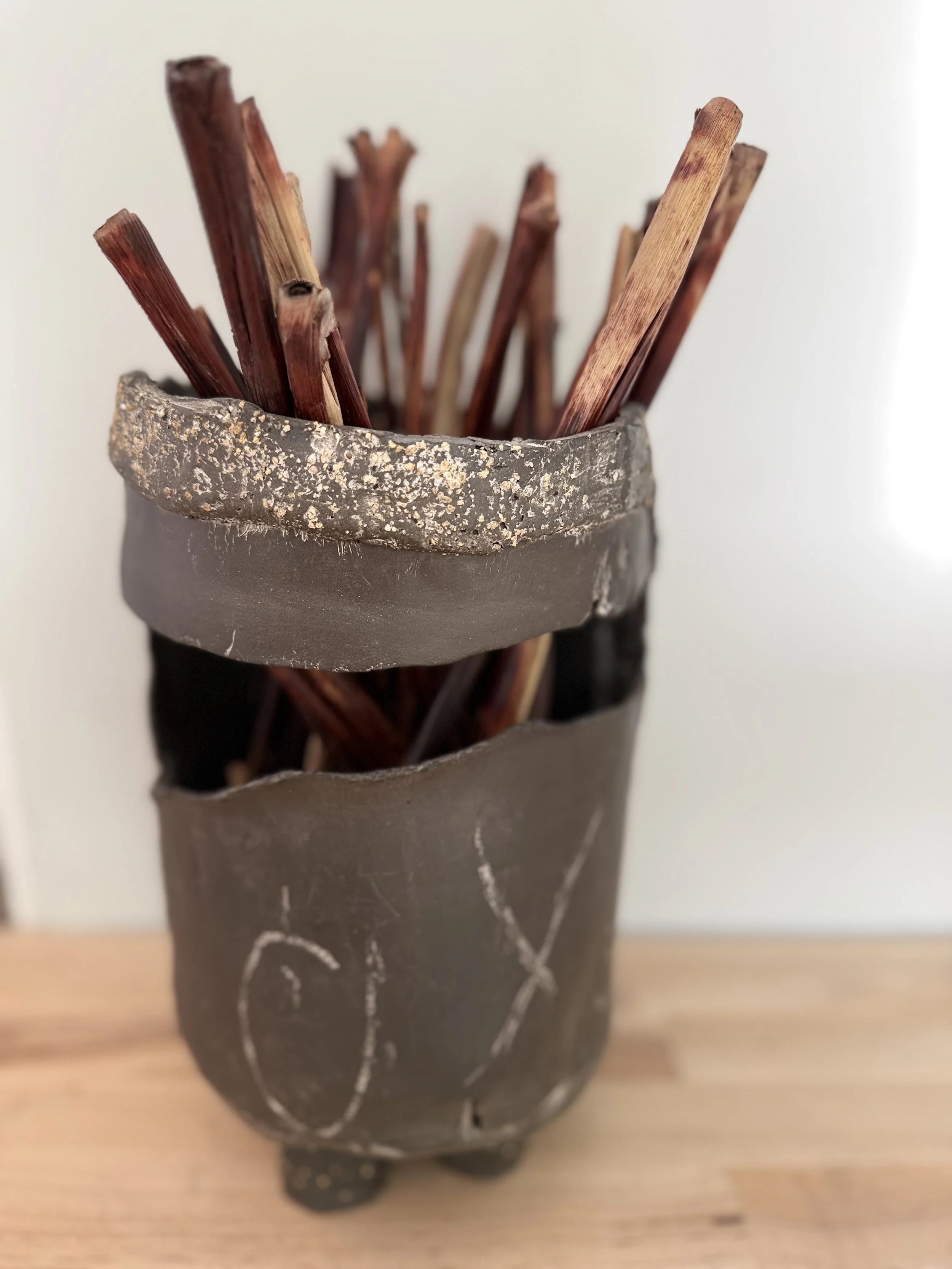
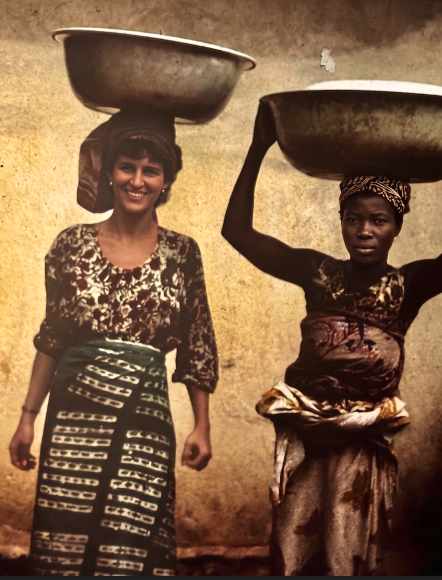
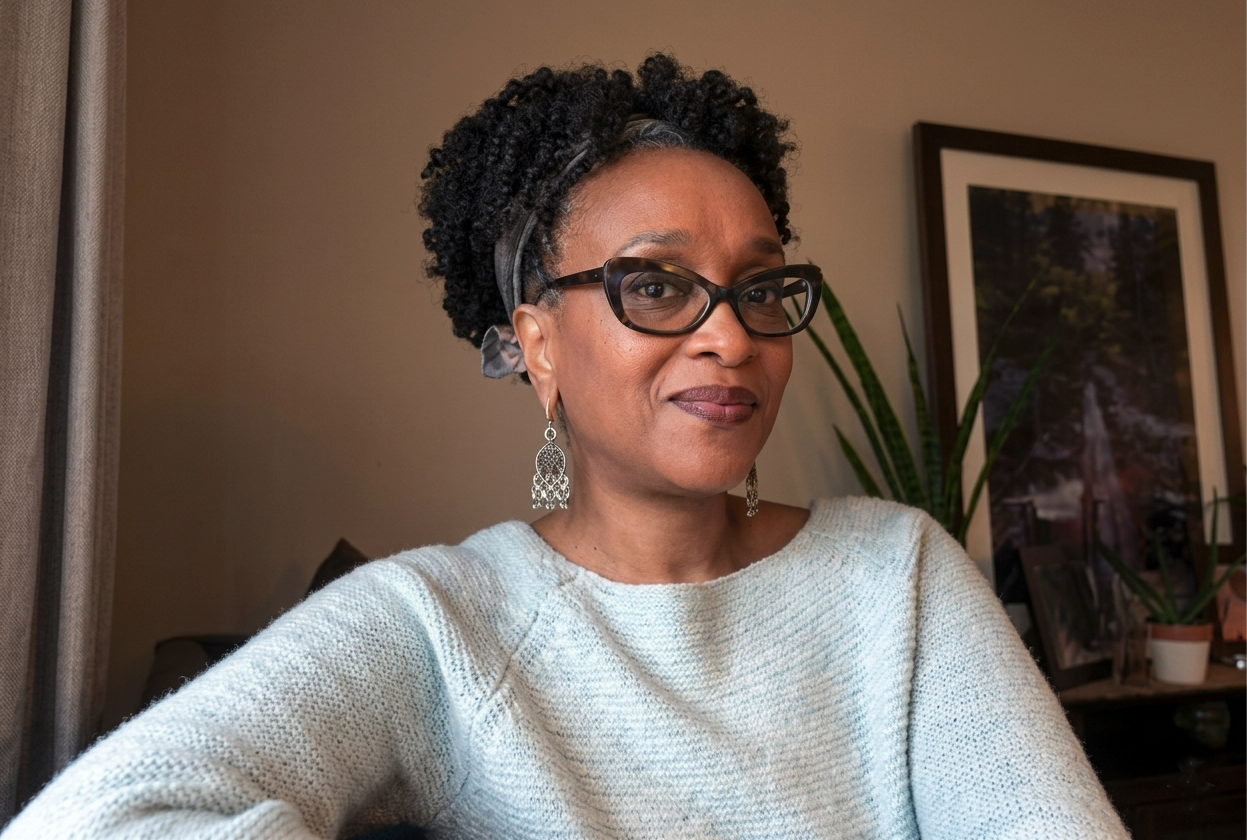
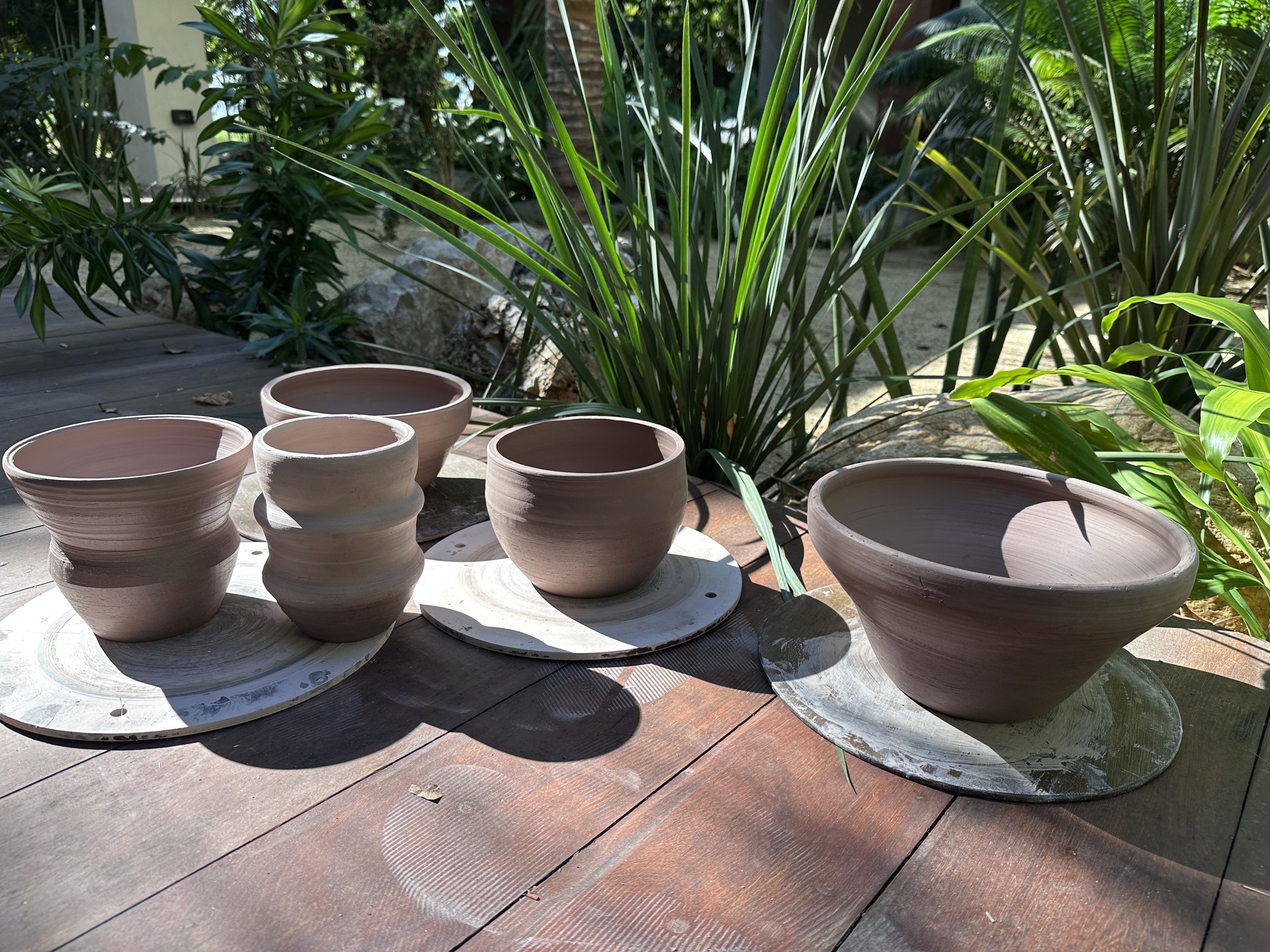
Center right: Susan Siegel with pottery “sister” in Ivory Coast, 1986. Left: contemporary photo of Siegel. Above left and center left: Siegel’s saggar-fired pot with disc and soda-fired vessels with Khella Morrocan toothpick plant.
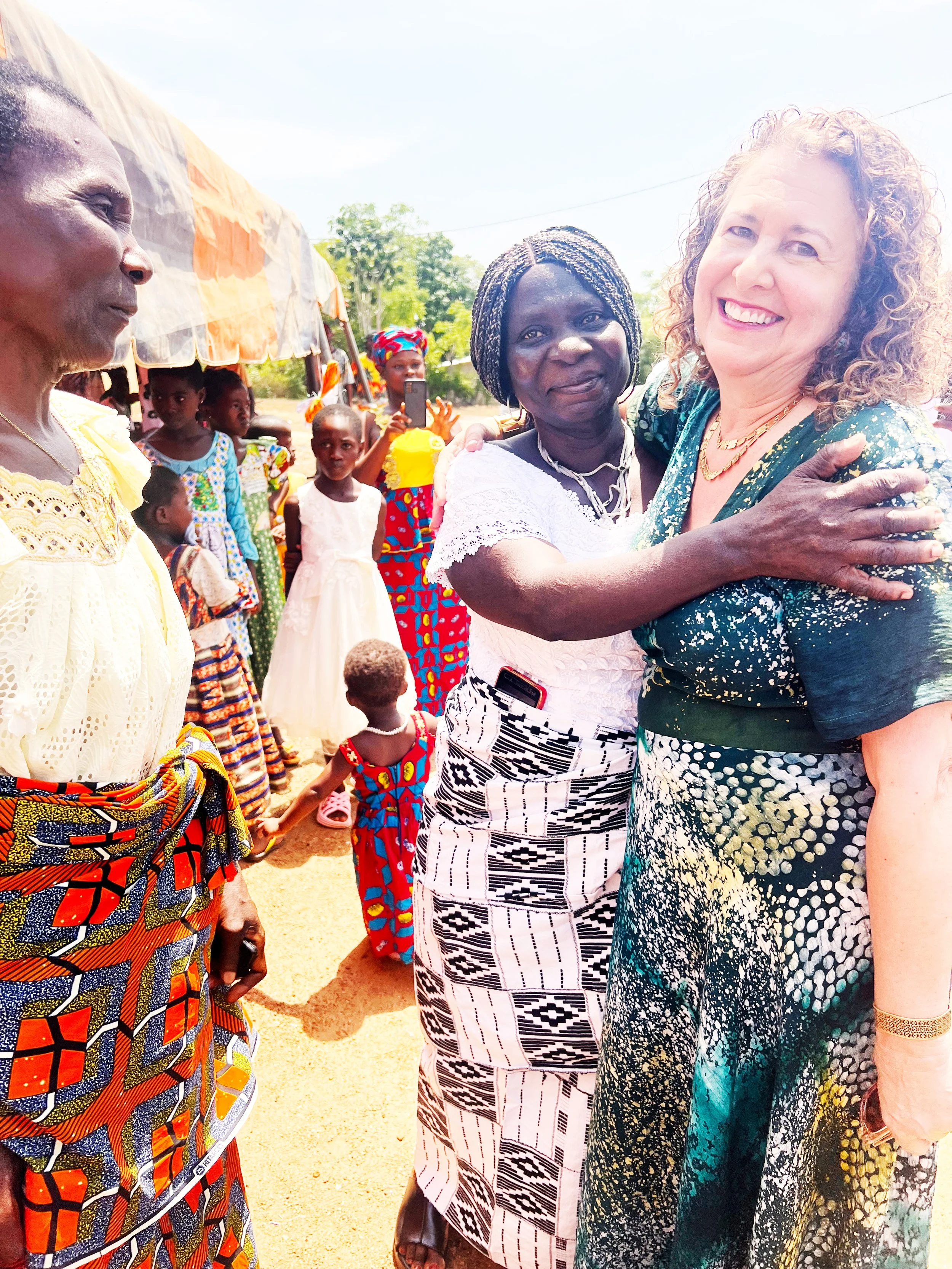
Susan Siegel lived in an Ivory Coast pottery village during several immersive apprenticeships over two years when she was based in Abidjan, the capital. Welcomed into the community and initiated into the craft by the chief of pottery, Siegel communed with women she came to know as sisters. In 2025 when Siegel visited the Ivory Coast pottery village, it was not just a visit but a joyful, tear-filled reunion.
Unless otherwise attributed, photographs and videos in this article are from the collection of, and courtesy of, Susan Siegel and Saundra Thomas.
I think Rachel passed away in a spiritual community that helped usher her into the world of the ancestors in a way that was right for her.
Susan Siegel
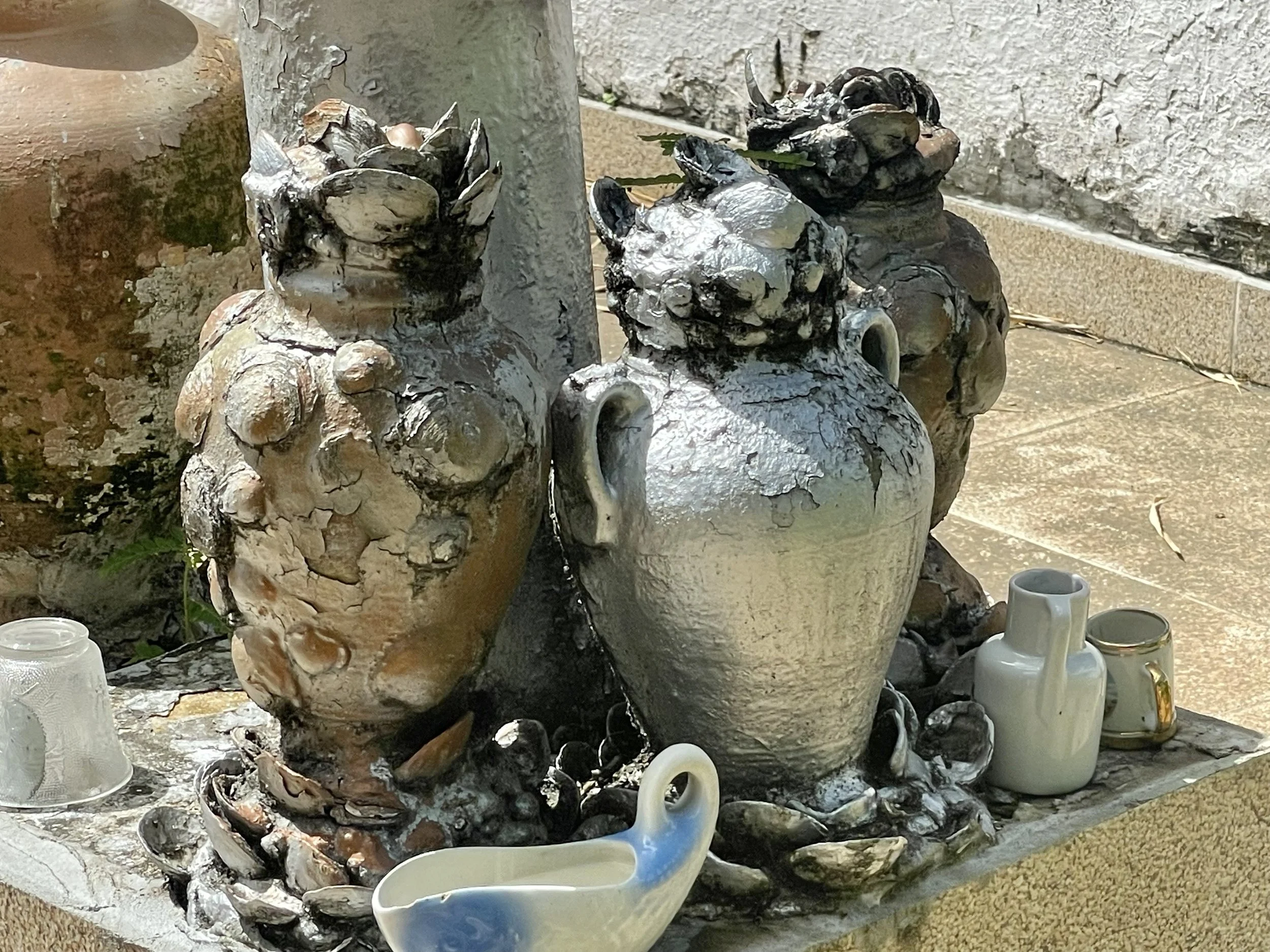
Rachel Harding’s transitional ritual pot was inspired these pots in Harding’s terreiro (sacred Candomblé) community in Bahia) which Susan visited in 2023.
Melding African and indigenous knowledge systems with her own sensibility, Susan creates ceramic/mixed natural media forms as vehicles for transcendent growth and personal reinvention.
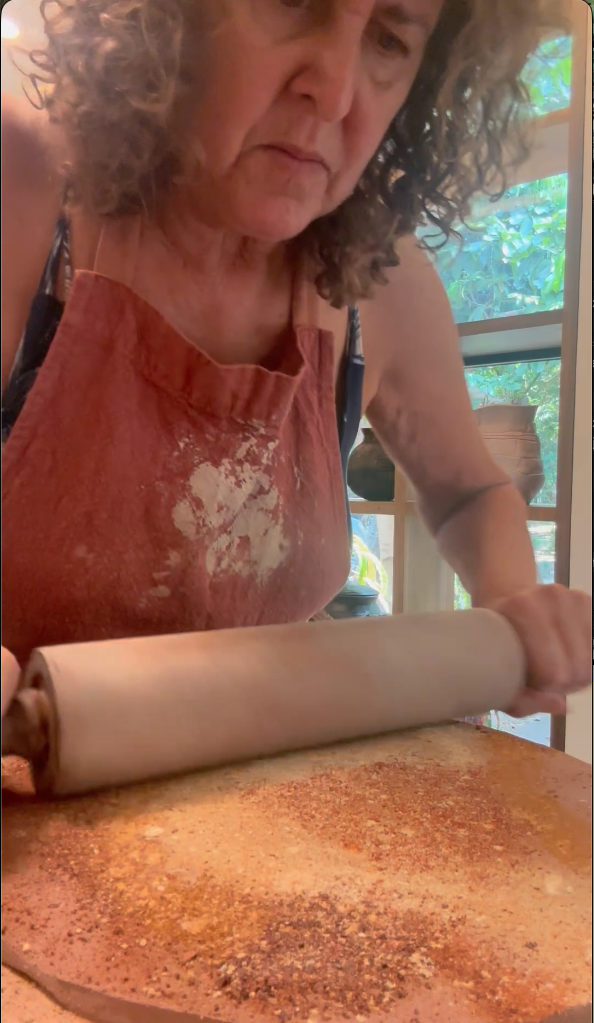
The process is itself ritualistic. As she works, she enters a trance-like state, and she feeds the clay — pressing corn, rice, and beans into its surface as elemental offerings. Seeds carry the archetype of the Divine Mother and the promise of ancestry. Corn mirrors cosmic creation. Rice, used across cultures in ceramics to invoke spiritual community and survival, brings patterns of abundance, fertility, and renewal into the surface of the work.
Under the spell of N’na and the clay
As a way to connect to African artisans, Siegel joined up with a Parsons College program trip bringing American artists and educators to apprentice Ivorian artisans. They visited batik, lost wax casting, indigo dyeing, basketry, weaving and pottery villages.
That’s how Susan found herself in the Baoulé pottery village of Tanou-Sakassou, under the guidance of Eugenie Aya Koua called “N’na, the chief of the pottery collective and the woman she would come to think of as her African mother. The other Americans left after three weeks. Susan stayed in the country for two years, frequently returning to village. “I found myself under the spell of N’na and clay” she says.
“There was something that called out to me, and I listened, and I just knew I needed to stay there. I wanted to become part of the rhythm of daily life. “When we went to the fields, I wanted to dig, and they were like, no, it's too hard for you! At the end of a hard day's work, when she walked through the village, she recounted, “people would call out to me to show my blistered hands, and they would laugh and clap their hands!”
Susan’s first pottery making tools were a stick and a stone. She learned to coil pots the way the Baoulé women had always made them.
These days, Susan has returned to her passion and her connection to Africa. She is fully focusing her life around clay, spending considerable time in her ceramic studios in Belize and at Powerhouse Arts, on the 6th floor of a Brooklyn building with magnificent floor-to-ceiling arched windows that flood the space with natural light.
While she works, she listens to African, Cuban, Brazilian, jazz and hip hop that gets her “in the zone for creation,” she says. (See her jammin’ playlist at the end of this article.) “I envision viewers wearing headphones and listening to the same beats while they take in my pieces.” Sometimes the music gets her into a trancelike state and conjures up the ritual that she visualizes for someone with the pot in their home.
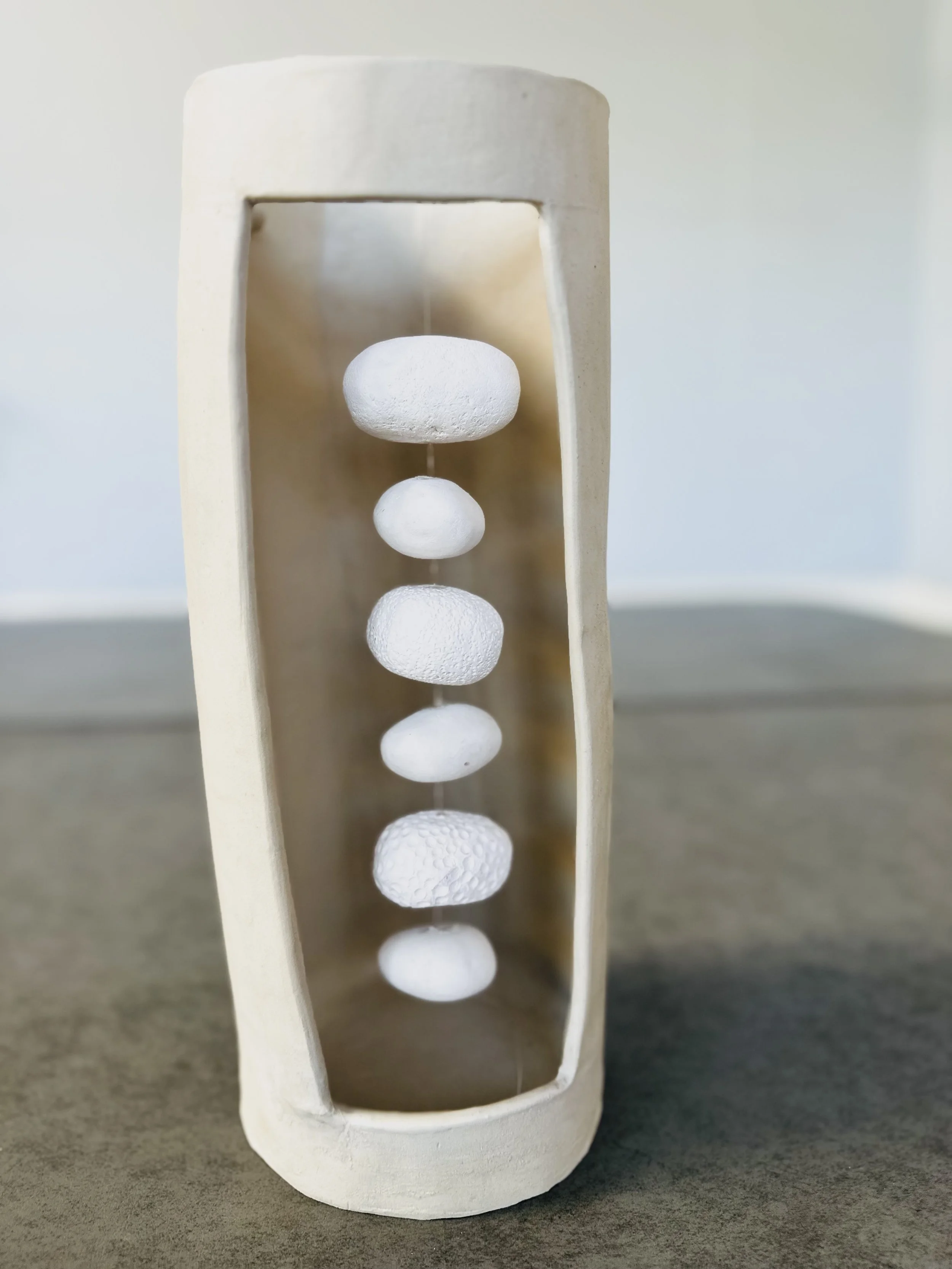
“For example, my piece, Six Wishes (shown above). I envision that the owner has six wishes that they want to actualize. Maybe they project them on to each of those spheres in their mind and use the piece as a vehicle for manifesting those desires, whether personal, spiritual or political. They can return to the piece, perhaps on an altar, and focus on their desires, working toward manifestation.”
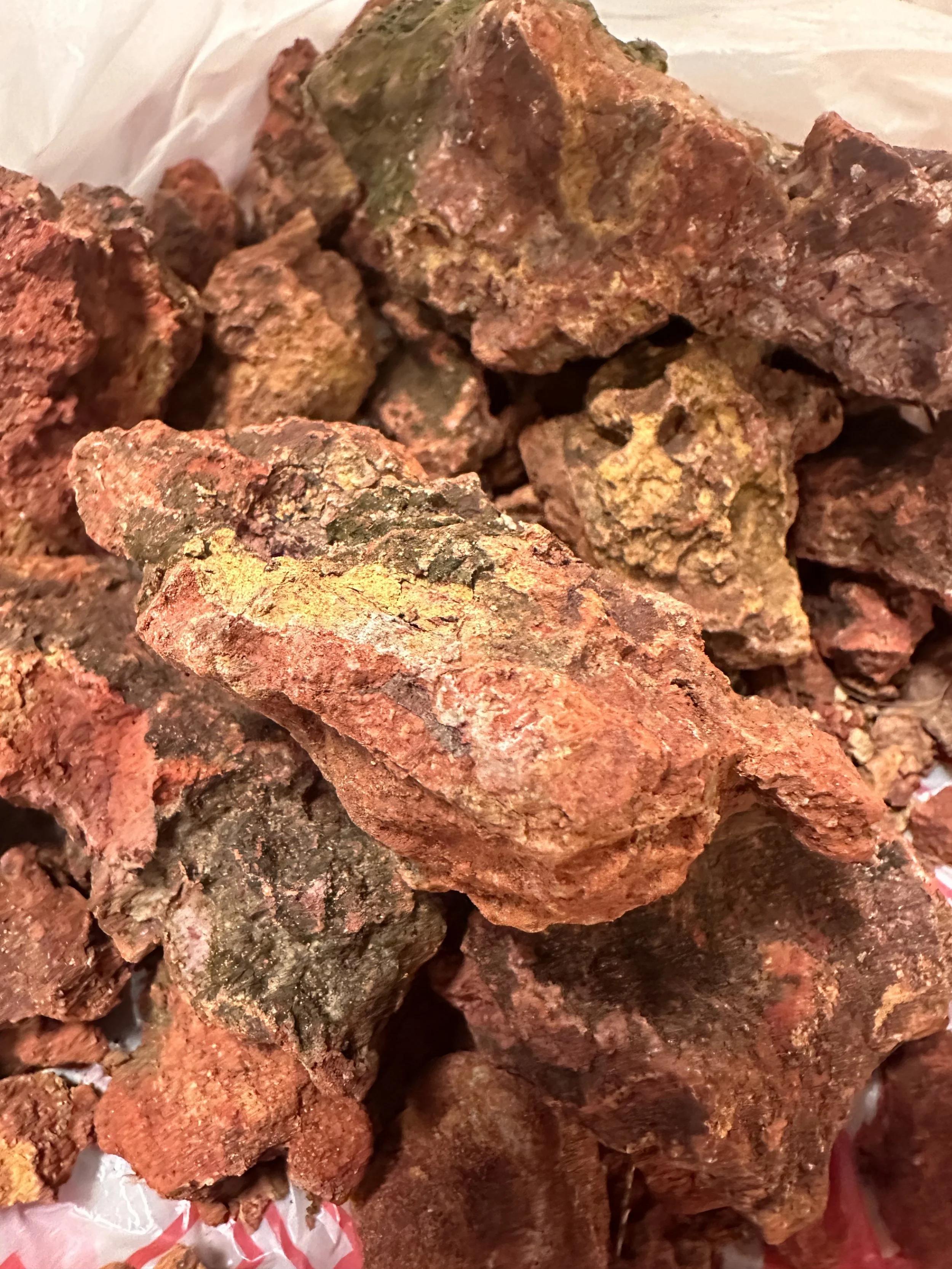
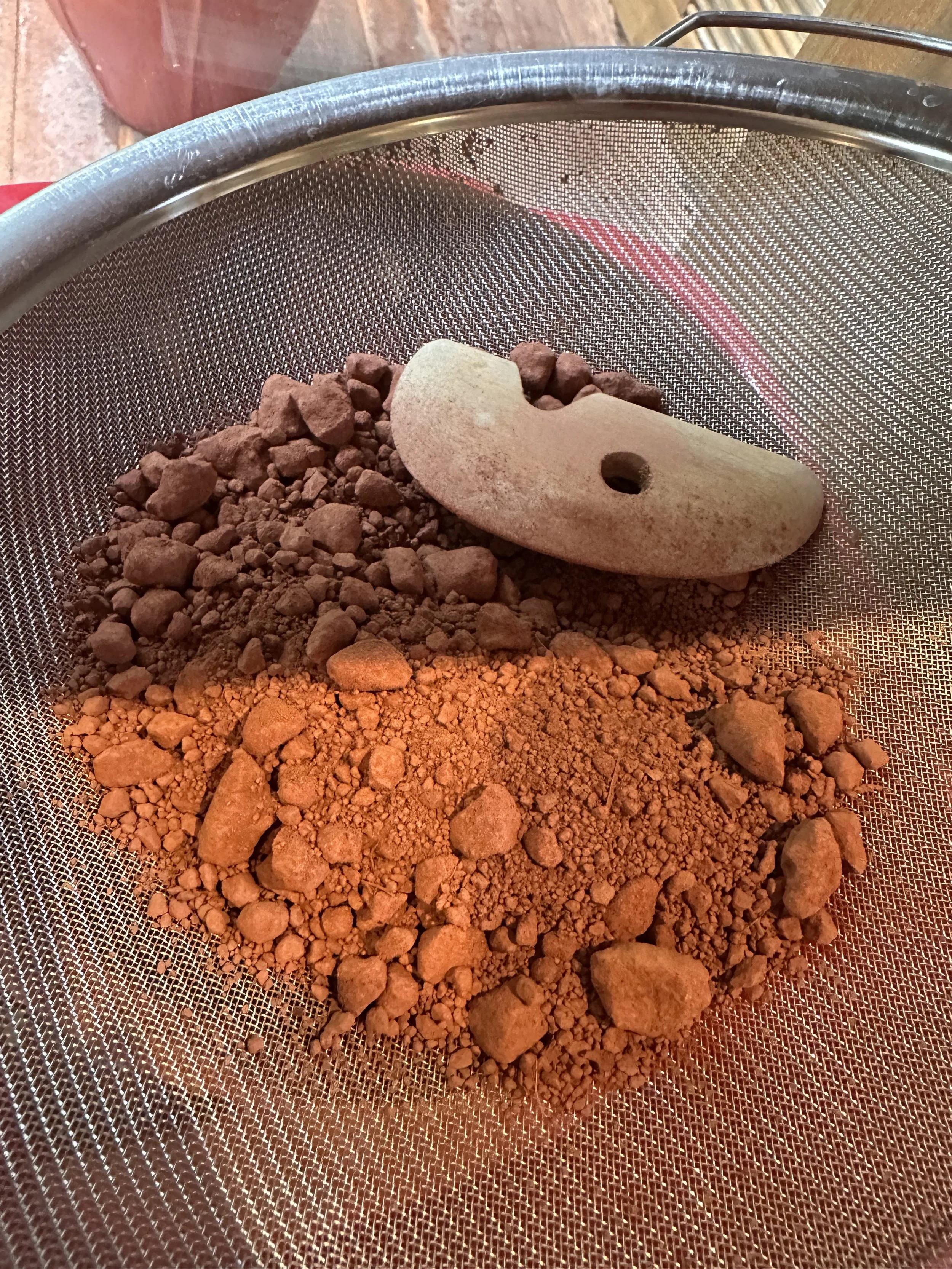
Susan is always on the look out for the natural earth that she prefers over anonymous, commercial clay. But the pleasures of hunting wild clay gives way to the arduous process of turning it into usable malleable clay.
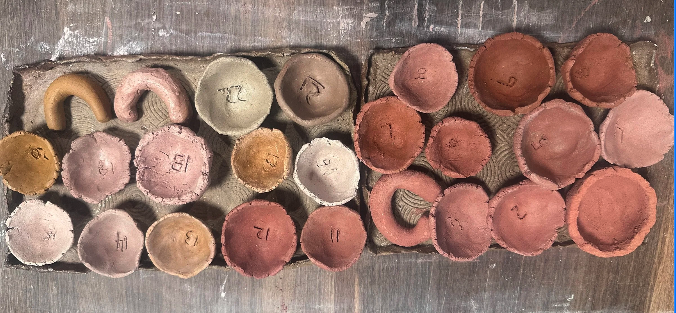
The raw clay must first be pounded, sifted, slated, dried and wedged. Then it undergoes extensive testing. Susan evaluates elasticity, firing survival and natural coloration. She often has to alter the composition by adding elements like feldspar, silica, or commercial clay bodies to ensure elasticity.
Susan rejects shiny glazes in favor of matte, organic, and raw surfaces that lend themselves to the quality of her work. She often uses oxides (black iron oxide, Spanish red oxide, cobalt, chromium) which she views as painting with the raw elements of the earth.
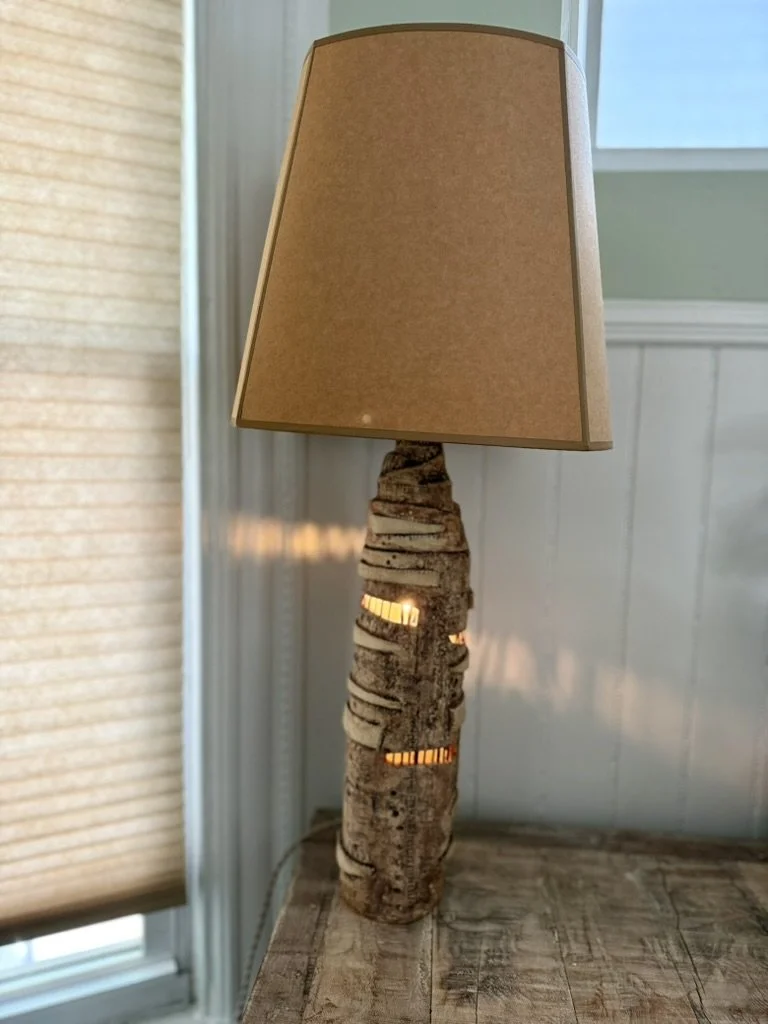
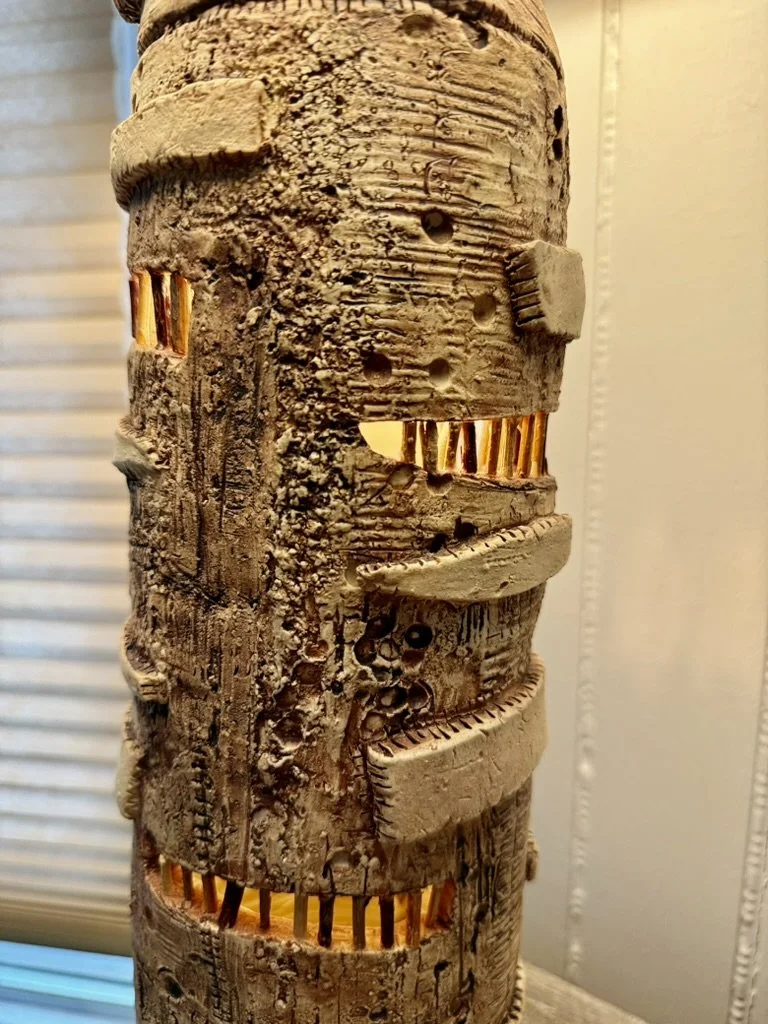
Siegel’s lamp base and detail of base.
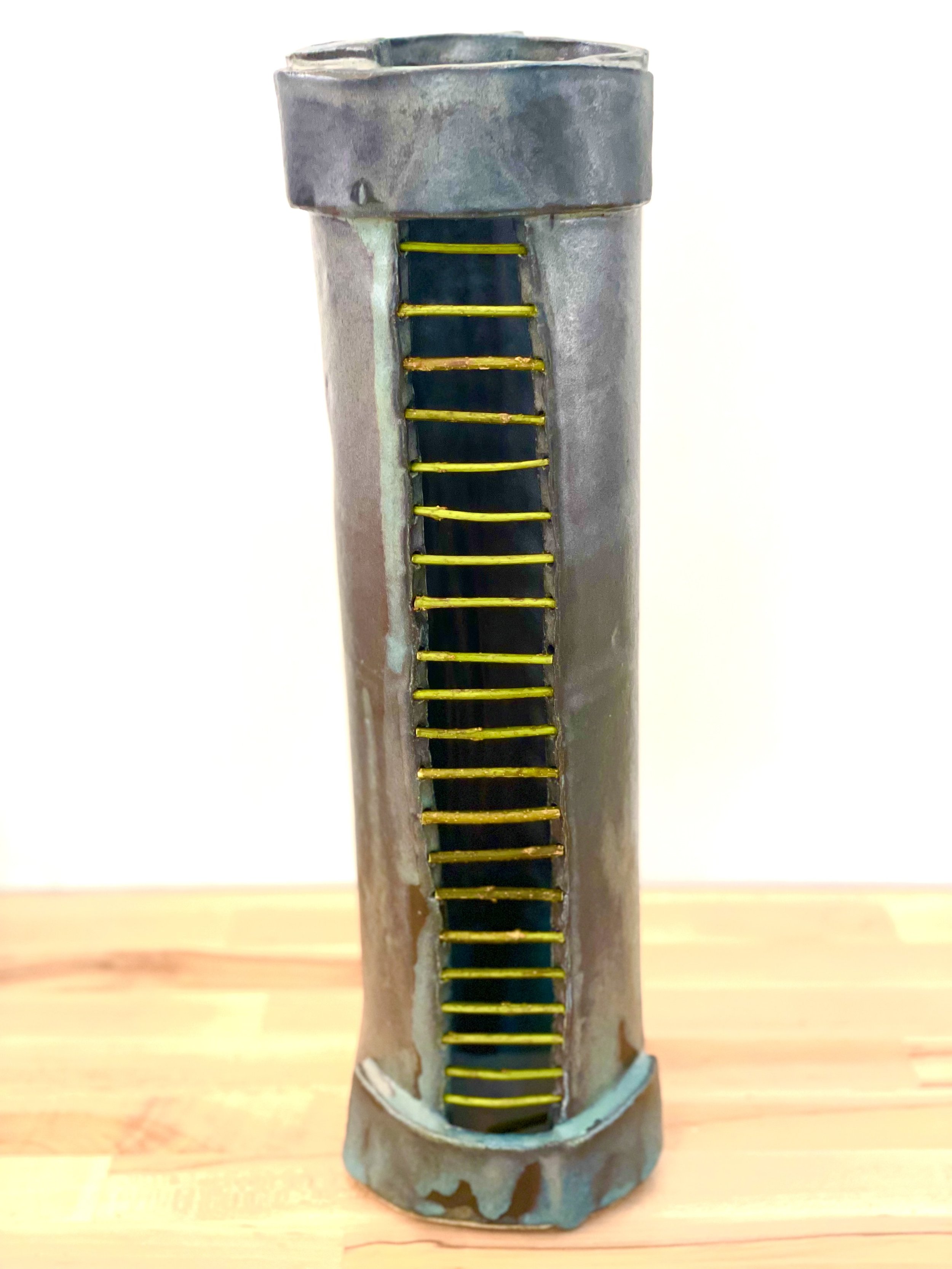
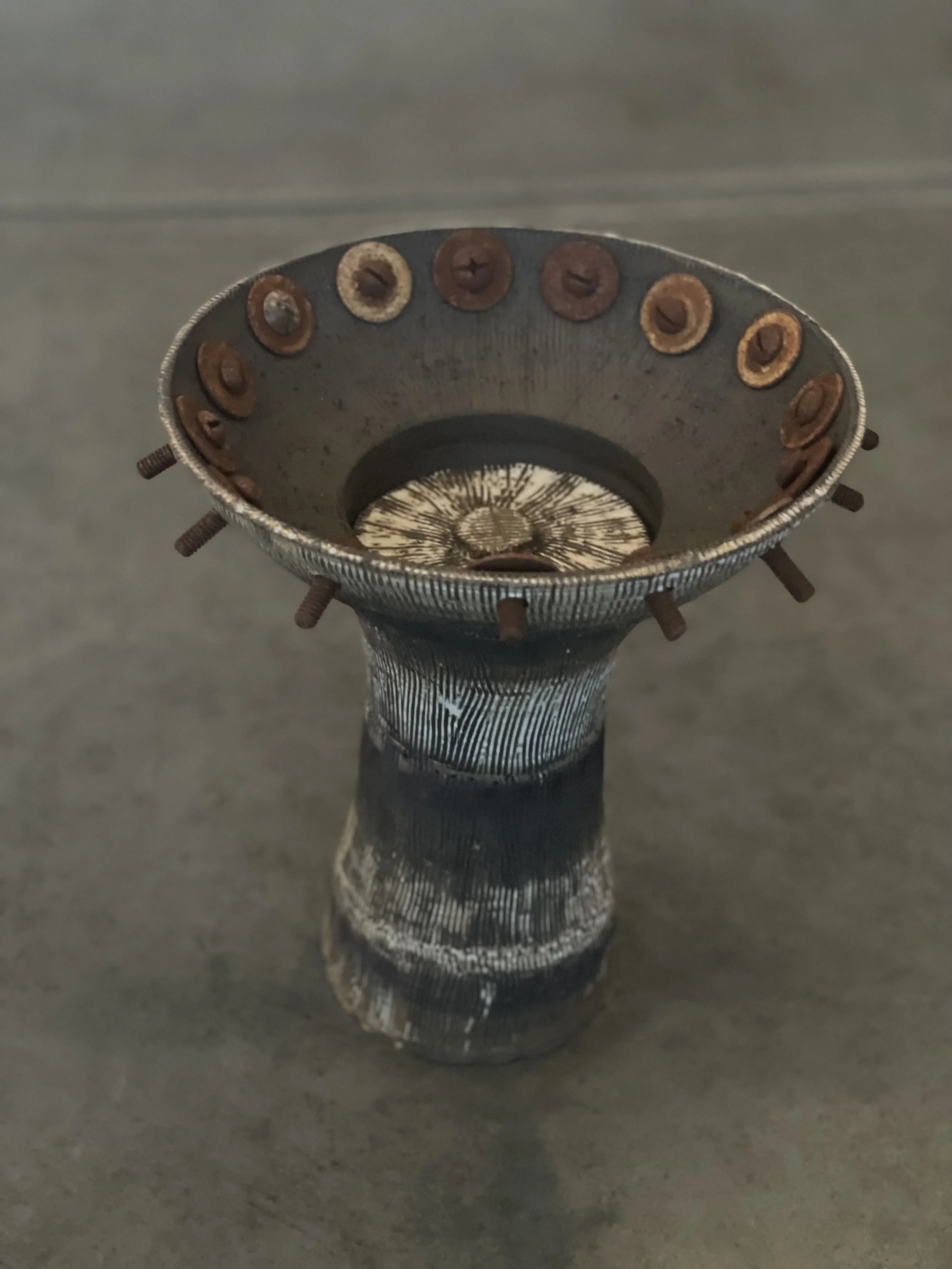
Her weathered, pock-marked surfaces incorporate sticks with windows that allow light.
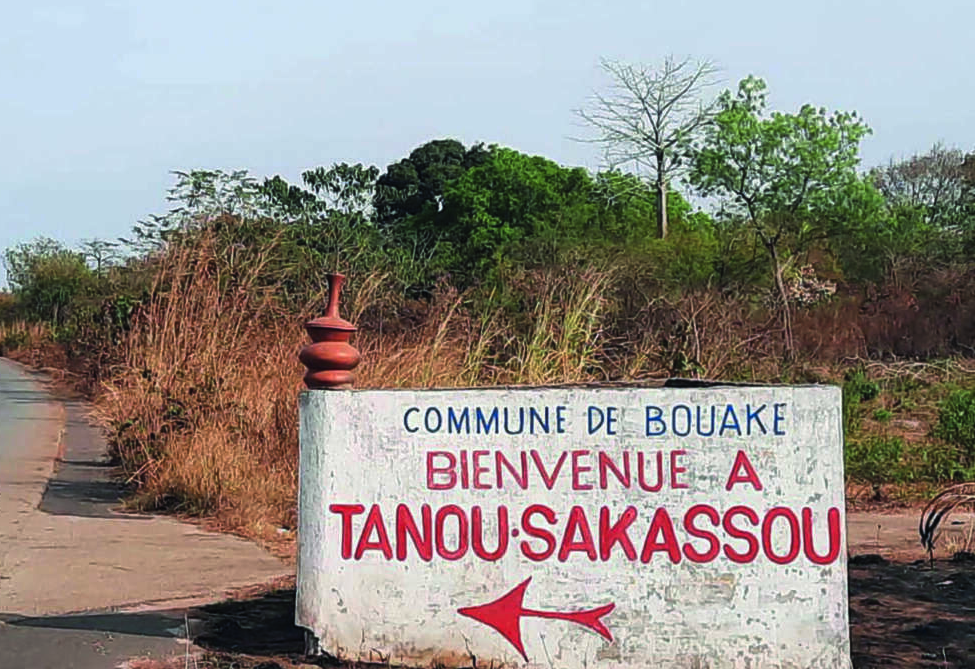
Contemporary Tanou-Sakassou sign. Source: BAAB travel guide.
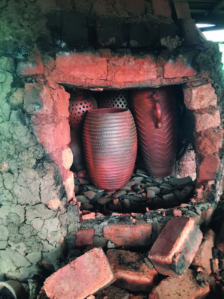
A contemporary view of the clay oven in Tanou-Sakassou.
Source: Baab travel guide.
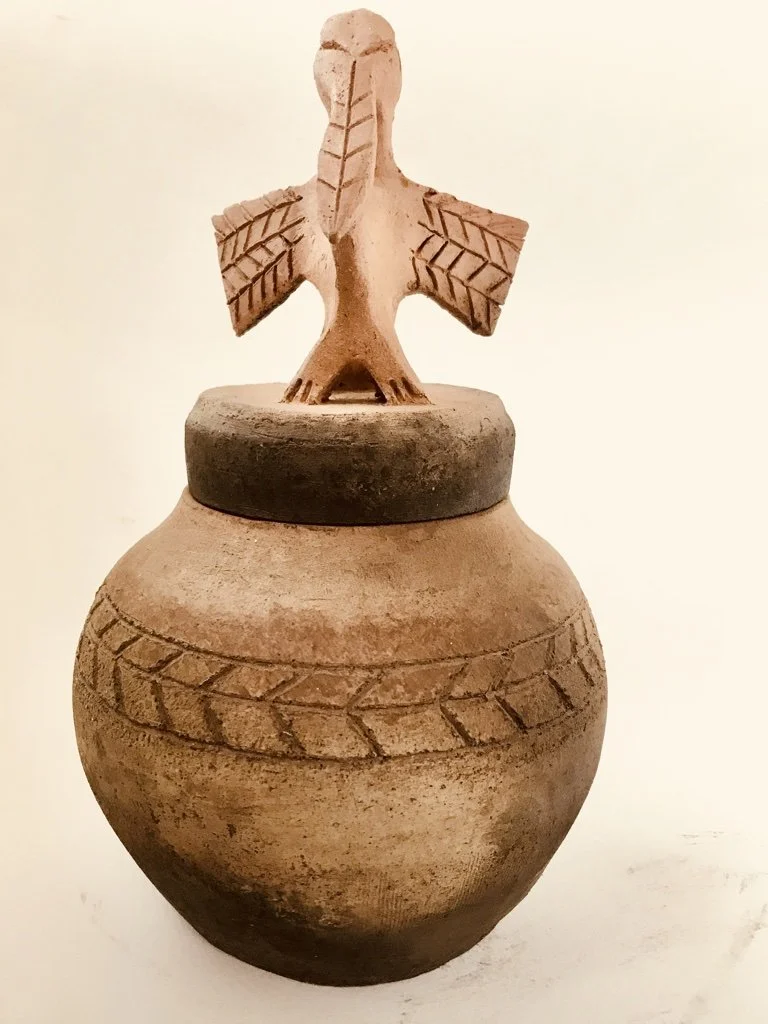
Susan Siegel, Lidded Bird (left) and Six Wishes
Below: wild clay before processing and stages of the process.
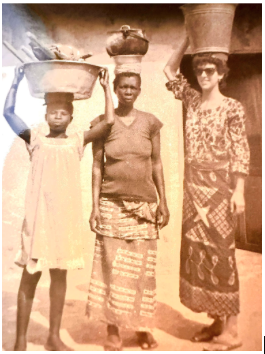
Photos left and right: Susan Siegel bearing pots on her head in Tanou-Sakassou,
Earth remembers
An Earthling responds
This article is dedicated to Rachel Harding
Video of pot about to be consumed by waves.
A poem to Yemanjá’’s sister, Oya, force of wind and adjacent waters, was recited by Rachel Harding on the Visions and Voices podcast. When the recording of the poem was played during Harding’s transition ritual in Belize, Rachel’s voice reached out to Oya and resounded ocean side as waves lapped towards her transitional vessel. Phrases from the poem such as “Wind, covering the newly dead” and “Guide my fugitive words, water-grown audacity into air” were especially prescient and poignant within this context.
Listen to the complete poem followed by a discussion that includes these observations:
We must recognize that we are related to each other and we need to live like we are related. That is how we create a truly humane society.
When our parents or any of our elders who loved us pass on, they don’t leave us. They just find other ways to love us.
— Rachel E. Harding.
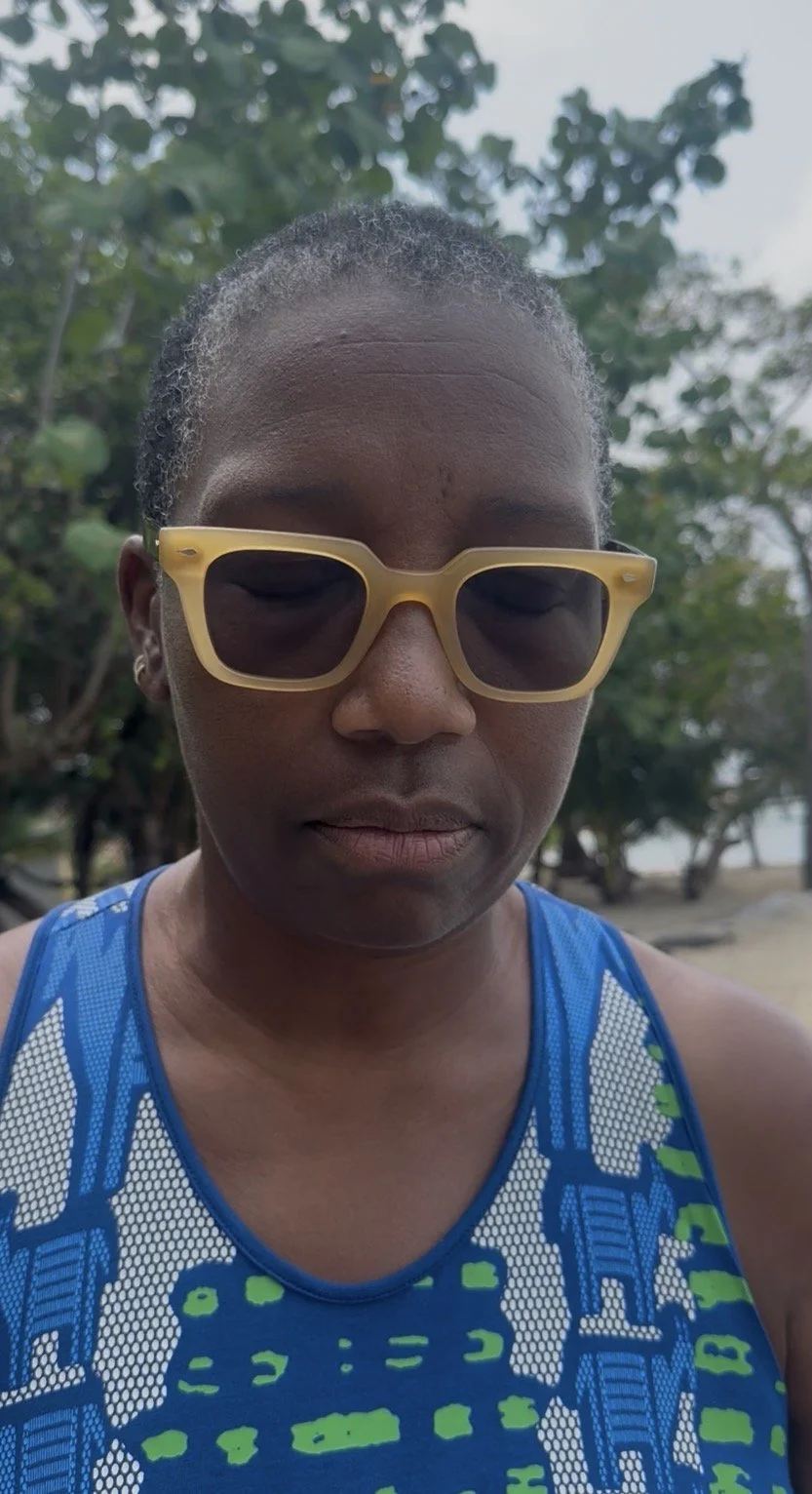
During the transition ritual, Saundra Thomas, a poet and non-fiction writer, spoke directly to Rachel Harding, wishing her “as gentle a transition as you are in spirit.”
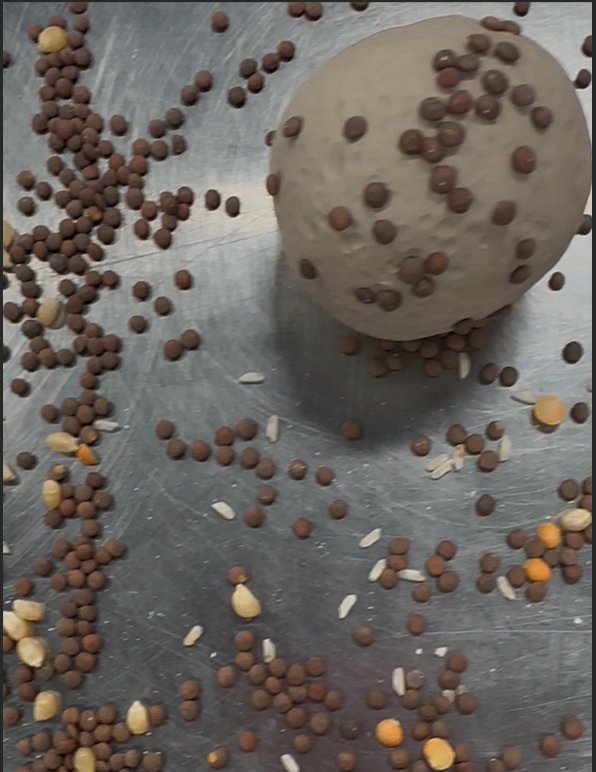
Rice, corn and lentils for pressing into clay or “feeding the clay,” as Susan says.
The men dug heavy clay rocks from ditches in the surrounding fields and loaded them into metal bowls. The women, including Susan, lifted the bowls onto their heads and walked them back into the village in regal, straight-backed, single-file. Children pounded the clay into fine red sand with pestles. The women added water, wedged the clay into balls and crafted the vessels.
The villagers had built massive clay ovens the size of a large yurt to fire the work. Lacking electricity or fossil fuels, they meticulously layered the clay pots with collected firewood. The process required sleeping around the kiln all night to keep the fires stoking at maximum heat, ensuring the clay reached temperatures high enough to permanently transform mud into durable pottery.
Susan lived in a village courtyard with three generations of family and was surrounded by clay in the most literal sense. The cooking hearths were sculpted from it. And each day N’na and her daughters repainted the hearth surfaces with a fresh coat clay. “Imagine cleaning with mud!” Siegel exclaims.
The family cooked in the clay pots, drank from the cups, and ate from a communal plate shaped by the hands of the women.
The villagers’ spirituality was also malleable. “There was a little church in the village where they had the drumming, clapping and singing about Jesus.” When Susan inquired about Christianity mixed in with the traditional religion, they explained, “Jesus is just another good God to pray to. You never know. He has brought us some good things.”
Susan’s happiest days ended bathing under open air with a warm bucket of water and a sponge.
Founds center for disabled artisans at age 26
Meanwhile, Susan was also commuting back and forth between the village and Abidjan to organize the cooperative of artisans with physical disabilities. “They joined me at many meetings and presentations with funders. We finally raised the capital for the Artisan Center, and with the help of an architect friend, were able to develop the plans to construct a building and realize a dream.”
After two years, Siegel returned home for graduate study at New York University’s Gallatin Division, a division for self-directed students who design their own course of study. Her Masters degree, in ethnographic film and global education, featured a thesis paper entitled “How Artistic Expression is Integrated into the Daily Lives of the Baoulé People of Ivory Coast West Africa.” An accompanying exhibition featured her batiks, photographs, and ceramics, along with her documentary film titled Mwala CnBa: “I left for a while but now I’m back.”
Susan Siegel, stick ladder and ritual pots with sticks.
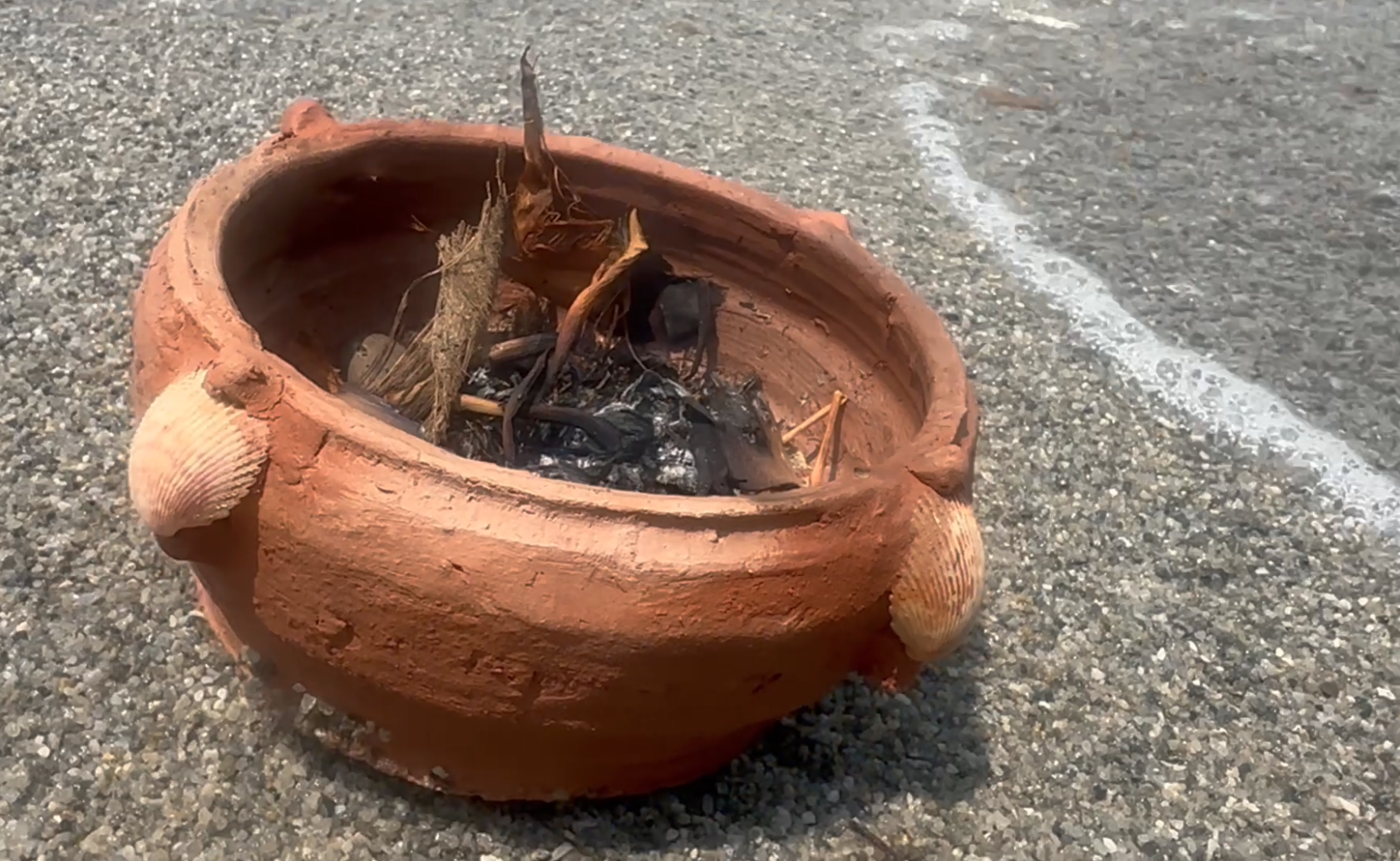
In April 2026, Susan Siegel and her wife Saundra Thomas were at their Belize home when they heard that their friend Rachel Harding had gone into hospice. As a ceramic artist who creates vessels for ceremonial use, Susan created a clay pot to honor Rachel’s life and to help prepare for her transition. Using red clay dug up from Belizean earth, she hand-molded a small unfired ceremonial bowl embedded with seashells inspired by her visit to Rachel’s terreiro (sacred Candomblé community in Bahia) where monumental ceramic vessels stand in the courtyard, adorned with specific spiritual symbology (including seashell motifs honoring the sea deity (Yemanjá) and utilized for sacred offerings of rice, water and corn.
Saundra wrote a poem for Rachel which went into the vessel. They walked to the ocean to the sound of drumming and chanting. Then listened to Rachel on a 2025 Voices and Visions podcast. “We wanted her to be there with us, to hear her voice,” Susan said.
After lighting the combustible contents of the vessel on fire, they placed it on the shoreline and sat with the smoke and flames at the water's edge, watching the water come over it and eventually taking it back, symbolizing Rachel's spirit returning to its source.
Sticks began to speak to Susan when she was 17 years old and became a key element in her vessels.
Susan told me that her mystical connection to the earth began with sticks in 1977 when she was 17 and went to University of Arizona from her hometown of Pomona, a suburb of New York City.
In Arizona, at the Grand Canyon, under the influence of psilocybin mushrooms, Susan found herself in conversation with three particular sticks lying on the canyon floor. The first carried the hard edge geometry of a businessman with skin patterned like a Mondrian painting. The second, the mountain woman, was etched with flowing lines. The third had deep fissures like a troubled child.
The natural grandeur and sacred feeling of that canyon was very powerful to young Susan. Stretching across four states, the Grand Canyon National Park is the ancestral homeland for 11 ethnicities including the Hopi, Navajo and Zuni. A shaman later told her that in a past life, she had been a leader on the Trail of Tears. Maybe that former self found refuge with indigenous communities beyond the trail.
“I kept those sticks (from the canyon) in a box for many years,” she says.
Susan Siegel majored in art and special education in college and taught hearing impaired, emotionally disturbed, and learning-disabled children in New York City. The work was very rewarding because the benefits for the children were directly observable.
This was the work that serendipitously changed Siegel’s life. At the age of 25, she traveled with a friend through East and West Africa. While in Abidjan, she encountered men, with polio, dragging themselves through the street on muscled arms and withered legs. Their eyes and smiles were penetrating. She returned to New York unable to stop thinking about them.
Utilizing her degree in art and special education, she wrote her very first grant application. She proposed to establish an artisan center for the physically handicapped in Ivory Coast, where they could learn a marketable skill and earn a living. The following summer in 1986, she went back to Abidjan, knocking on the doors of the World Bank, the African American Bank, and various embassies to seek funding for her project.
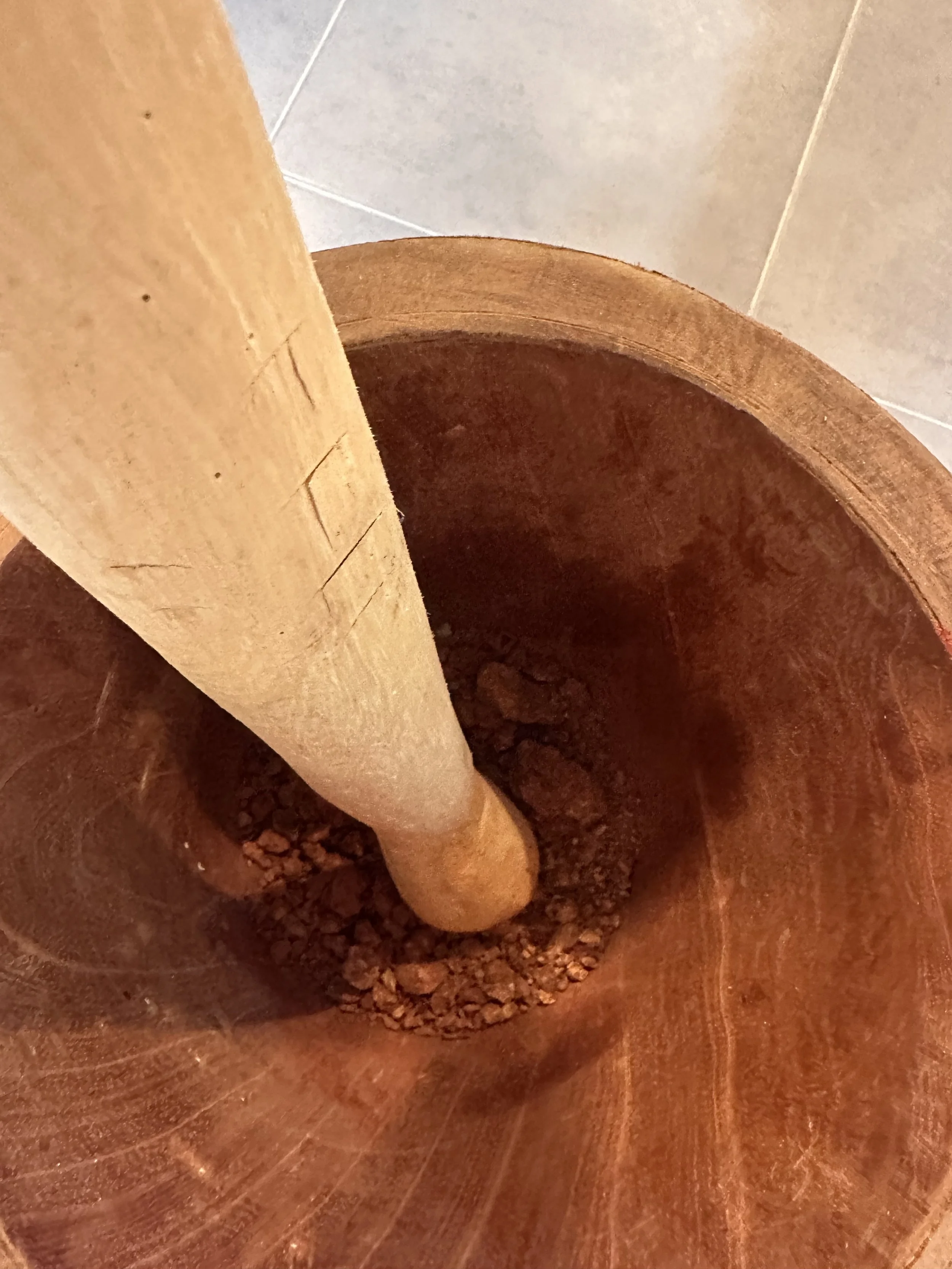
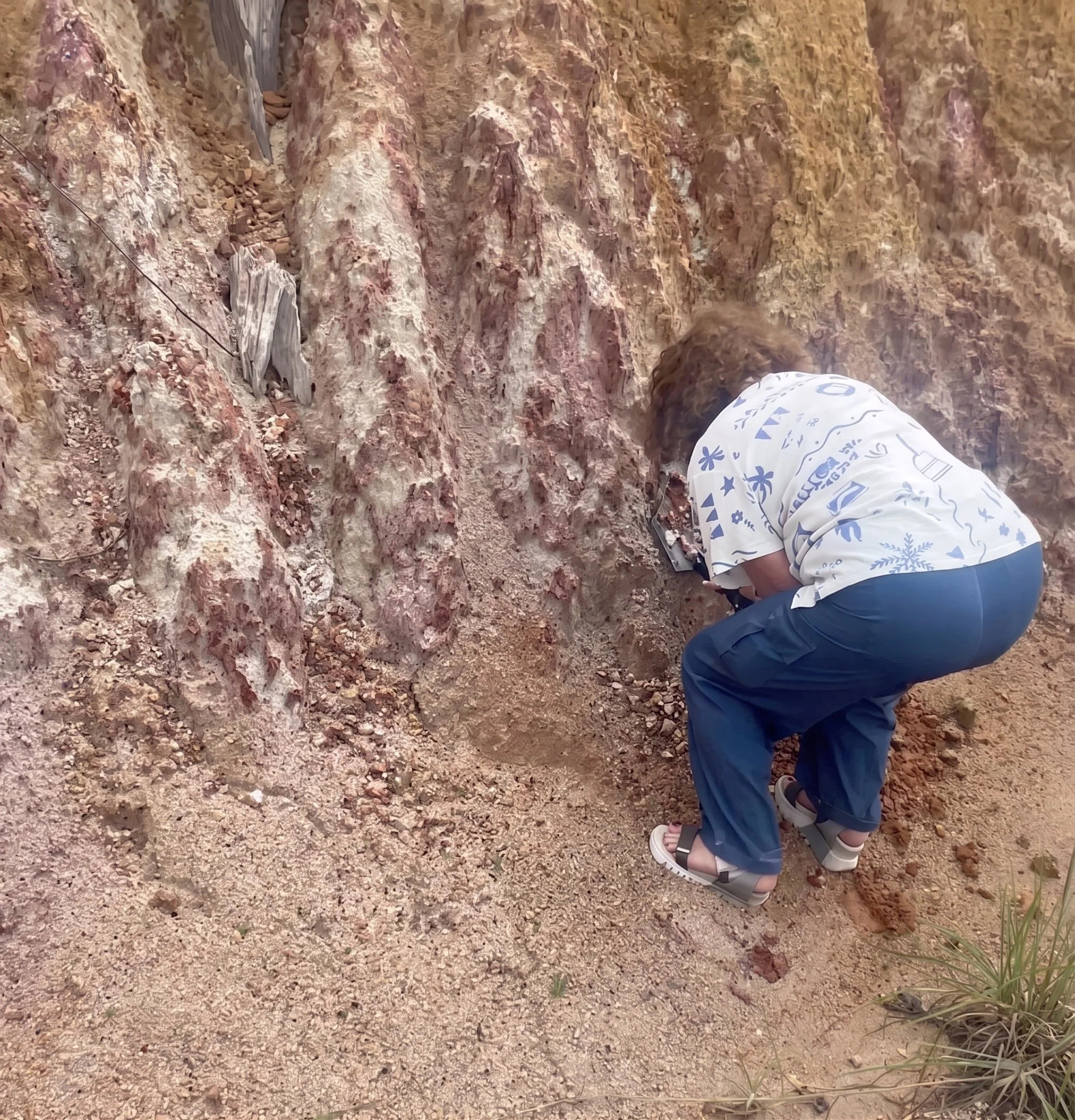
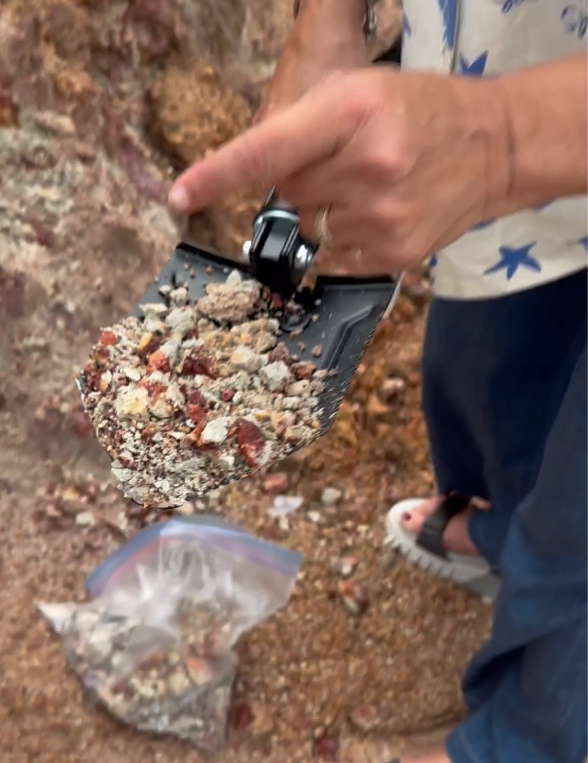
Susan digging up wild clay in Belize.
Susan Siegel’s ritual bowl for Rachel Harding’s peaceful transition.
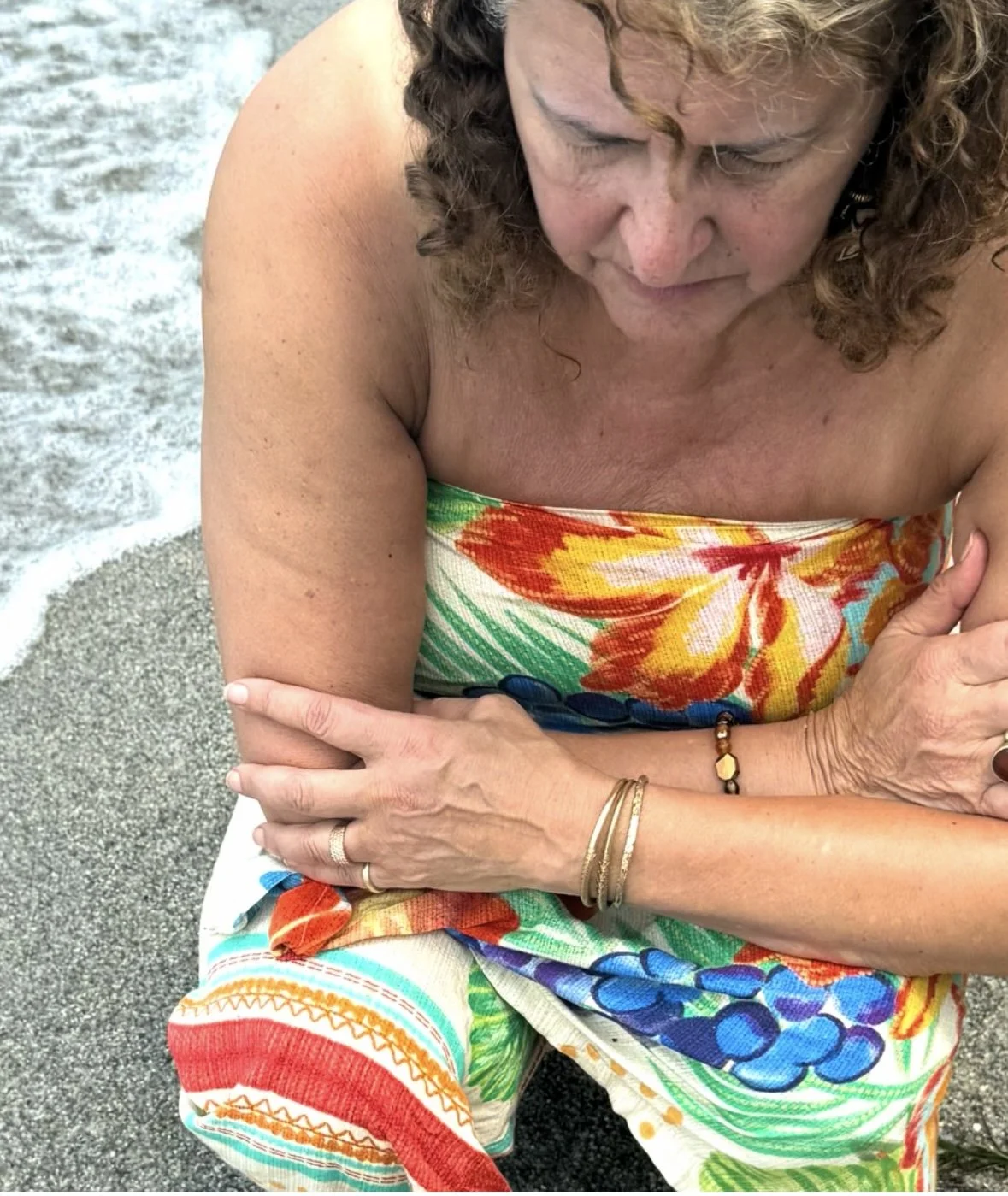
Susan Siegel’s pose during the transition ritual for Rachel Harding.
Earth mother in search of wild clay. High-achieving innovator and manager in the non-profit world. Same person.
Susan Siegel is such a “down-to-earth” person, that unless you know her well, it’s hard to fathom the depth of her achievement and breadth of her worldliness. Open-minded, bubbly, easily approachable, no facades, she is keenly interested in you whoever you are. That outgoing warmth is matched by a deep, grounded spirit, one that is quite literal when she’s on her knees foraging for wild clay. She’s Brooklyn-based ceramicist who keeps a foldable shovel inside her bag.
The “depth of her achievement” stems from being a dynamo who can step up get the job done. Beginning in 1986 when she was 26, she has founded and directed organizations to help people in need and support communities.
Yet no matter how broad her commitments, her hands are never far from the earth.
On the drive from the airport to her vacation home in Hopkins, Belize, Susan stops the car, gets out, and digs up wild clay.
Her work is elemental in the most literal sense. The elements of earth, water, wood, fire and air comprise the materiality of her spirituality.
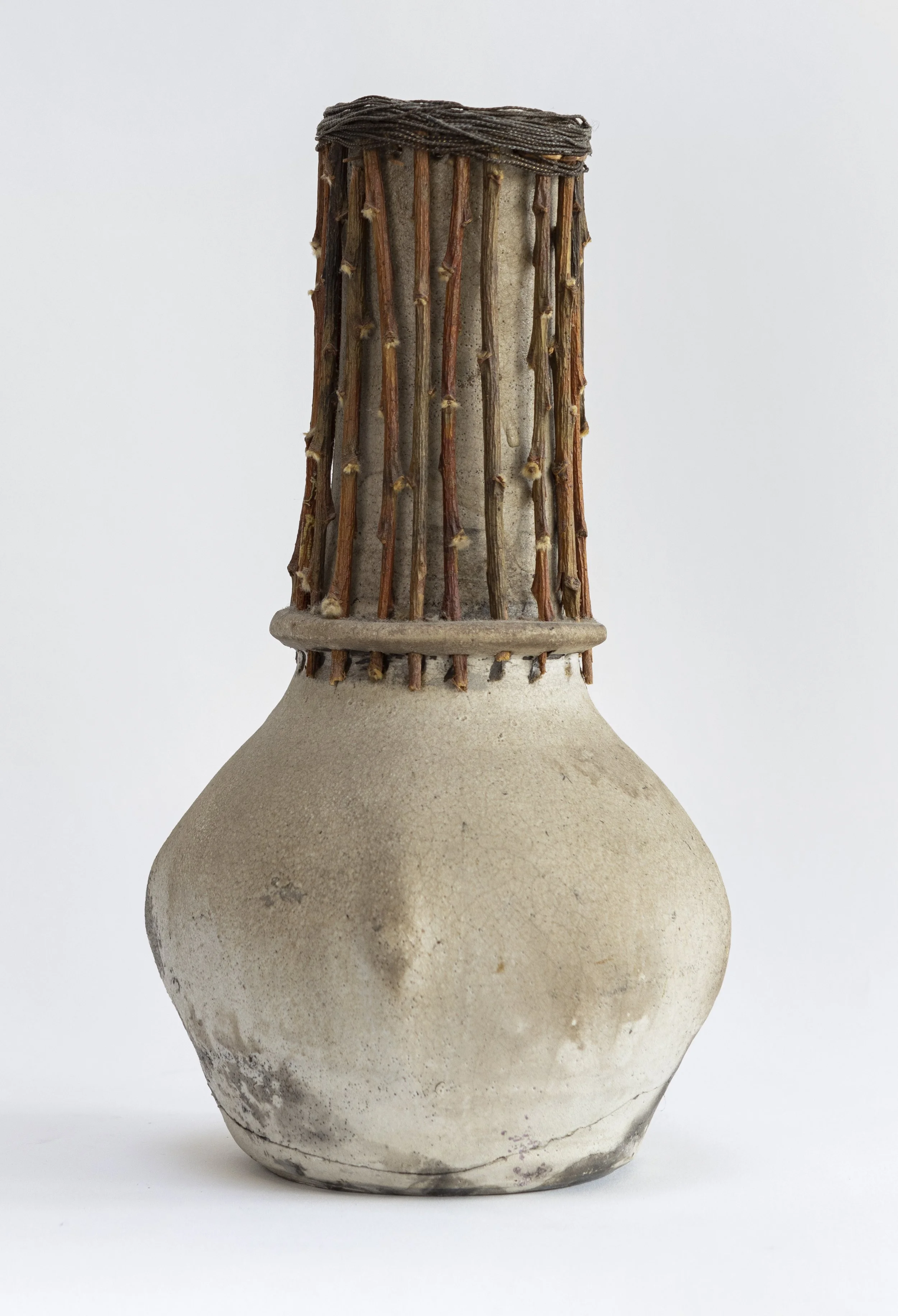
Eugenie Aya Koua (N'na) , village mother and master potter of Tanousakassou, Ivory Coast
Rachel Elizabeth Harding (1962-2026) was a beloved colleague and sister figure to Marcia and Daniel Minter, co-founders of the Indigo Arts Alliance in Portland Maine. Susan Siegel and her wife Saundra Thomas had come to know and admire Rachel through their affiliation with the Alliance as members of Indigo’s board of directors.
Rachel Harding, PhD, was a poet, historian and scholar of African-Atlantic diasporic religions. She was associate professor emerita of indigenous spiritual traditions at the University of Colorado Denver and her research centered on how enslaved Africans preserved their humanity, personal agency and spiritual freedom through ritual and community. (Rachel Harding photo courtesy University of Colorado, Denver.)
The very “earthiness” of Susan’s craft charges it with elemental meaning. From that very ground of being, it calls out for individual or communal engagement.
Her first actually ritualized piece occurred from the dissolution of a romance.
After Susan returned to New York from the Ivory Coast she created a cylindrical form with a funnel opening, punched holes around the top of the funnel, carved a snake-like window on the body, and put the cut out clay away.
A little later, she went through a painful breakup with a guy who kept his cacti at her apartment.
“There was the pot sitting on my windowsill, waiting for its purpose. As if calling to me, I took it down, stuffed all the letters from my lover into that vessel, and sat on the floor with it between my legs. I lit them all on fire, crying out the flames with my tears,” she recalls.
“Then I planted his cactus into the ashes and soil and did not water it for many weeks. When the cactus died, I wove the top closed with natural fibers and replaced the cut-out, puzzle pieces back on to the cylinder.” When she told friends about the experience, they requested ritual pots to help purge or manifest something in their lives.
Susan Siegel went on to found the Global Action Project, a nonprofit that trained young people to make films on social issues and use them as tools for community dialogue and action. GAP produced more than forty films; and although she moved on after 12 years, the organization lasted 30 years.
Discovering that she was good at filling niches that needed attention and adding value to community, Siegel went on to launch a farmer’s market and a community garden and became executive director of Flatbush Development Corporation in her Ditmas Park Brooklyn neighborhood.
Owning her identity as a “start-up entrepreneur,” she thrived on “the chase” and on building a strong foundation for new ventures. She has, among other things, raised funds for a school library serving young men of color at George Jackson Academy and founded Brooklyn ARTery, a shop for hand-made crafts and arts space near her home in Ditmas Park and Governor’s Island in NYC.
Click on boxes to enlarge images and view full details.
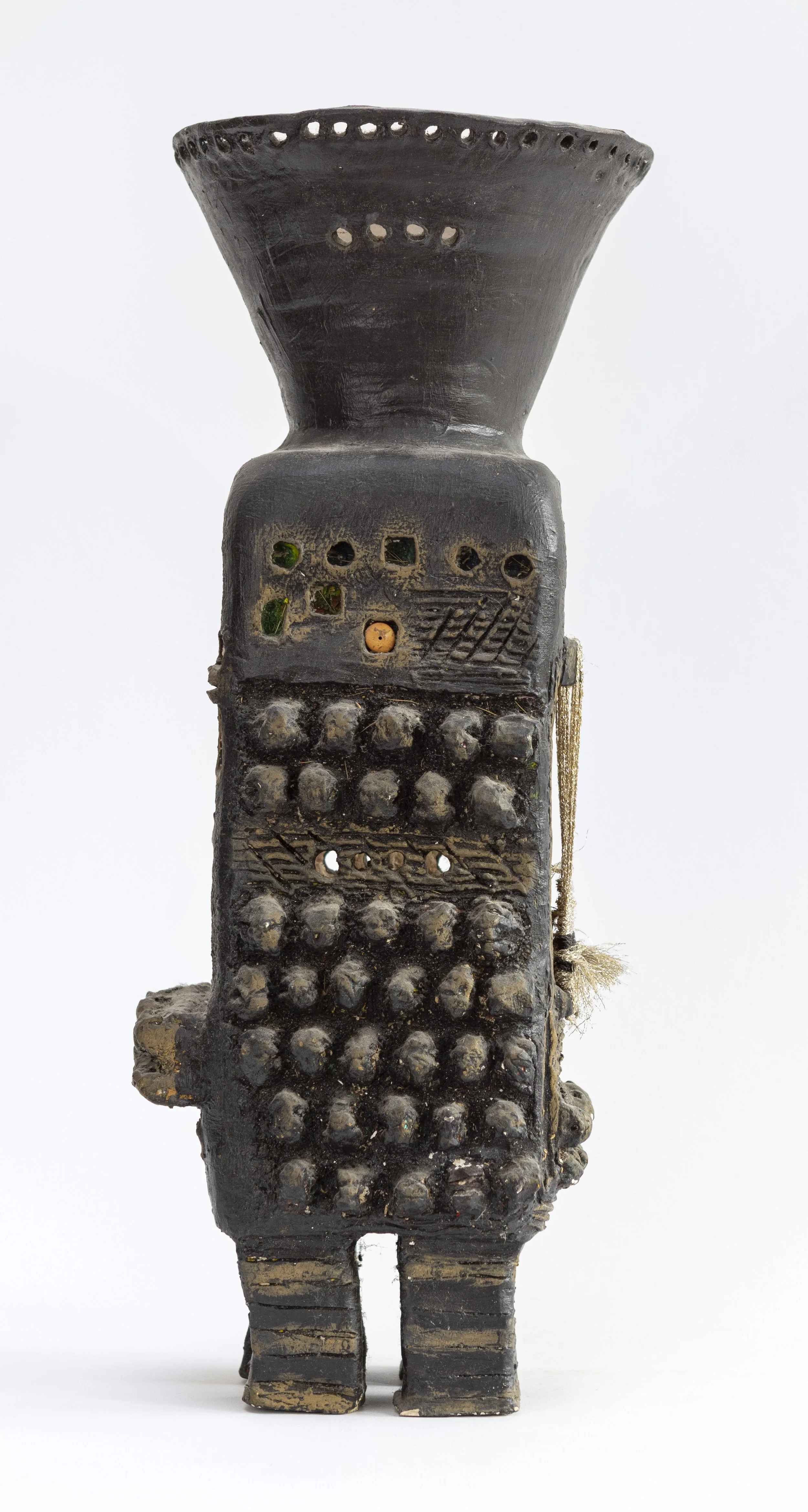
Susan Siegel, African style ritual pot
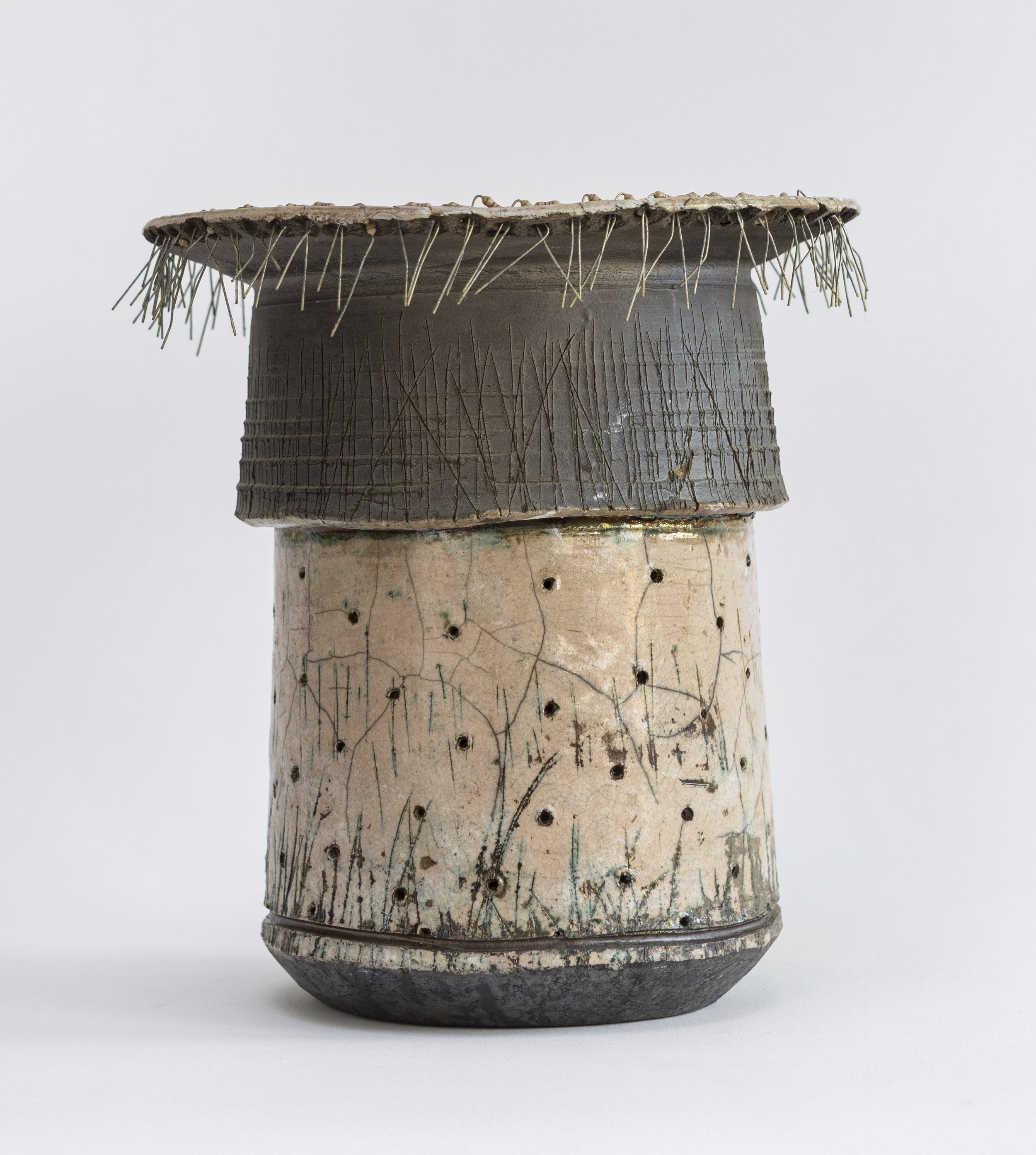
Susan Siegel, ritual pot. A distinctive polyculture of natural materials strengthening one another, the vessels have inherent power brought out through ritual.
Susan Siegel, father's memorial pot containing a top that is lifted to access letters from her father. Every year she lights a yahrzeit candle and reads the letters.
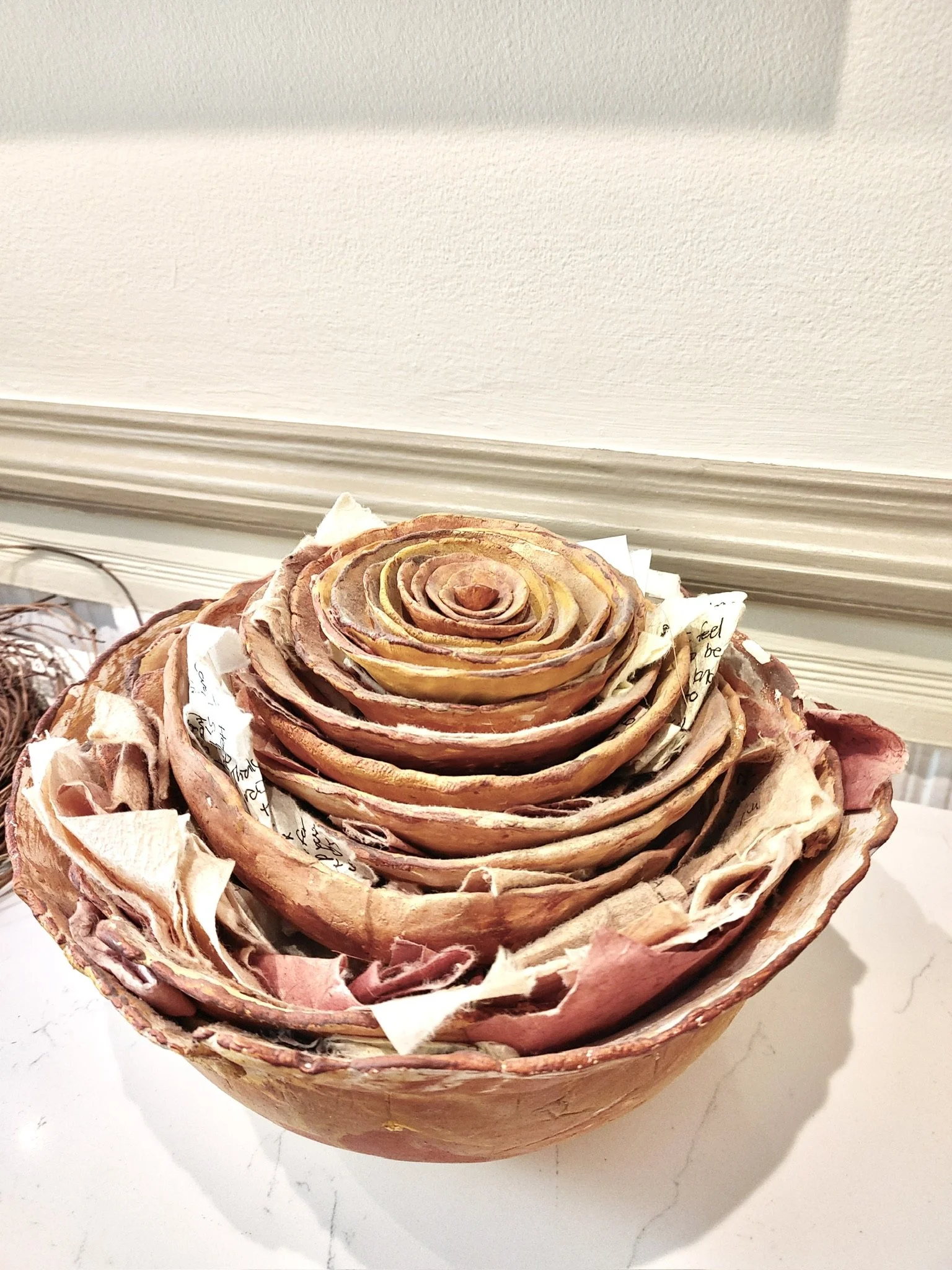
When a dear friend and Brooklyn village elder Sylvia Harris passed, Susan created a nesting bowl for her husband Gary Singer. During the memorial, mourners wrote notes and placed them in the crevices between the layers of the nested bowls. This experience was inspired by the Wailing Wall in Jerusalem, where visitors leave prayers for their ancestors in the cracks of the wall.
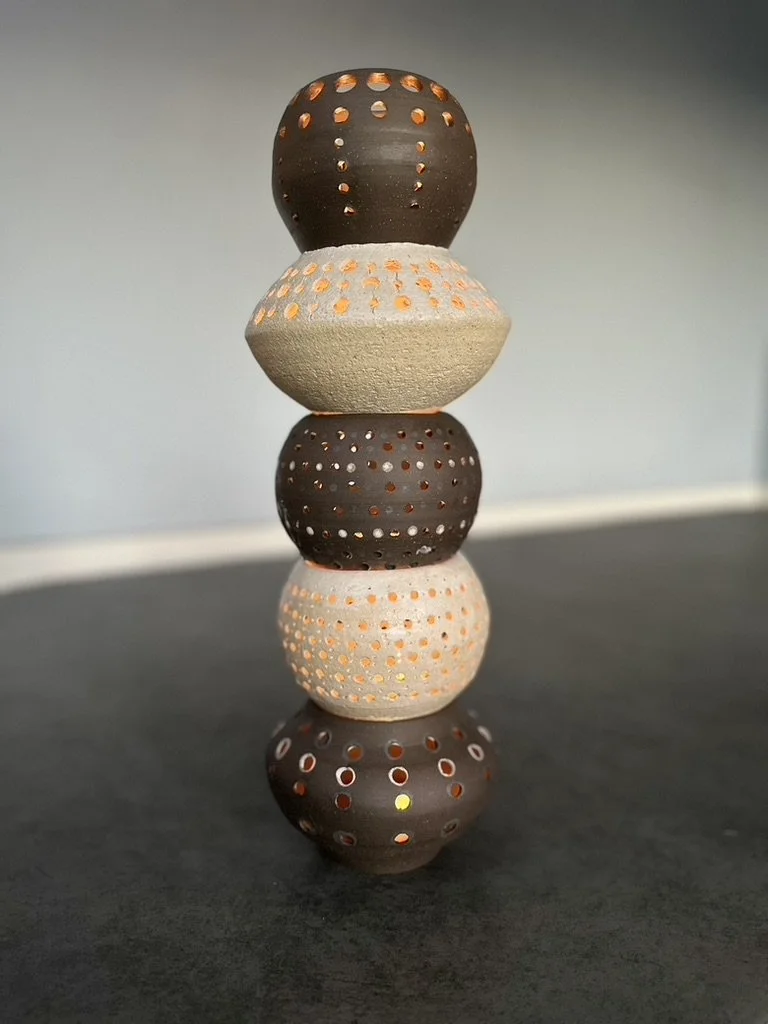
Susan Siegel, candle totem. Light is also a natural element filling her pots.
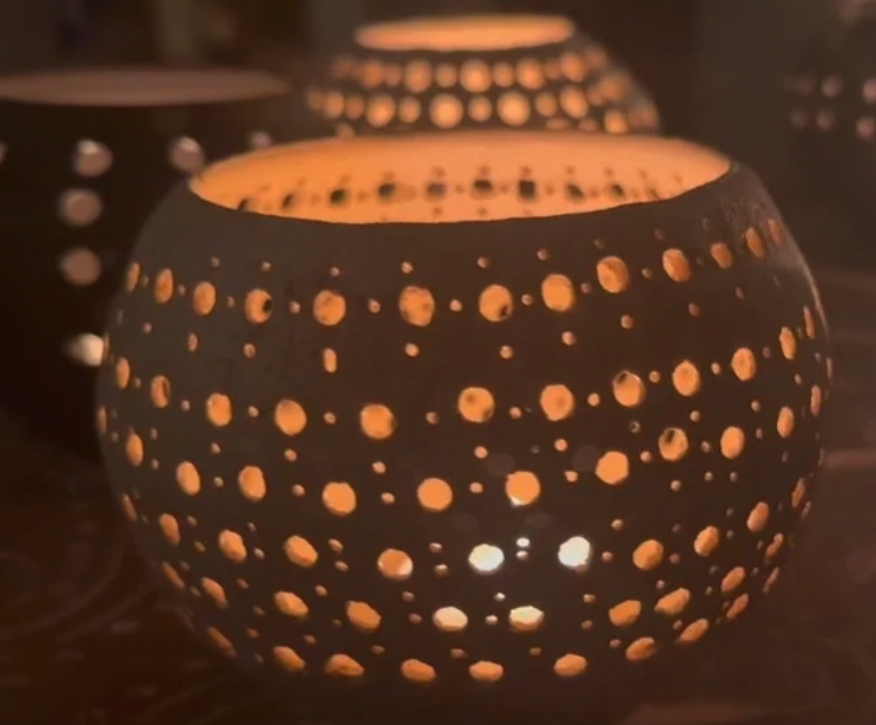
Susan Siegel, candle lanterns
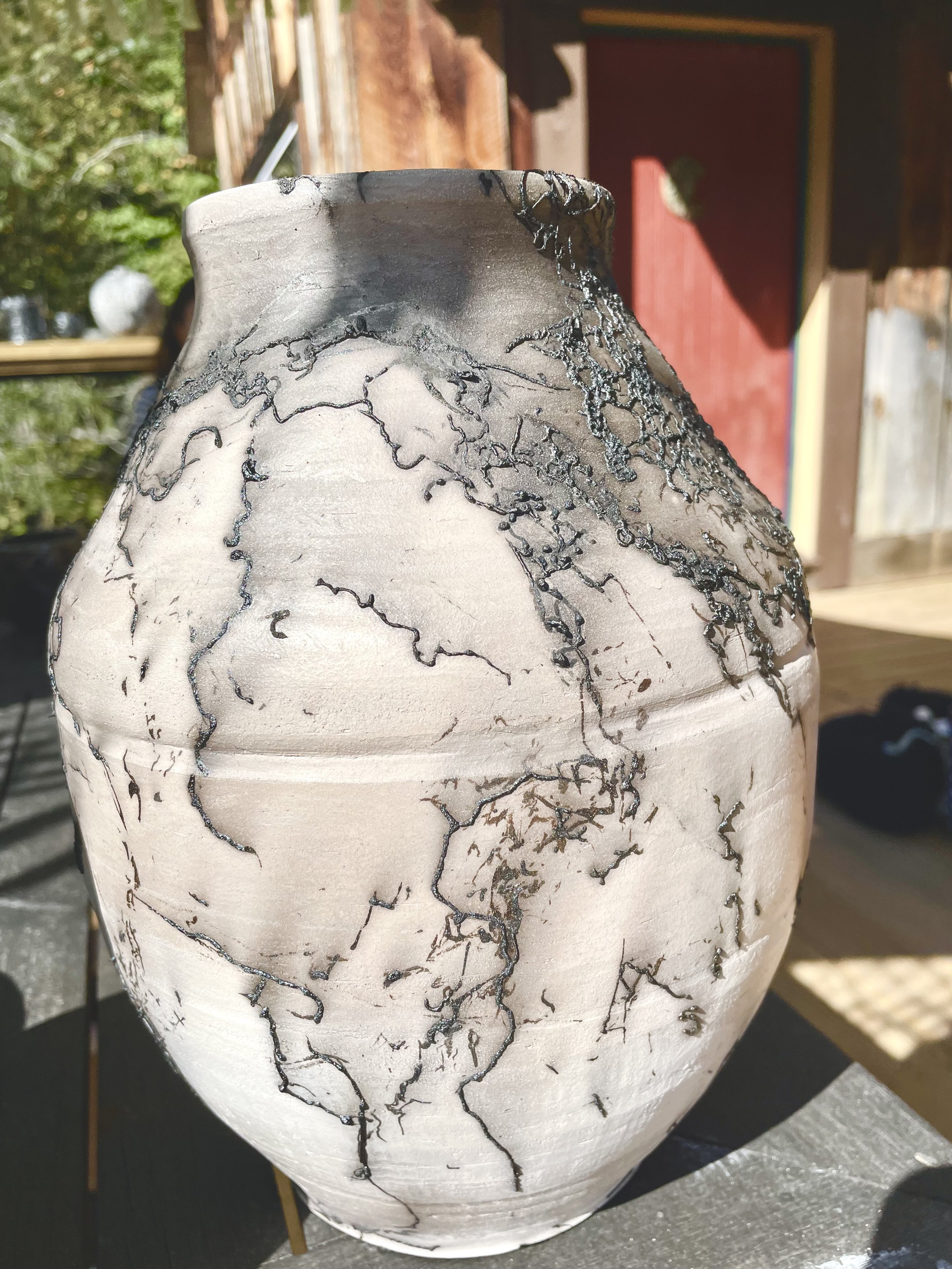
Susan Siegel, raku moon jar embedded with horse hairs from her brother's farm.
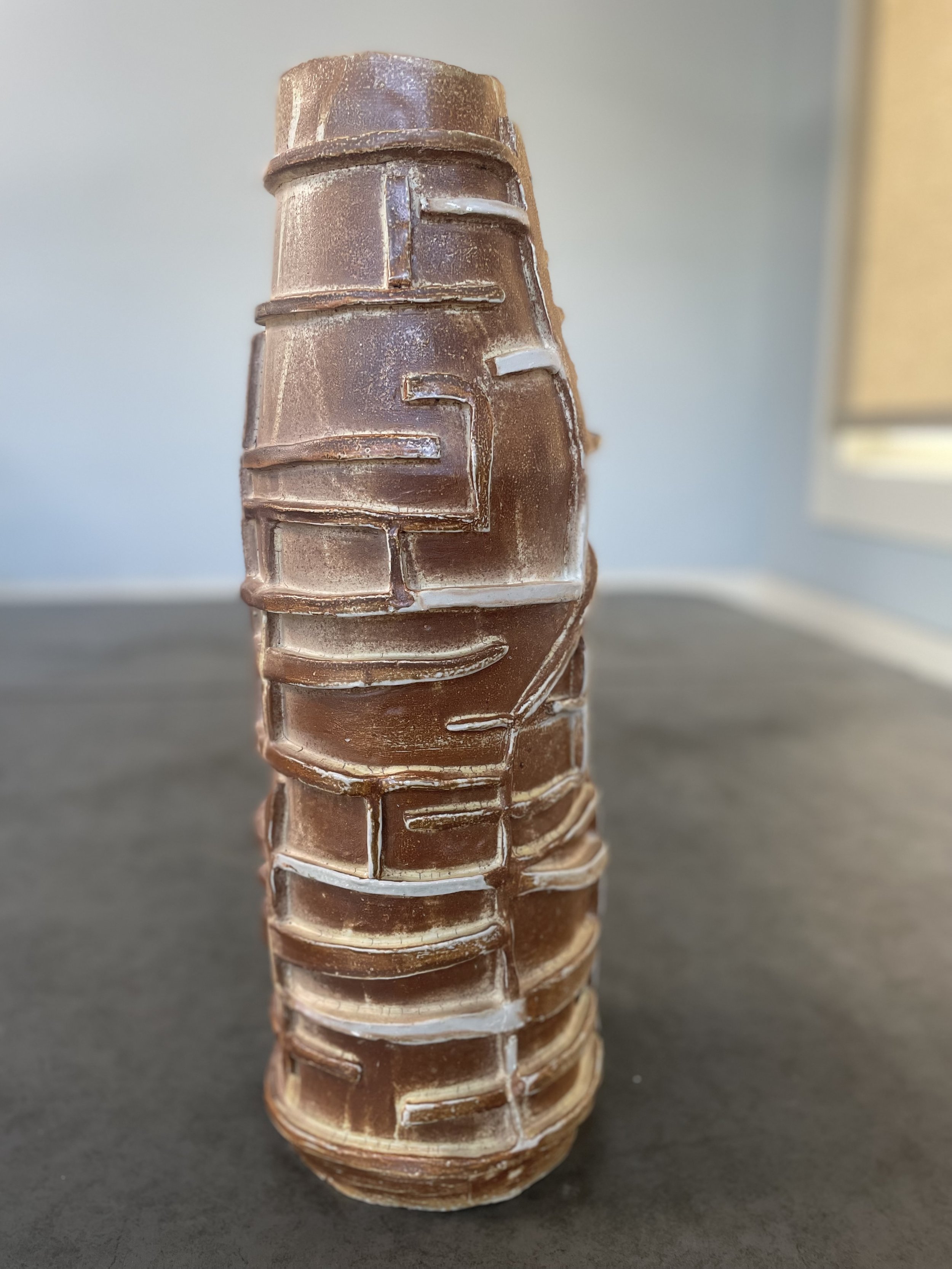
Susan Siegel, Road to nowhere
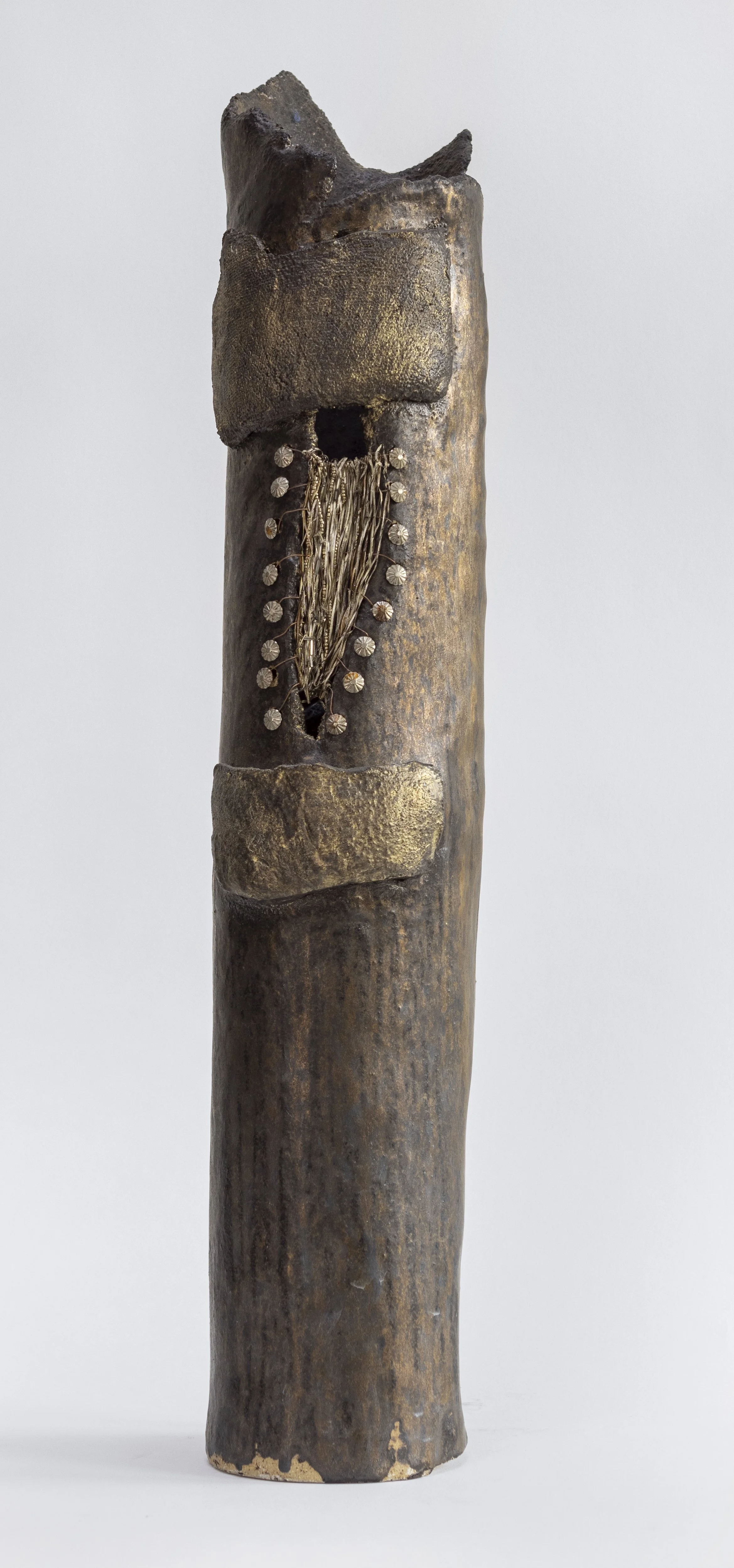
Susan Siegel, tall totem.
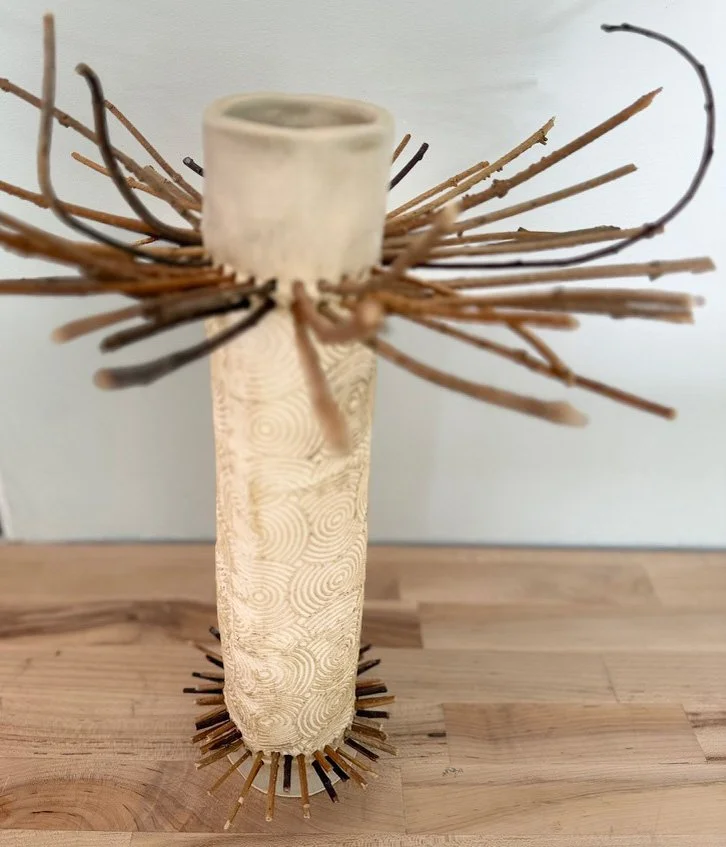
Susan Siegel, totem with pattern etched in clay and sticks.
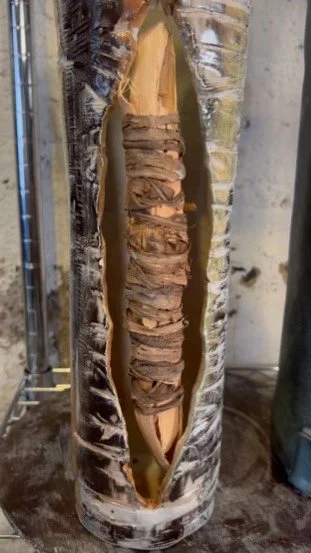
Susan Siegel, soda-fired totem with Morrocan miswak
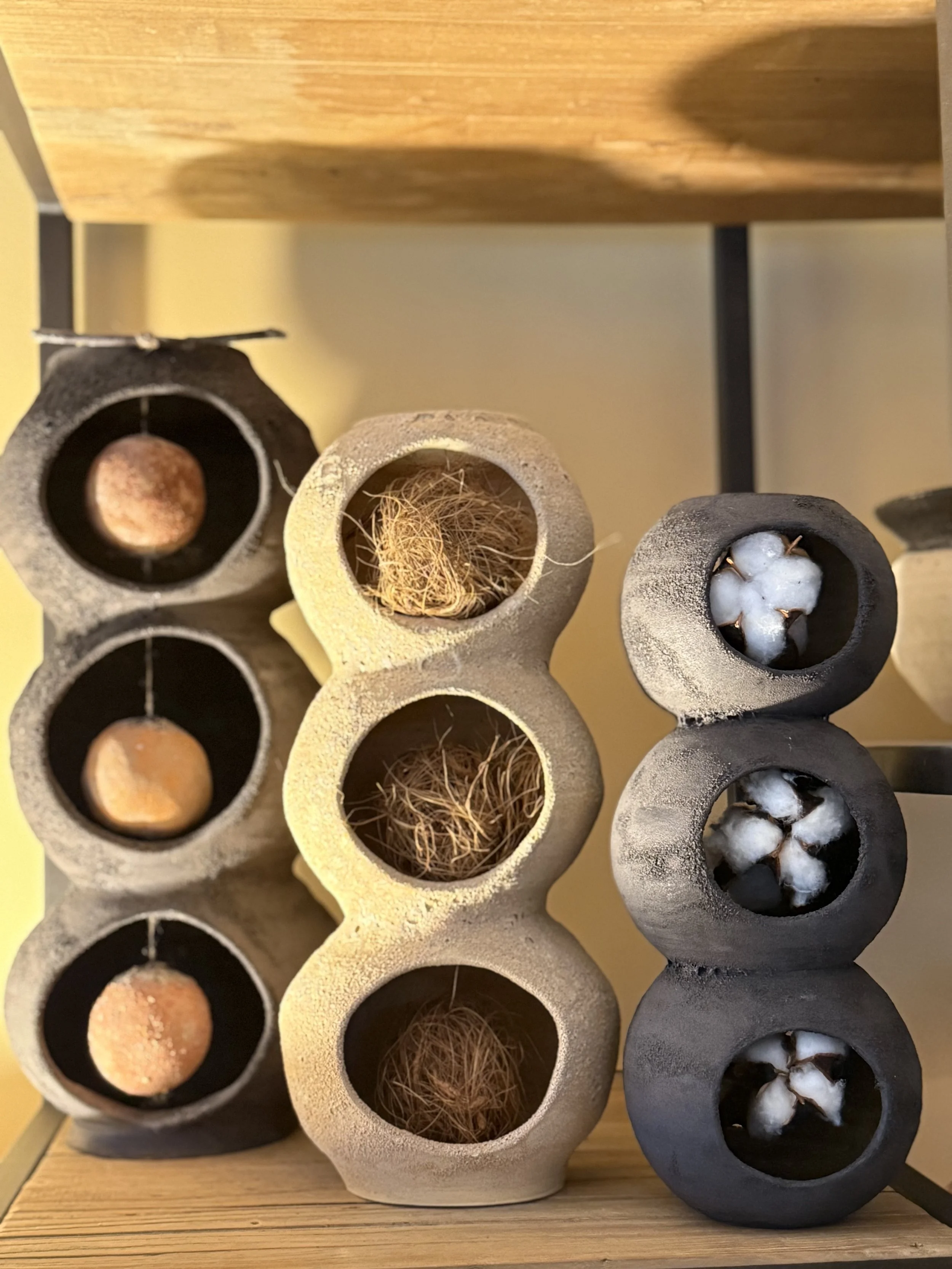
Susan Siegel, wish pots containing clay beads, sandal wood pods and cotton bolls.
Return to the Ivory Coast
In March 2023, Susan fulfilled her dream to introduce her wife Saundra to the pottery village that instilled her love of clay.
Susan was received with much love and joy. After 37 years, the villagers actually remembered her! Some were the four-year-old children who used to hold her hand and accompany her into the fields out of curiosity because “they had never seen a white girl poop,” Susan laughs.
She brought along photo albums and they watched her NYU Master’s thesis video documentary on the village. Word got out quickly and villagers gathered to search for faces that sparked memories that brought laughter and tears.
To show her gratitude, Susan asked what she could do to support the pottery collective. There was little space to show their work; pottery was piled up with no place to walk. The pottery collective needed a ceramic exhibition space.
So Susan and Saundra decided to give them the funds to build one. “This would call attention to the incredible work created there,” says Susan.
Two years later the building was complete. Susan and Saundra returned to the village for the big opening. Hundreds gathered to celebrate with drumming, speeches and dancing.”
The event was widely broadcast in all major newspapers and television stations throughout the country. As Susan stated at the opening, “It is our hope that this exposition space will create many opportunities for the potters to form business relationships, sell more work and improve the economy in the village.”
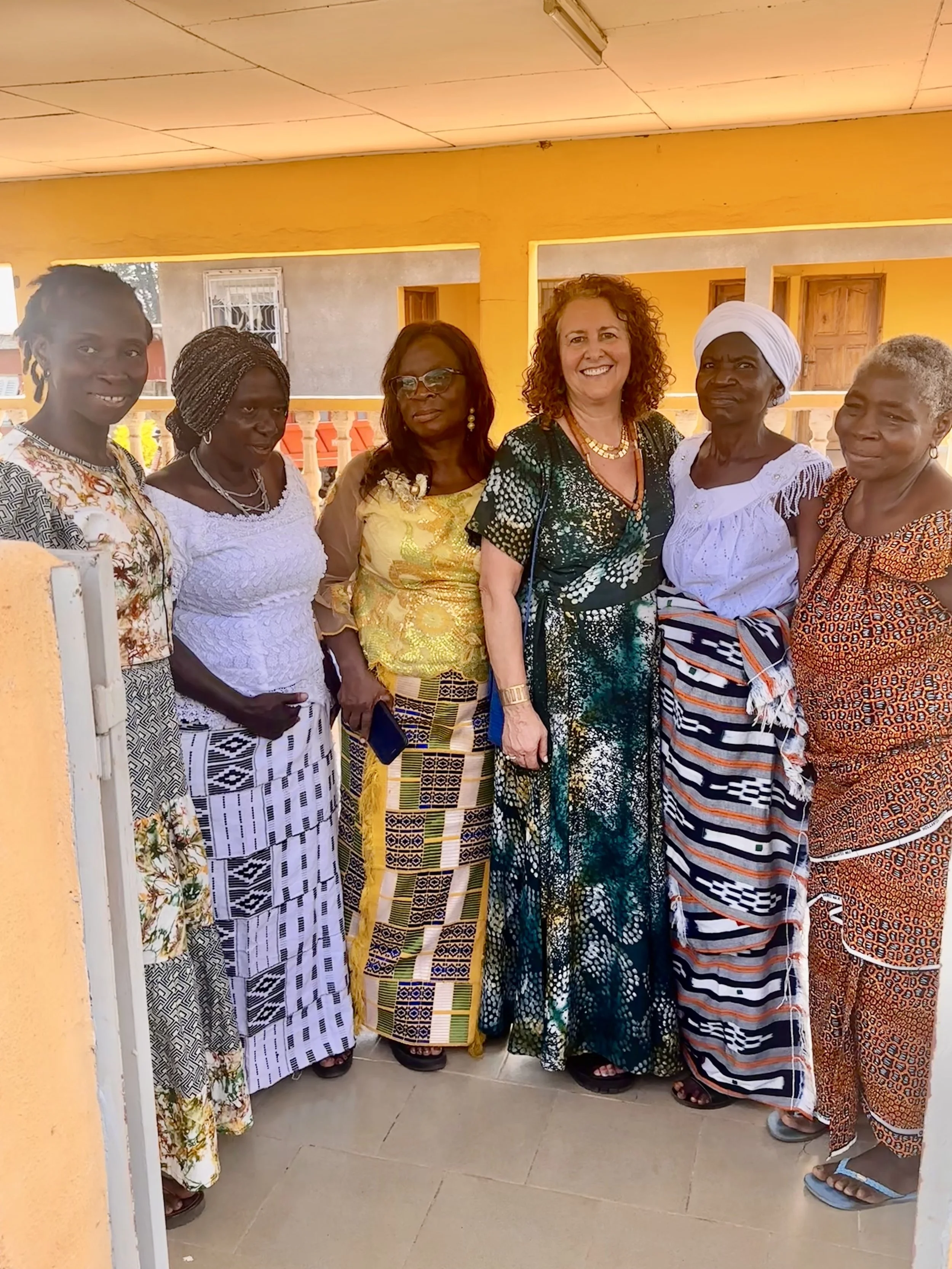
Susan Siegel and Ivorian sisters.
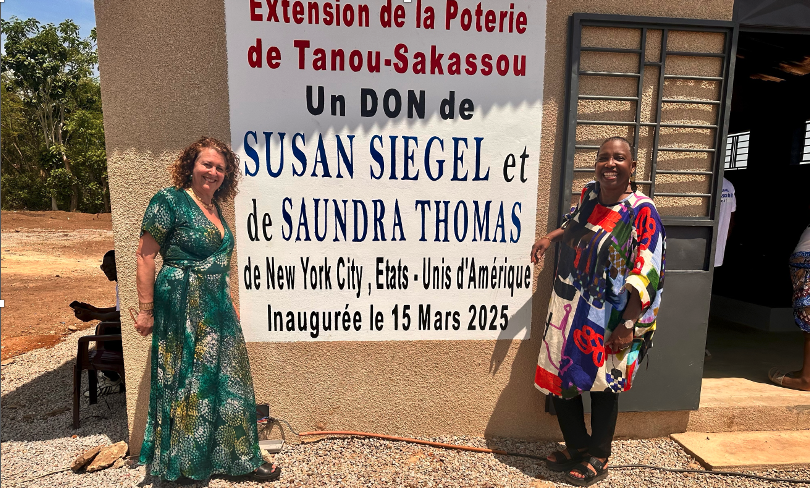
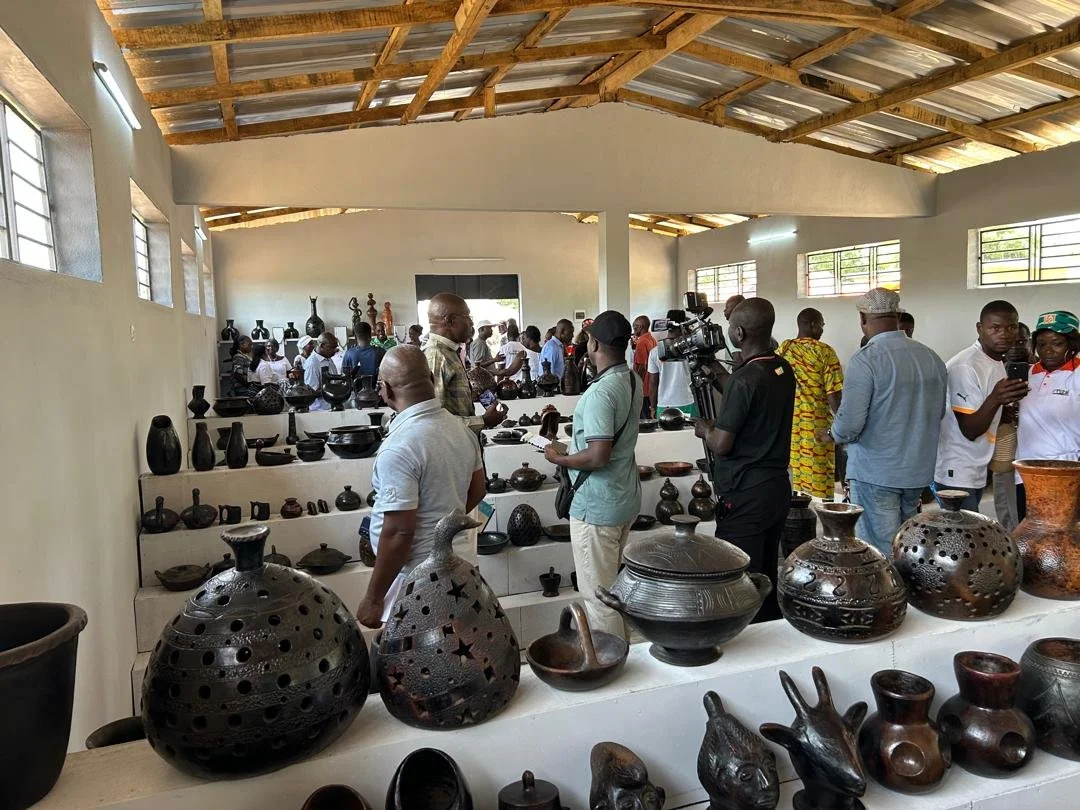
Tanou-Sakassou exposition opening.
Susan and current head of pottery at Tanou-Sakassou.
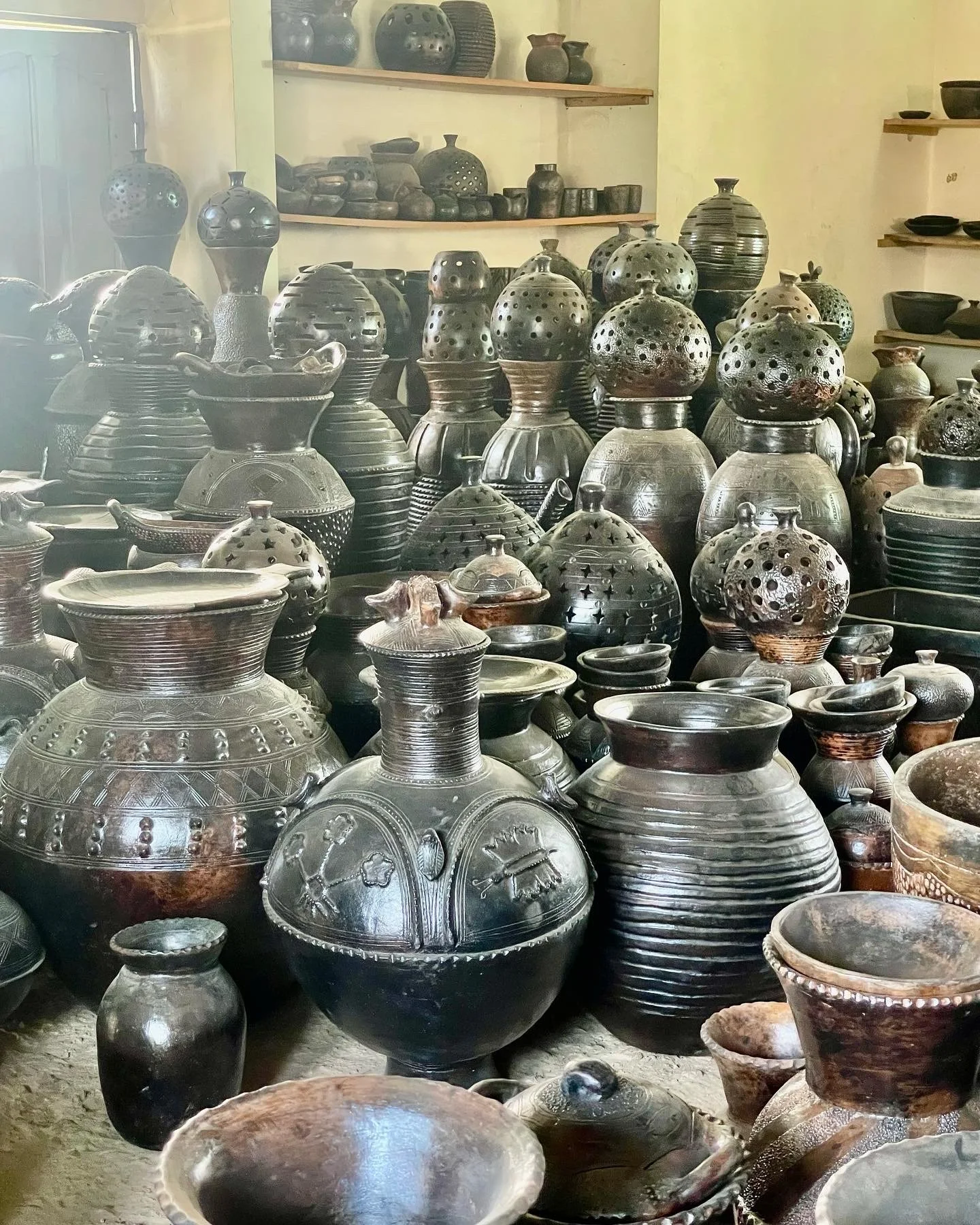
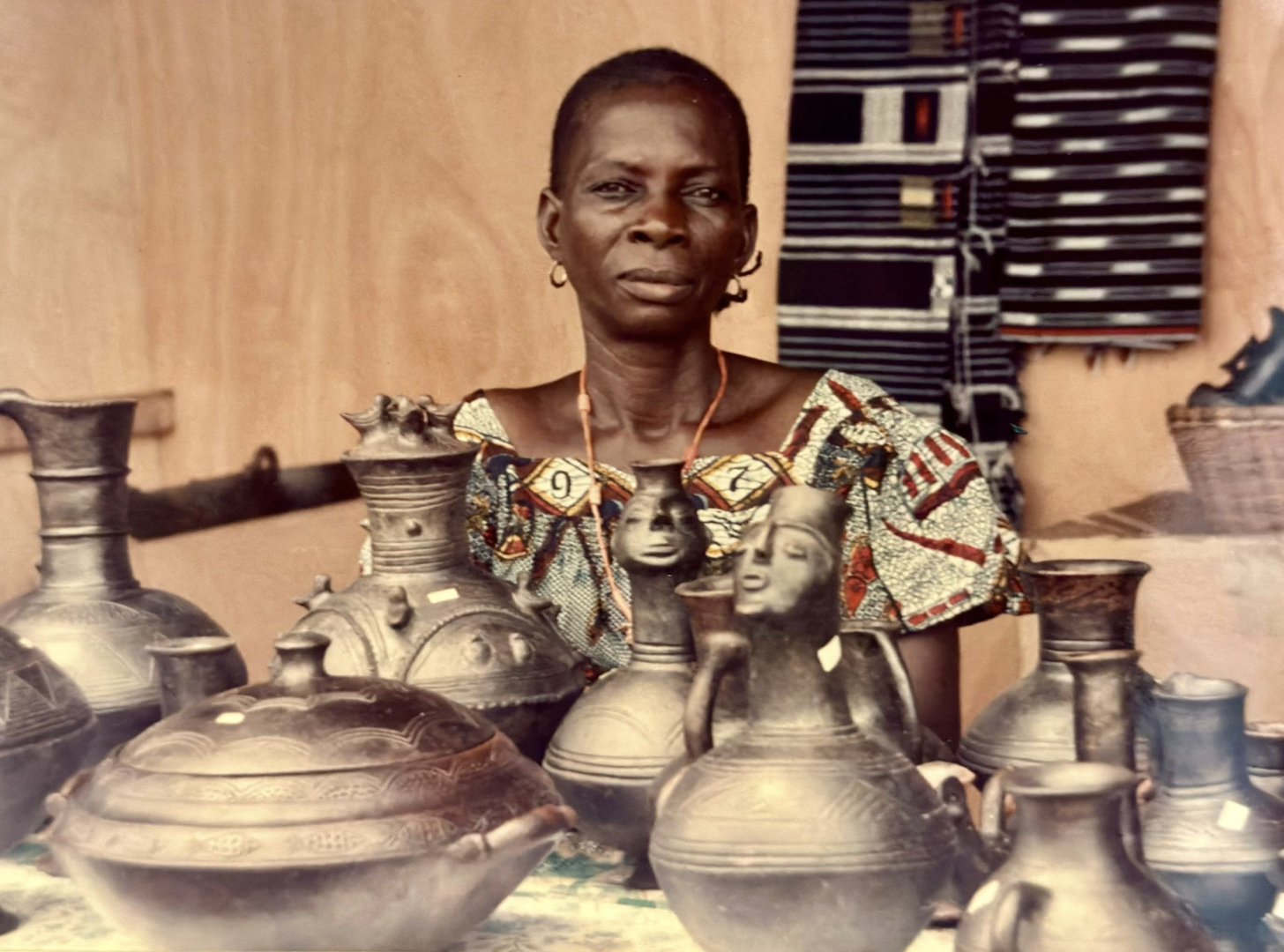
Tanou-Sakassou pottery.
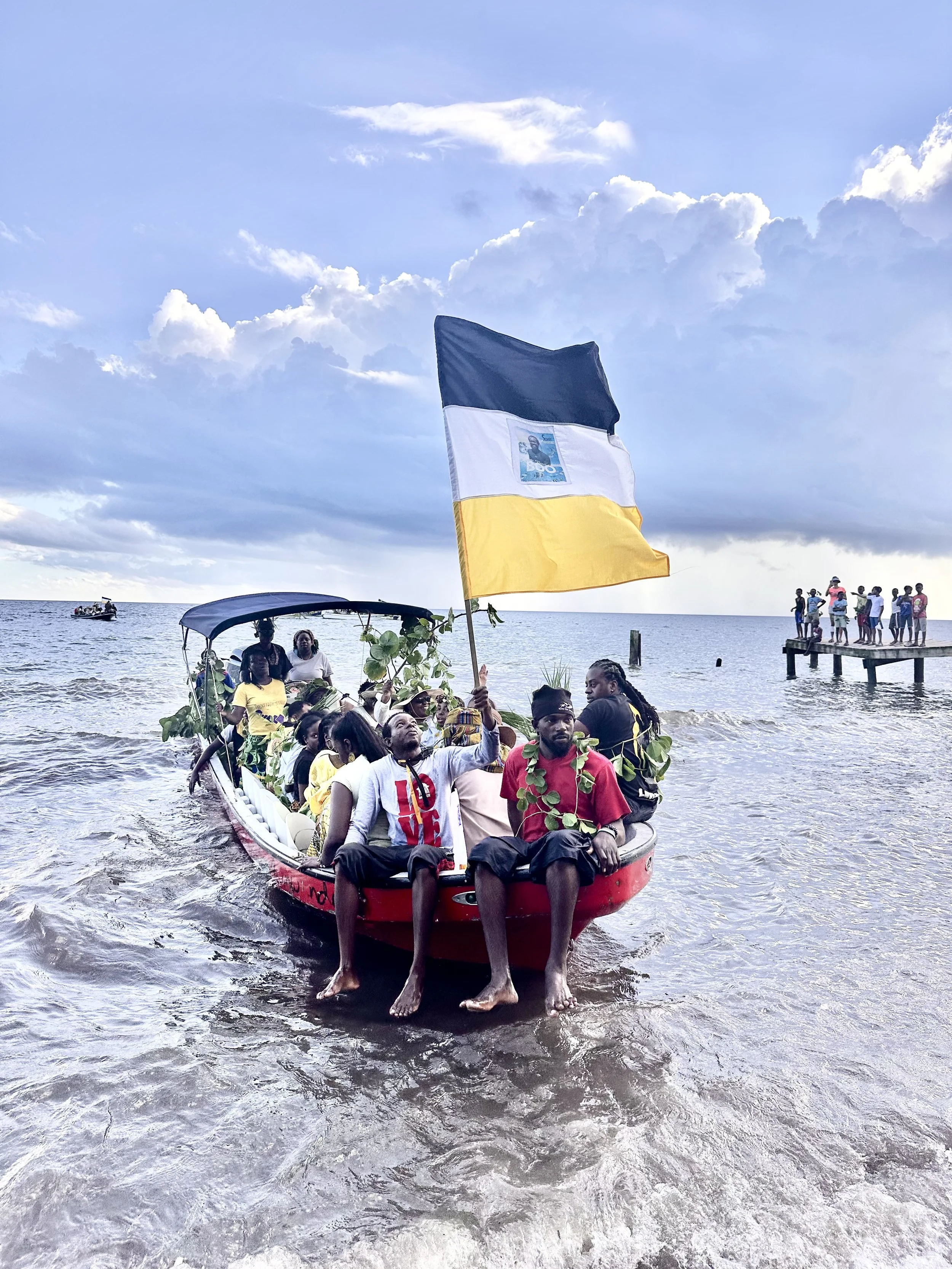
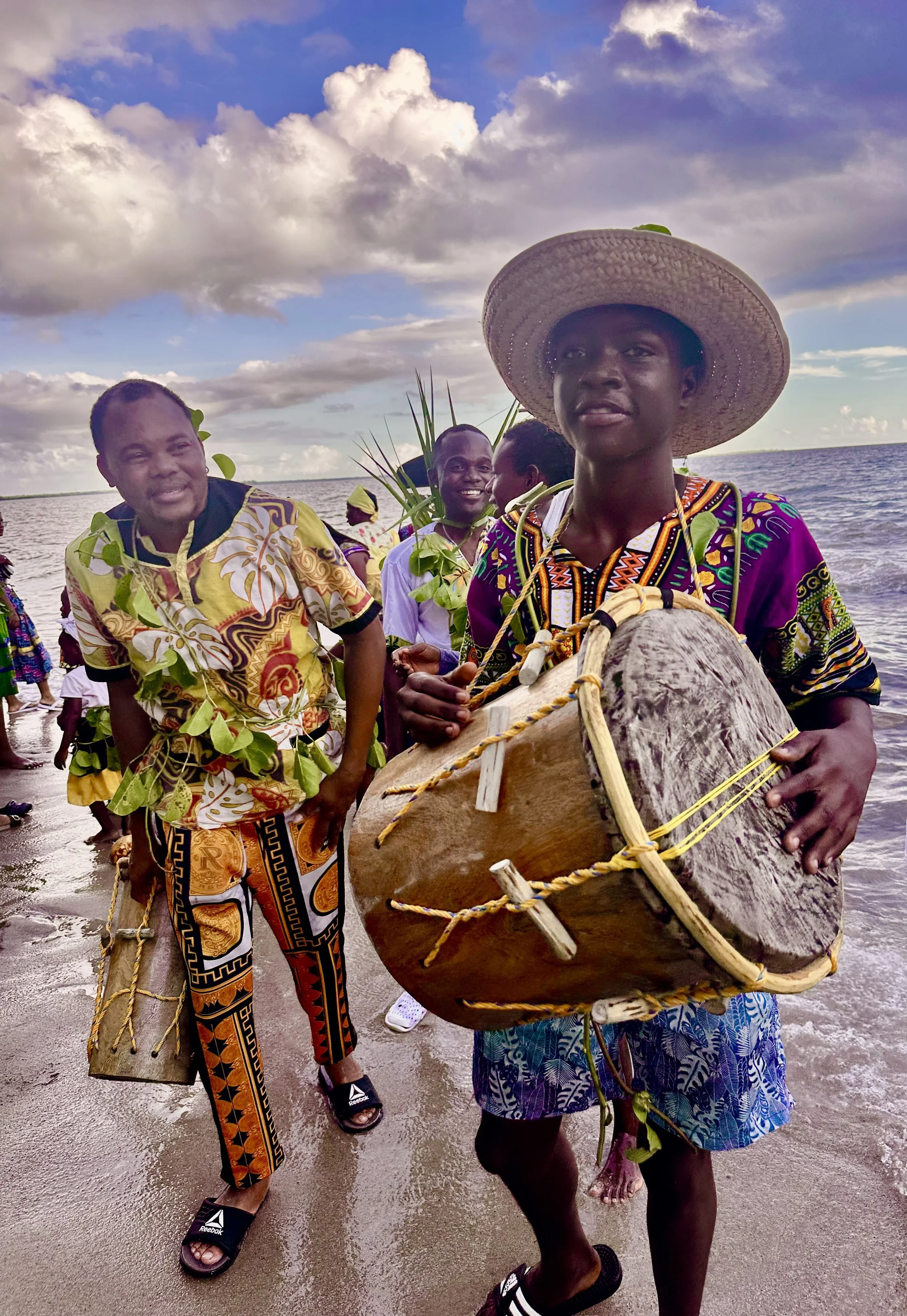
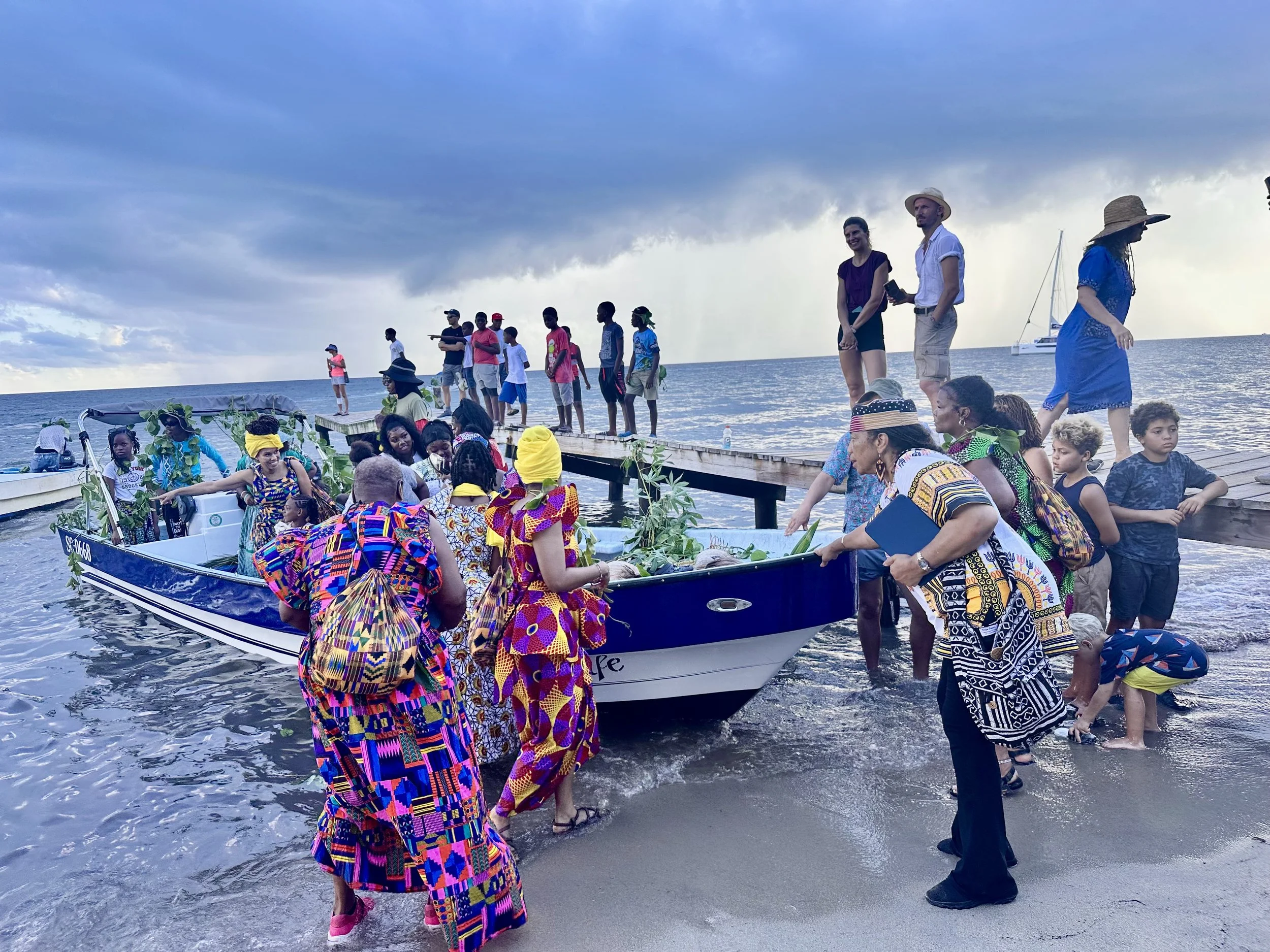
The Garifuna people of Belize. Susan, who took these photos? What kind of ceremony is this? And why are they transporting the plants with some wearing plant garlands?
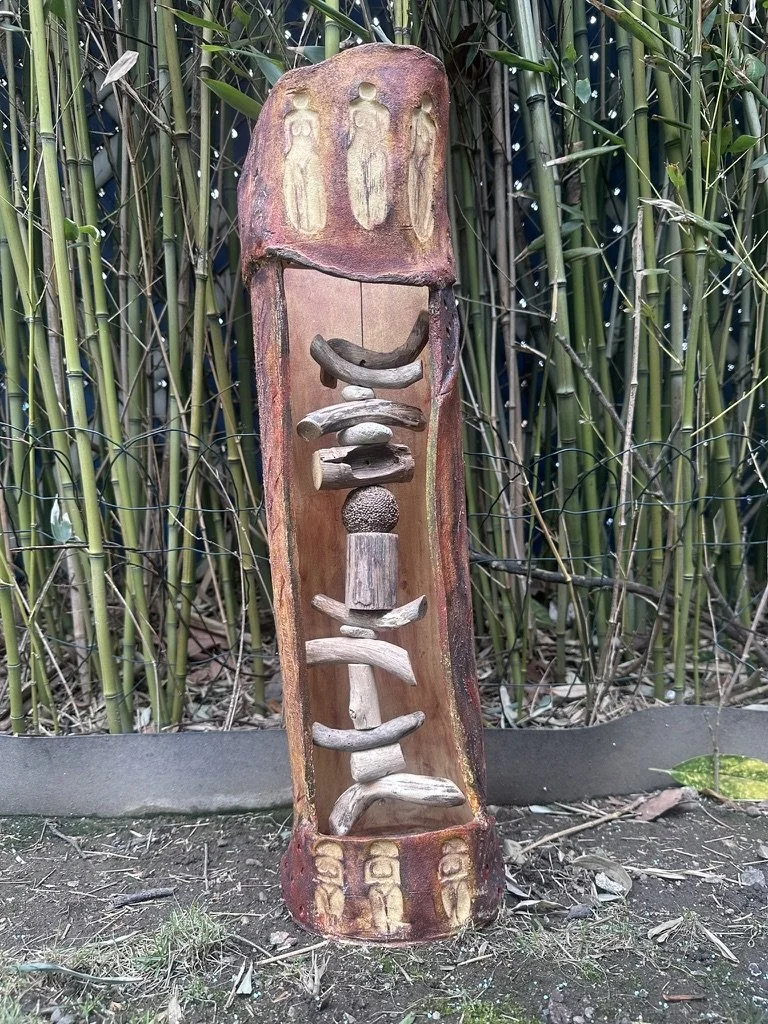
“Coming full circle” and “home” are also represented by the full-figured feminine icons that appear in some of Susan Siegel’s vessels and totems. In the totem on the right, the sticks speak to these iconic figures. Across human history and myth, the Divine Mother takes form in numerous archetypes: the Stone Age figure later named Venus of Willendorf, Hathor, Tara, Kali, Gaia, the Virgin Mary and M’dear, Great Mother of the African American tradition.
While sacred traditions often elevate the ancient great mothers to realms of effusive metaphor, Susan Siegel’s encounter with them is like being embraced by M’dear, a tangible sanctuary and protective presence that she commemorates in her vessels.
The Belize home and studio
Working with a Mexican architect and Filipino contractor, Susan and Saundra designed an ideal, integrated space where Susan can "float" between her pottery studio, domestic life, and the sea. The house was built entirely around the existing landscape, saving roughly 35 native trees from being cut down.
Susan’s pottery studio opens onto a central "Story Garden,” a courtyard that the architect named after the owners' narrative-rich lives. Susan uses the Story Garden to dry ceramic pieces quickly and intends to utilize the space to build tall sculptural totems and functional plant vessels.
Living beside the ocean, she can walk the beach and collect ocean-worn sticks. And, as true in many agricultural areas, lighting fires in Belize is often practiced as a means of managing crops and recycling nutrients back into the soil. It is quite common to see the rising smoke and small fires while driving along Belizean farmlands, or in peoples’ yards, as a way to dispose of their trash.
Susan had been doing mini pit fires in her backyard BBQ appliance in Brooklyn to create surfaces that are earthy and natural. Now she can perform clay pit fires in her Belize yard.
Dating back over 30,000 years, pit fires bring out the natural elements of the clay. Carbon trapping caused by smoke and minerals surround the pottery, and the wood, sawdust and oxides create natural decorative black, grey, red and orange stains.
Completing the vessel with the world
The vessel becomes whole when the natural world is brought inside it. Items gathered from beaches, African markets, roadsides forests and residential Brooklyn neighborhoods find new life in the vessels. These foraged elements have their own histories which reside in the spaces Susan carves to hold them.
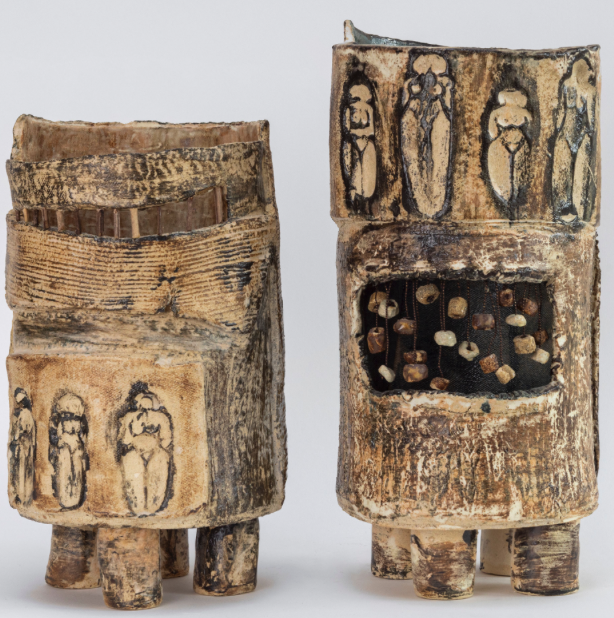
Susan Siegel, Minter Ladies are carved stones created and gifted from her artist friend Daniel Minter. She presses the stone ladies into the clay. They surround the cylindrical forms as female protective energy.
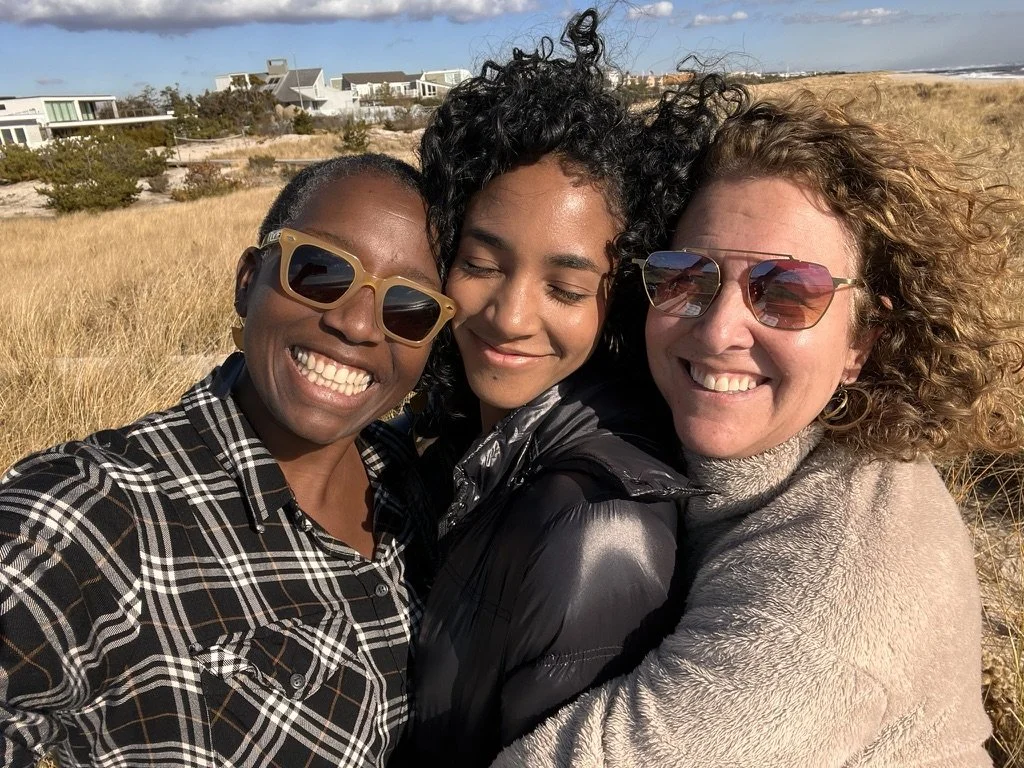
Saundra Thomas and Susan Siegel with their daughter, Calli.
Her own enacted spirituality
When I was gathering information for this article, one of the meetings with Susan took place via Zoom when she was in Belize. Towards the end, she hopped up to fetch a book that she was reading: The Book of Joy: Lasting Happiness in a Changing World, an exchange between Dalai Lama and Desmond Tutu moderated by Douglas Abrams (2016).
When asked to define her own spiritual framework, Susan said that her practice is entirely action-oriented rather than formally theological:
My spirituality is the way that I live. It doesn't come from my head at all. It comes from my heart, and it’s an extension of my being... . It's my way of interacting with the world, with people, with nature, with clay, with everything. My connection to ritual-making and the spirit world is very rich and the clay work is my vehicle to express this deeply engrained part of me.
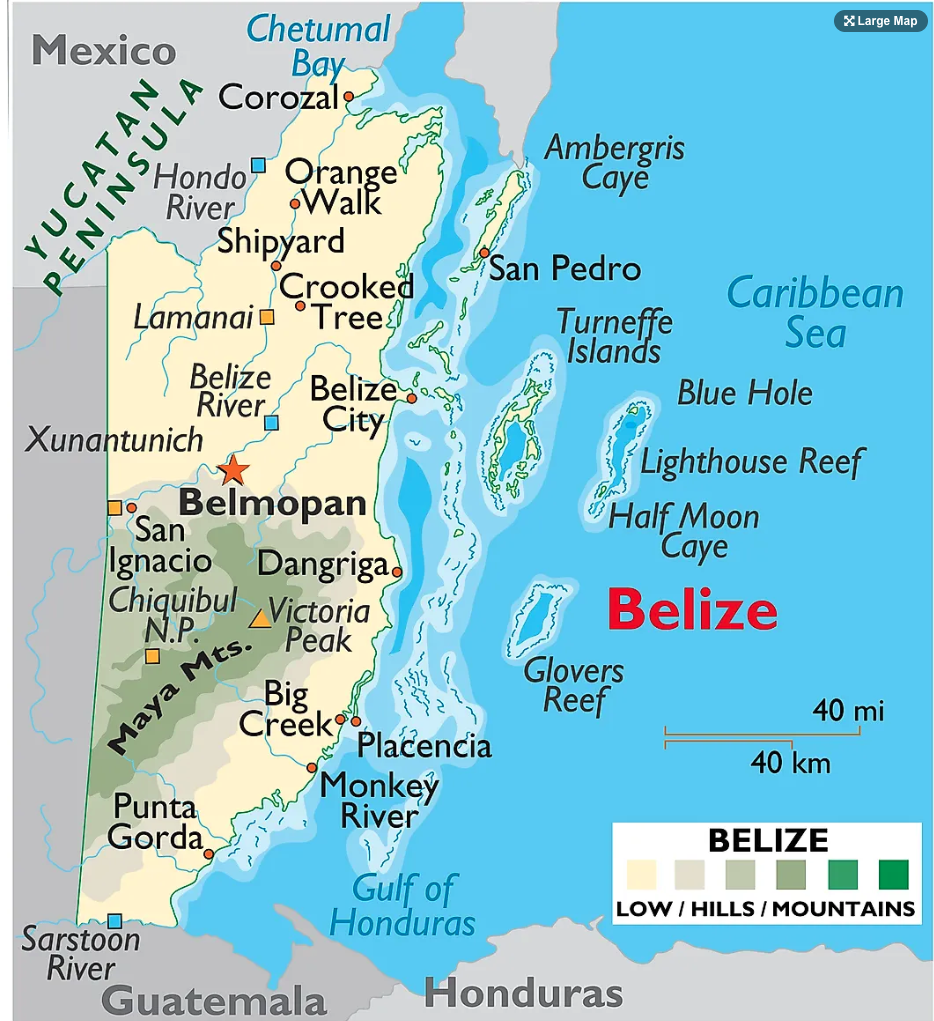
Source: World Atlas
Coming full circle
Susan Siegel and Saundra Thomas built an oceanfront home in Hopkins, Belize, because this Afro-Indigenous Garifuna village felt like home. Hopkins and Seine Bight are prominent villages in Belize populated by the descendants of West Africans and indigenous Carib/Arawak survivors, Mayans, Mennonites.
Originating on the Caribbean island of St. Vincent, the Garifuna people today primarily reside along the Caribbean coast of Central America (Belize, Guatemala, Honduras, and Nicaragua).
Bowls drying in the sunny Belize story garden.
Susan Siegel channels rhythmic responses to music into her pots. Here’s the eclectic jam that she calls a “ritual pottery sample playlist.”
Click on titles to listen to music
Omar Sosa and Seckou keita-Gniri Balma and Transparent Water
Alabastere ( 2021 Remastered) World Standard
Ahmad Jamal - Marseille
Illuminations - Alice Coltrane & Carlos Santana
The Traveller- Baaba Maal
Bebop Essentials- Apple Music Jazz
Zombie- Fela Kuti
Folon- Salif Keita
Wolo So- Balimaya Project
Nite- Ablaye Cissoko & Nathalie Vairac
Sabu Yerkoy - Ali Farka Toure and Toumani Diabete
1da Shall Never end - 1da Banton
I Told Them - Burna Boy
Will enter the rest of the links