The ancestral ’Environmental Protection Agency’
In Igbo tradition, the yam is not merely a staple crop. Its cultivation, harvesting, and consumption are governed by Ahiajoku (also known as Ifejioku), the spiritual force of agriculture and the guardian of yams. Before an iron tool ever touches the earth, the land must be respected. Farmers offer libations and prayers to Ala (the earth spiritual force) and Ahiajoku. Because the earth is the womb of Ala, breaking the soil is seen as an act that requires spiritual permission. Clearing land indiscriminately or exhausting the soil is viewed as an offense against Ala, which would result in spiritual barrenness and actual crop failure.
The Iri Ji festival is celebrated at the end of the rainy season to mark the harvest. No individual is permitted to consume the newly harvested yams until the oldest men or the chief priests perform the ritual blessing, thanking the earth for her abundance.
The whole community is involved in what environmentalists now call “regenerative” agriculture, ensuring that crops are harvested at the correct maturity and that seed yams are properly selected and stored for the next planting season.
Today, while traditionalists still perform these rites in some rural communities, many celebrations have incorporated Christian elements.
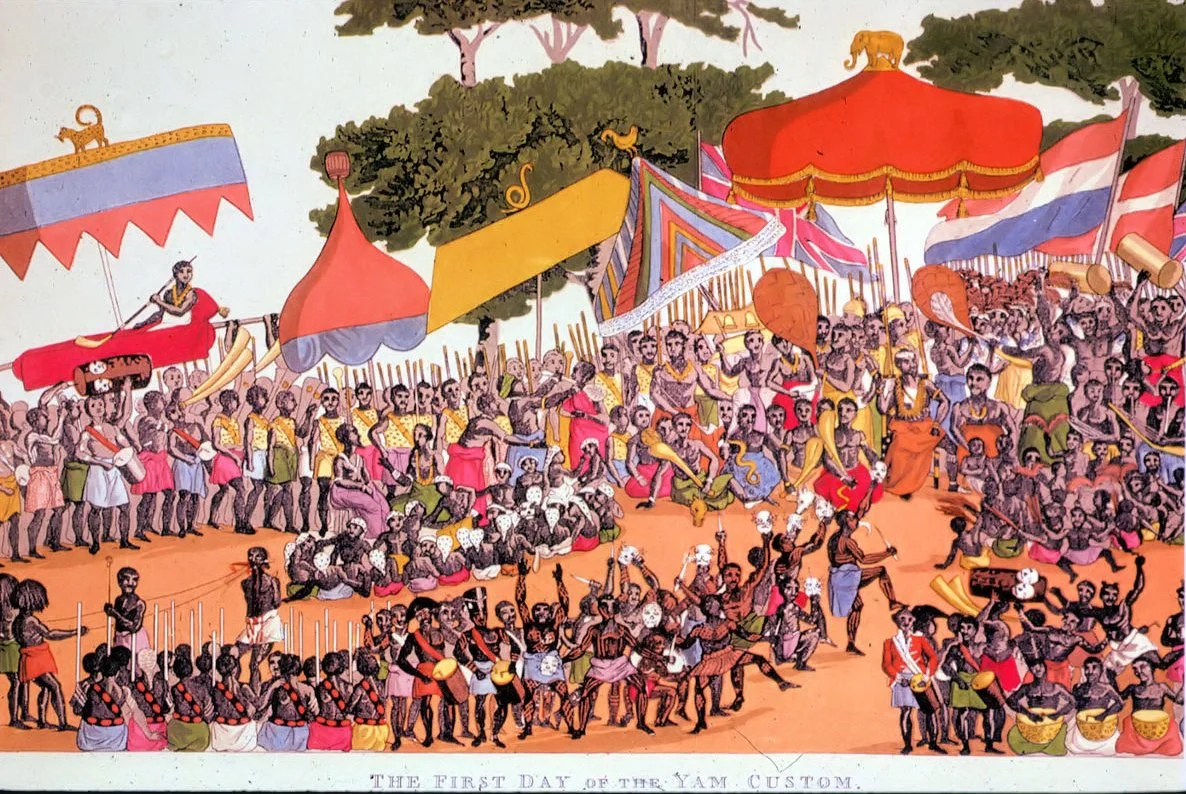
The Nigerian Igbo tradition described in the left column has a counterpart in Ghana. The above illustration depicts the Ashanti yam ceremony, Kumasi, Ghana. 1817. Engraving by Thomas E. Bowdich for the Mission from Cape Coast Castle to Ashantee book (London, 1819). Illustration reprinted in color by Frank Cass, 1966. (Image via Wikimedia Commons)
In the biblical story, a sower flings seed across a field and it lands on four types of ground. (1) Seed falls on the hard-packed path, and birds quickly devour it. This represents a person who hears the message but does not understand or accept it, allowing it to be easily swept away. (2) Seed falls where there is little soil. It sprouts fast but lacks deep roots, so it quickly withers under the hot sun. This represents someone who accepts the message with initial joy, but their faith falls apart as soon as difficulties or persecution arise. (3) Seed falls among weeds and thorns, which grow up and choke the young plants. This represents someone who receives the message but anxieties, distractions and the lure of wealth choke out their spiritual growth. (4) Seed falls on fertile, deep earth, grows successfully and yields an abundant harvest. This represents the open receptive heart that understands the message, holds onto it and spiritually prospers.
How wildlife conservation figures into this picture
The first time I ever really noticed bats was at the Nigerian Baptist Theological Seminary in Ogbomoso. That place is very large space with thick forest and mango trees. There are millions of bats there. They feed on mangoes, they fly all over the sky and drop on you, if you are not careful.
That was my first exposure to bats. So seeing bats again in my own compound, eating my bananas, I wanted them gone.
And then I learned about the work of Nigerian ecologist and conservationist Iroro Tanshi. Her research changed my perspective on bats. Bats eat insects that affect agricultural production. Consumption of insect pests by bats results in a savings of more than $3 billion per year. Bats also eat fruit and nectar which pollinates a variety of plants like peaches, bananas and agaves. And in eating fruit they perform another important role in the ecosystem: seed dispersal.
Farming expanding to environmental sciences
When I went to the Federal Technology University, Minna, I already knew I didn’t want to leave agriculture behind. I wanted to understand how to improve it.
Studying project management exposed me to project planning, systems, construction and even software thinking. At the same time, I already had practical knowledge from home.
My father is a bricklayer. That is the handwork he grew up learning, aside farming which he learned from my grandfather. He worked on major projects like the emergency unit at Bowen University Teaching hospital and hostels at LAUTECH in Ogbomoso. He built houses, including his own. From him, I learned construction to back the theory I learned in my technical study.
I don’t just want to farm. I want to build farms. I want to combine technology to improve how farming is done: construction to build strong farm structures and agriculture as the foundation of it all. Everything I have learned and built (technology, project management, construction) is for sustainable agriculture.
Our home area is gradually shifting from rural to semi-urban, so we use family land farther away for farming. We raise chickens both at home and at a farm settlement.
Personally, I have acquired farmland, about 20 acres which I am working on. On the field, I still practice traditional weeding using hoes, cutlasses, and sometimes uprooting weeds by hand.
I began to rethink waste and food production in the city. Instead of seeing used jerricans and waste plastics as pollution, I pioneered a simple aquaculture idea by converting them into movable fishponds. This was my own small way of introducing fish farming into tight spaces. The idea was to reduce environmental waste while still producing food.
By readjusting these materials, we created low-cost, flexible systems that can hold water and support fish growth. It showed me that innovation does not always need big capital, but creativity, local materials, and a deep respect for the environment. At the same time, I am open to modern methods where needed.
Comparative spiritual and agricultural traditions
West African traditions hold that the earth bears witness and responds to moral and spiritual conditions.
Likewise in Genesis, the ground is never portrayed as passive. When Cain sheds Abel’s blood, God declares that the earth itself will resist him: “When thou tillest the ground, it shall not henceforth yield unto thee her strength…” (Genesis 4:12).
Even earlier, in the example of Adam, we see that disobedience alters humanity’s relationship with the soil. The ground, once cooperative, becomes resistant: producing “thorns and thistles” (Genesis 3:17–18).
Farming moved from ease to struggle; not merely because of physical conditions, but because of a fractured relationship between humanity, God, and the earth.
So when African traditions emphasize rituals of respect before cultivation and when scripture emphasizes obedience and righteousness as conditions for fruitfulness, they are pointing through different perspectives to a shared truth: agriculture is relational. It is a relationship between human beings, the land, and the unseen order that governs both.
Abraham, Isaac, and Jacob did not treat land as an unlimited commodity. When the land could no longer sustain both Abraham and Lot, they separated peacefully (Genesis 13:6), acknowledging ecological limits. Isaac, when faced with conflict over wells, chose movement over strife until he found space to thrive (Genesis 26:22).
Even the agricultural festivals instituted in Israel, such as the Feast of First Fruits and the Feast of Harvest, is related to practices found in many African communities. The principle is the same: before consumption comes acknowledgement. Before enjoyment comes gratitude. The harvest is not merely taken; it is received.
When I read scripture, I am reminded the earth is the Lord’s “and the fullness thereof.” (Psalm 24:1). Jesus Himself consistently used agricultural imagery to explain spiritual realities: seeds, soil, harvest, growth. In doing so, He affirmed that farming is not just an activity, it is a language through which divine truths are revealed.
As a Christian African farmer, I do not subscribe to all of the practices of either of my multifaceted traditions. I am participating in a relationship that is at once cultural, spiritual and filled with environmental meaning. I also have a strong sense of purpose in feeding people.
“Parable of the Sower” uses seeds and the responsiveness of earth to teach principles of spiritual growth

Hans Bol's The Parable of the Sower. This 1585 engraving depicts the biblical narrative in an European Renaissance setting. The small medallion at the top with the astrological sign of Aries (the Ram) represents the connection between divine scripture and the early spring planting season. (Photo: public domain)
In this two-part article, John Adeolu explores a layered network of agricultural, spiritual and wildlife ecology issues in Nigeria
Part 1
When I was a child, my mother would ask me what I wanted from the market. My answer was always the same: “Tractor!”
Looking back now, I believe I was born a farmer … and also, inevitably, an environmentalist.
When I was a student at Ogbomoso High School in Nigeria, my friends and I used to “drive” an abandoned tractor parked by the roadside. It was a John Deere sharing my name so it felt personal to me. Between that old machine and watching my friend Goke’s father plow fields, agriculture became my natural calling.
Today, I practiced what I call contemporary mixed farming. I don’t own a tractor yet, but I hire one for ploughing and ridging and to save the land. I use the tractor to plough gently along natural contours of the land, avoiding repeated deep tilling. I maintain proper soil moisture before operations, reduce soil compaction by limiting passes, and create ridges following slope lines for drainage. I rotate directions yearly to protect soil structure and preserve fertility naturally. Then combine that with manual weeding using hoes and cutlasses.
My broad concern is food sovereignty in Nigeria. Although it is one of the most agriculturally endowed countries in Africa, with over 36 million hectares of arable land, vast agro-ecological diversity, and a population of over 220 million people who can serve as both labour force and market, the country still imports a significant portion of its food. In 2023 alone, Nigeria’s food imports were estimated at over $10 billion annually, driven by rising demand for rice, wheat, fish, and processed foods. Abundance of land and dependence on imports raises a critical question about how we utilize our resources.
A major part of this challenge lies in smallholder farmers, who produce over 70% of Nigeria’s food supply. These farmers are the backbone of the agricultural system, yet many operate without adequate access to modern agricultural knowledge, climate information, irrigation systems, or post-harvest infrastructure. Many are not formally educated and while they continue to produce food, a large percentage is lost due to post-harvest losses estimated at 30–50% in some crops, especially perishable produce.
Agriculture in Nigeria is also increasingly shaped by environmental and climate challenges. Irregular rainfall patterns, prolonged droughts, and severe flooding have become more frequent, reducing productivity and threatening food systems. These climate pressures are consistent with broader global changes affecting many developing countries.
Historical and structural factors including colonial agricultural systems that prioritized export crops over food crops have also contributed to long-term vulnerability in local food systems, leaving many regions exposed to shocks in climate and global food markets.
Environmental issues extend beyond climate alone. Practices such as bush burning continue to affect soil fertility, biodiversity, and ecosystem balance. When vegetation is destroyed, the natural habitat of important organisms is disrupted. Even species such as bats, which play a vital role in pollination and insect control, are displaced, indirectly affecting agricultural productivity and ecological balance. These ecological disruptions weaken the natural systems that sustain farming.
So how can Nigeria achieve year-round food production without dependency on food imports?
My great-grandparents farmed. My grandfather said, “if there is food, work becomes easy.” This means that food is not just a necessity, it is the foundation of productivity and community stability. In my family, farming is not only for income; it is for feeding people, our household, our neighbours, and our community, before even thinking of commercial gain.
So how can Nigeria achieve year-round food production without dependency on food imports? Reliance on external food sources creates vulnerability. It exposes the country to price shocks, supply disruptions, and economic instability. In many ways, excessive food importation becomes a systematic dependency that limits national food sovereignty.
These realities, agricultural potential, environmental challenges, climate change impacts, biodiversity loss, post-harvest inefficiencies, and knowledge gaps, are what shaped my journey into farming. They also shaped my growing interest in environmental conservation and the work of environmental scientists such as Iroro Tanshi and Bennett Obitte whose research spans wildlife conservation, land cultivation and community health.
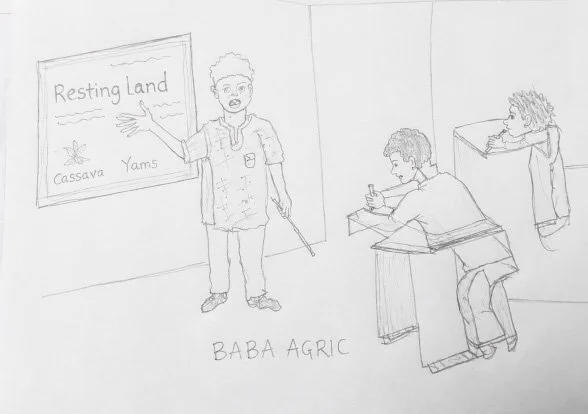
I first became aware of how traditional West African agriculture reflects what Americans now call agroecology and regenerative agriculture when I was in junior secondary school in Ogbomoso. My agric teacher, whom we always called Baba Agric, introduced us to this idea during one of his lessons. He explained that our fathers’ way of farming; mixed cropping, composting, leaving land to rest, and respecting seasons was not backward as people thought, but actually a smart system that protects the soil and sustains yields.
We called him "Baba Agric" (Father Agriculture) as a term of respect and endearment for his expertise. We didn't use "Baba" for all our male teachers.
Baba Agric said that farming has to be what environmentalists in the North call “sustainable” and requires constant adaptation. I personally found out this is true.
Last year, I failed to plant my cashew at the right time as I did not understand the weather patterns. That mistake pushed me to start studying climate more seriously using online platforms. Farming will humble you, but it will also teach you, if you are willing to learn.
As Africans navigating faith and modern agriculture, farming has never been merely economic. It has always carried meaning and value beyond the material realm. And when I stepped back and really thought about it, I realized that both African traditional worldviews and Christian biblical thought have always agreed on one central idea: the land is not a neutral‘thing.’
In many African societies, the earth is not treated as an object but as a living reality. Among the Igbo, for instance, the Earth (Ala) is not only a source of fertility but also the custodian of moral order. To spill innocent blood on the land is not just a social offense; it is a spiritual violation. Among the Yoruba, the ilẹ̀ (Earth) is approached with reverence and begins not with tools but with postures (respectful acknowledgement of the Earth as an living being). These traditional “postures” include thanking the spirit of the tree before chopping it down.
My three year old niece Ayomide helped me with this drawing of Baba Agric. As we played, I told her a story about going to school to learn how to grow food. I hope that she will appreciate the family tradition of living and working on the land. Women make up approximately 37% to 60% of the agricultural labor force in Nigeria. The percentage varies from region to region.
If she is so inclined, Ayomide could take a leadership role in the next family generation of land-based enterprises.
My ecological agric path led to learning about how Iroro Tanshi’s bat conservation supports farmers and helps farm communities, as well as bats, to thrive. That’s the focus of Part 2 of this article.
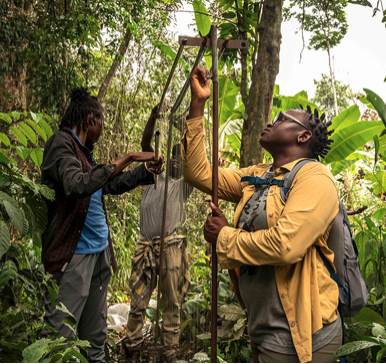
Shown here: Iroro Tanshi and team members set a trap at a bat survey site in Odukpani, Cross River State, Nigeria.
Photo: Etinosa Yvonne for the Goldman Environmental Prize
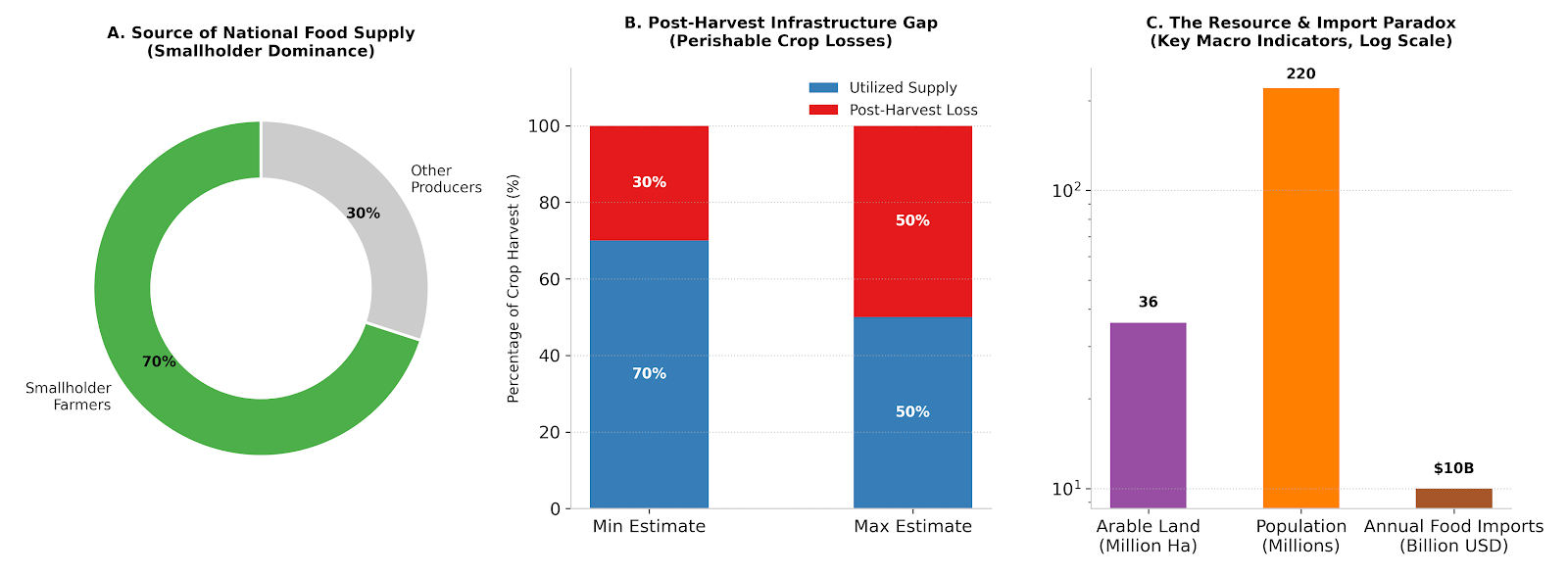
Charts based on data from John Adeolu
Smallholder farmers in northern Nigeria learn new methods of farming to cope with shocks that drive food insecurity in a project sponsored by the United Nations Development Program-Nigeria. (Photo: United Nations Development Program-Nigeria)
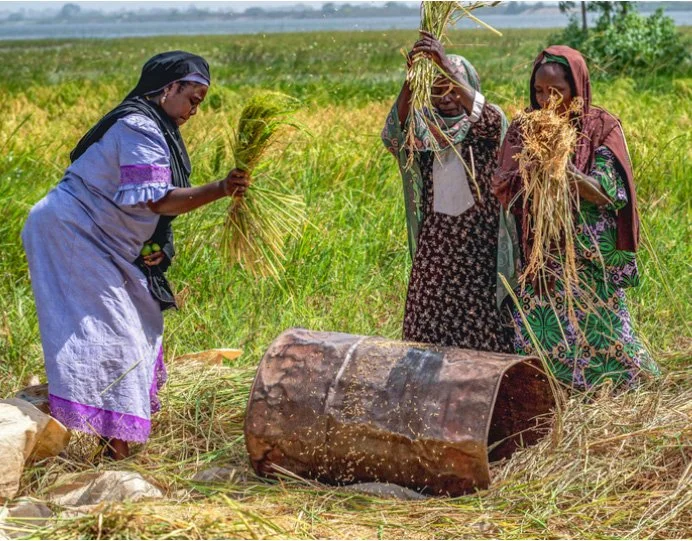
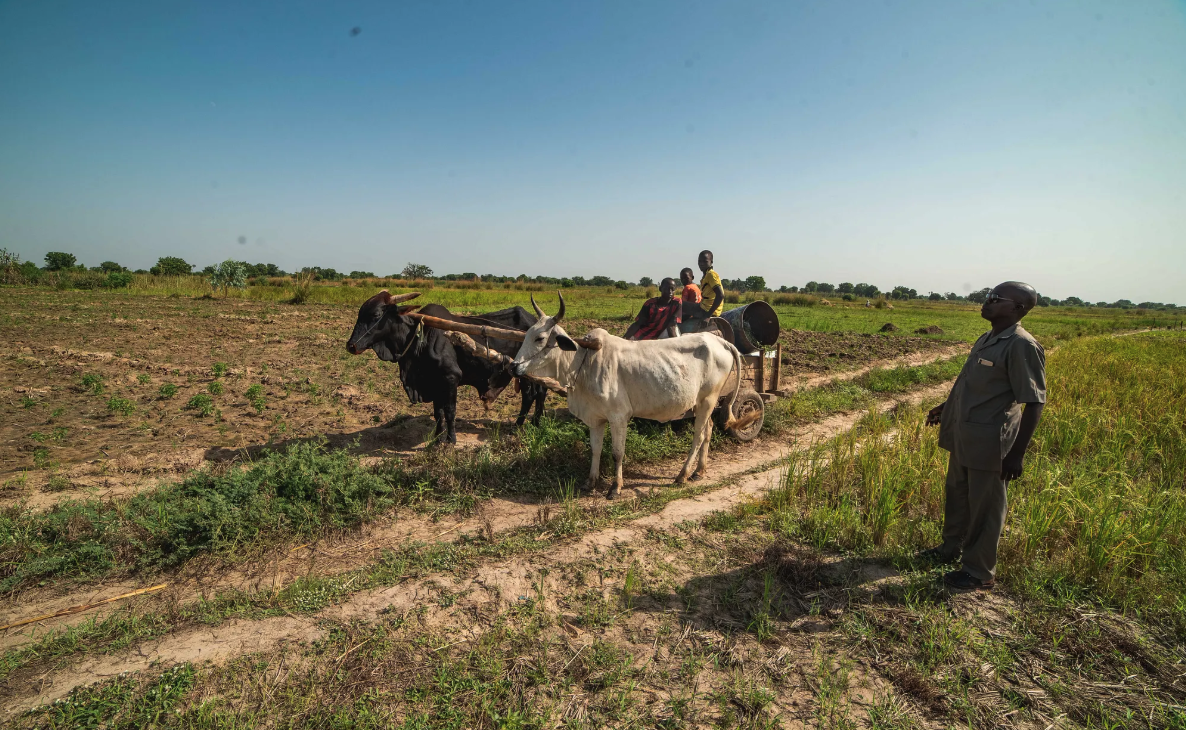
Agricultural workers in northern Nigeria. (Photo: United Nations Development Program-Nigeria)
Part 2
Through her pioneering conservation work, Iroro Tanshi has supported Nigerian farmers by protecting their crops from devastating fires and environmental threats.
In southeastern Nigeria, rural communities rely heavily on subsistence farming, cultivating vital crops like cacao, plantains and cassava. By introducing advanced wildfire mitigation systems and establishing community-enforced forest stewardship laws, Tanshi’s initiatives have successfully prevented controlled agricultural burns from escalating into destructive wildfires.
This not only secures the farmers' immediate livelihoods and food security but also preserves the natural habitat of insect-eating bats, which provide natural pest control for the surrounding agricultural landscape.
Iroro Tanshi, 41, was raised in the industrial town of Warri, Nigeria. Her early passion for wildlife led her to study environmental science, where she witnessed the heavy impacts of the oil industry on natural ecosystems.
Tanshi obtained a degree in environmental science and a master's degree in environmental quality management at the University of Benin in Nigeria. She then studied at the University of Leeds in England for a master's in biodiversity conservation and at Texas Tech University for PhD.
In 2016, she co-founded the Small Mammal Conservation Organization (SMACON).
While surveying caves in Cross River National Park and the Afi Mountain Wildlife Sanctuary, Tanshi rediscovered the endangered short-tailed roundleaf bat which confirmed the species' presence in Nigeria for the first time in 45 years. However, just weeks later, a catastrophic wildfire swept through the forest, threatening this fragile population of fewer than 1,500 individuals.
Determined to combat this recurring threat, Tanshi studied firefighting techniques used in the American West and partnered with US Forest Service programs. In 2017, SMACON launched the Zero Wildfire Campaign alongside 16 rural communities surrounding the 24,700-acre sanctuary. Recognizing that traditional land-clearing fires often escalated due to climate change, Tanshi worked directly with village leaders to draft community-based forest laws that regulated burning through locally enforced fines.
Also SMACON built a sophisticated wildfire early-warning system. Beginning in January 2022, they installed five local weather stations to analyze daily climate data, communicating fire risk to farmers via color-coded village signposts and morning town criers. They also established a fire command center and equipped 50 community "forest guardians" with water backpacks, GPS devices, and motorcycles.
This community-led strategy yielded massive success: between 2022 and 2025, forest guardians successfully contained 74 fire outbreaks on local farms, preventing them from spreading into the sanctuary. Alongside physical interventions, Tanshi introduced youth education programs to foster a generational shift in attitudes toward bat conservation and fire management. Today, Tanshi continues her work in Cross River State, where her team has identified 10 additional bat species and is designing a program to scale this model across Nigeria and beyond.
For her outstanding scientific and humanitarian work, Iroro Tanshi was awarded a 2026 Goldman Environmental Award,
She has also earned the the Henry Arnhold Fellowship (2025), the Pritzker Genius Award (2023) and other international awards and fellowships.
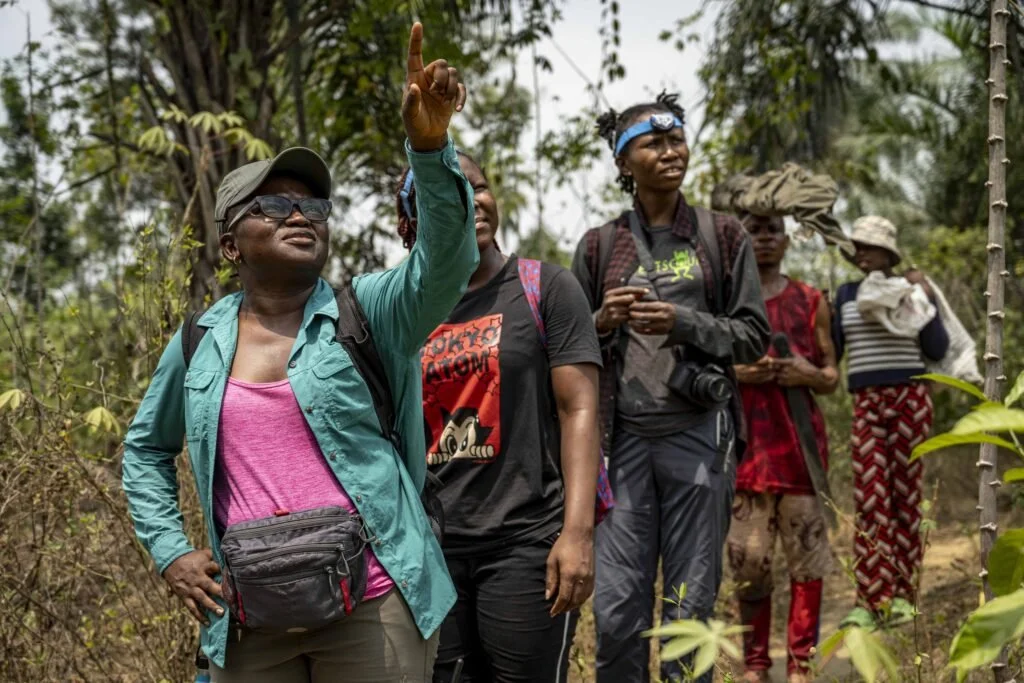
The story of Iroro Tanshi does not end here, in fact, it is just the beginning of what you should know about her work that spans science, community engagement and environmental stewardship.
At the April 20, 2026 Goldman prize award ceremony, Tanshi said “our planet is on fire” and went on the explain that climate pressures are causing deforestation for various reasons, not just agricultural burns. She announced that she has organized a new project called the Tropical Fire Alliance with the goal of returning forests in tropical regions around the world “back to being carbon sinks and at the same time time to help to cool our planet.”
As the Ecollective coverage continues, we will report on this and other developments, including Tanshi’s partnership with her husband, Benneth Obitte,who is also a conservation ecologist.
One urgent question that we have for Drs. Tanshi and Obitte comes from the news of an Ebola outbreak in the Democratic Republic of the Congo. The source of the outbreak is bats carrying the virus. The spread of the disease was caused by mining migration, wildlife habitat disruption, and social and political conditions in the rubber and mineral rich region that imperialist powers and multinational corporations have continuously exploited since Belgian colonial control.
What practical, science-based strategies do Tanshi and and Obitte recommend to deal with the bats and curb the spread of Ebola and prevent future epidemics?
John Adeolu is a farmer, agribusiness developer, environmentalist (sustainability advocate) and contributing writer for the Ecollective.
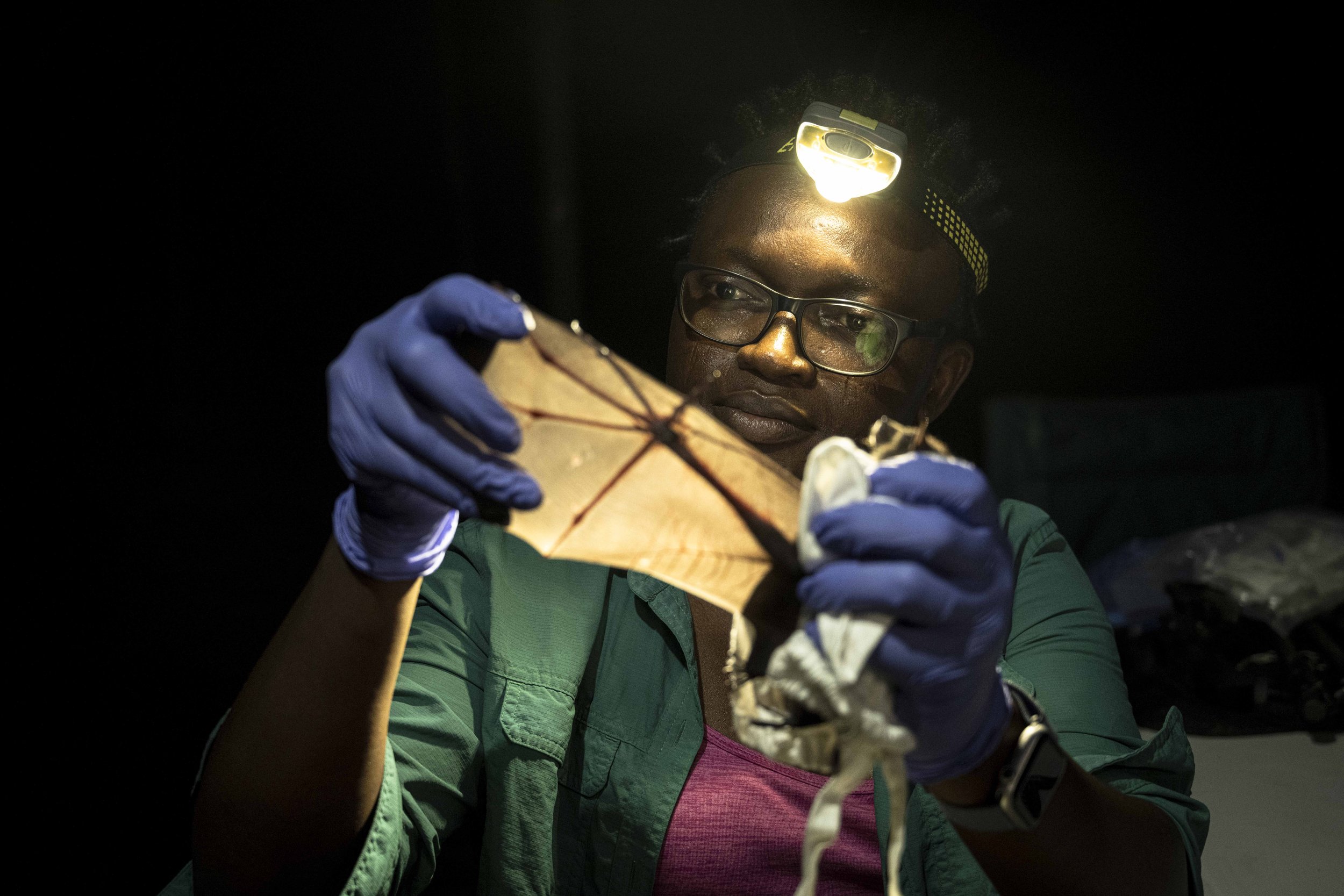
Iroro Tanshi examines the wing of a short-tailed round leaf bat in Odukpani, Cross River State (Photo: Etinosa Yvonne for the Goldman Environmental Prize)
Iroro Tanshi and team members setting bat traps in Odukpani, Cross River State (Photo: Etinosa Yvonne for the Goldman Environmental Prize)
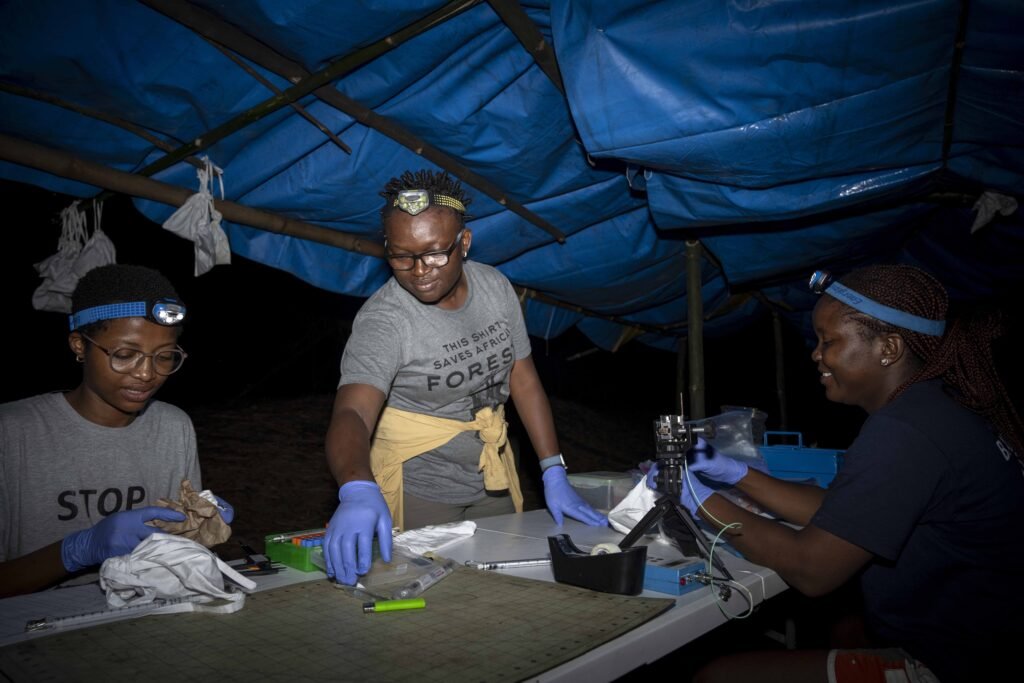
Iroro Tanshi and team members during morphometric data collection in Odukpani, Cross River State (Photo: Etinosa Yvonne for the Goldman Environmental Prize)
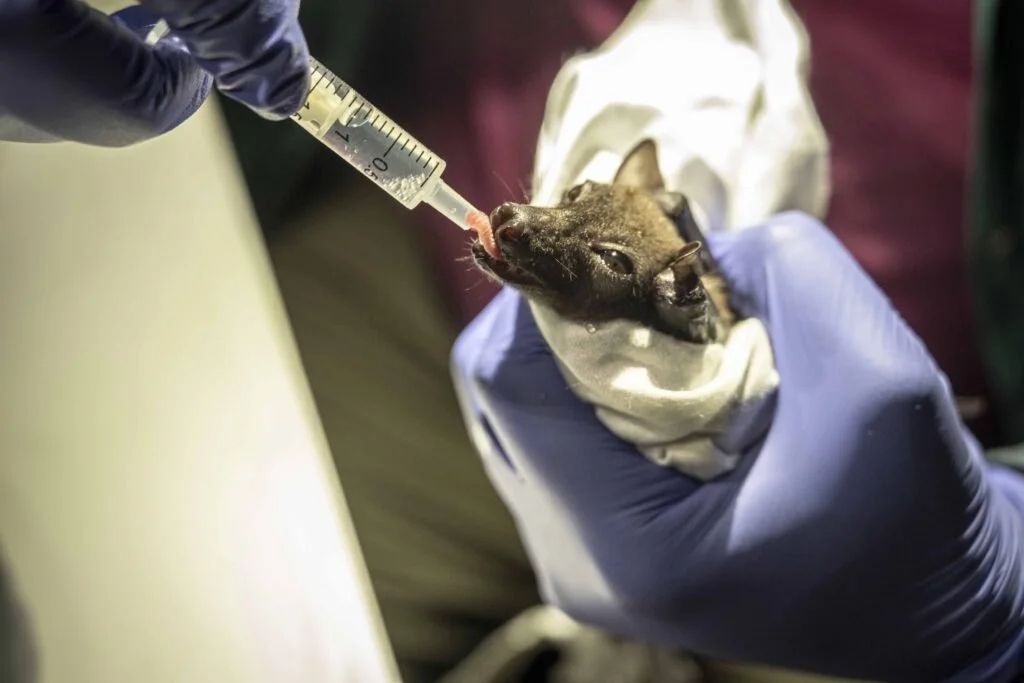
Iroro Tanshi feeds an Angolan soft-furred bat in Odukpani, Cross River State (Photo: Etinosa Yvonne for the Goldman Environmental Prize)
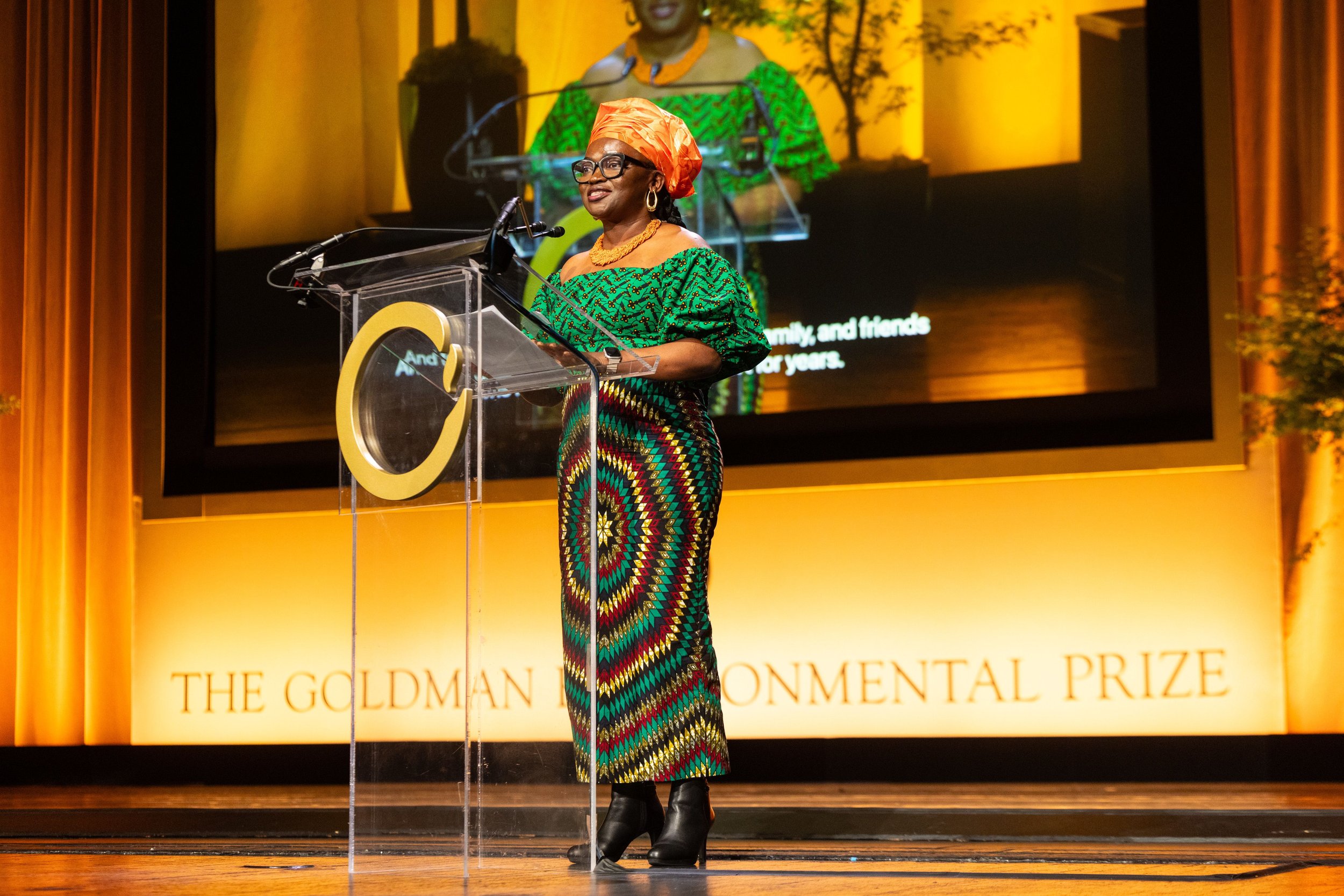
Iroro Tanshi accepting the 2026 Goldman Environmental Prize in San Francisco, CA. (Photo: Goldman Environmental Prize foundation)
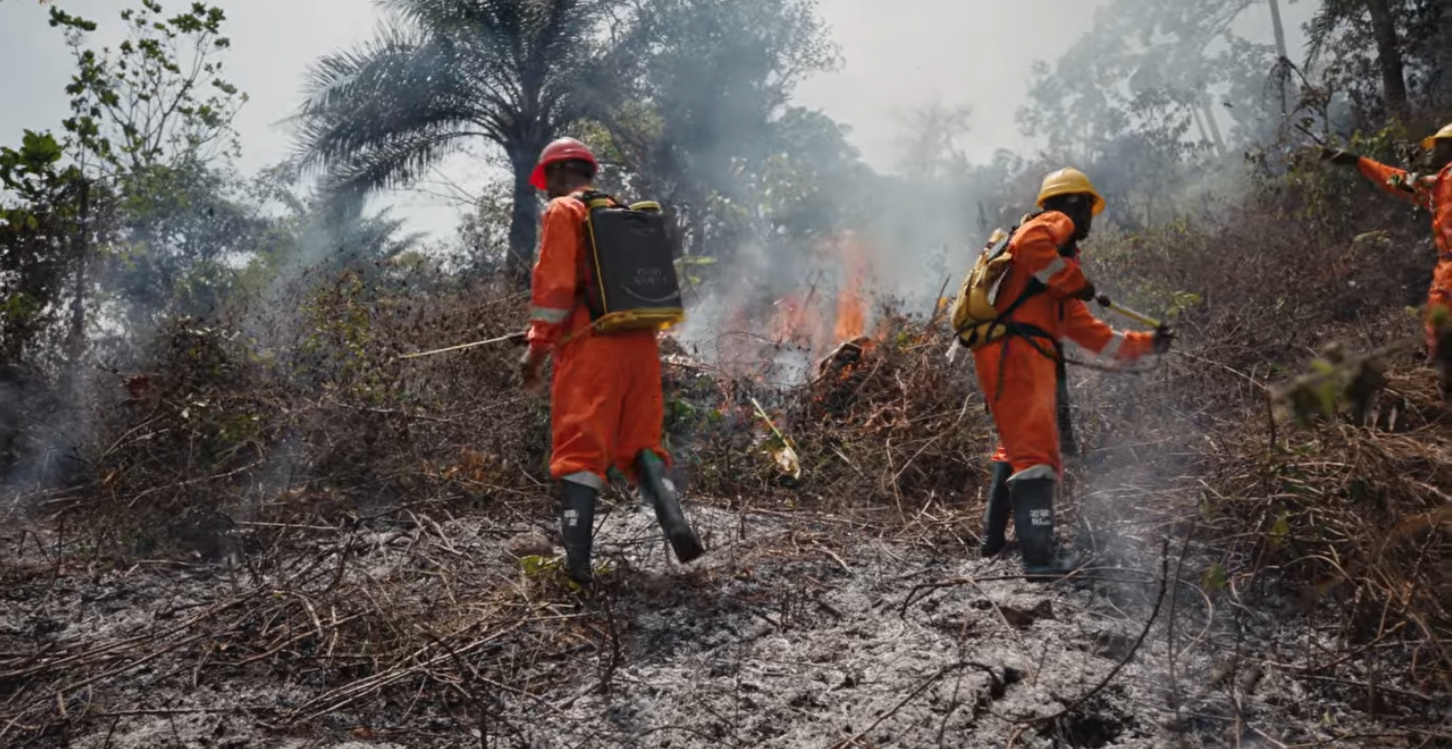
Iroro Tanshi founded the Forest Guardians by training people from local communities to put out wild fires and to prevent them.
Still image from Goldman Foundation video documentary on Iroro Tanshi. Watch it here.
The agricultural practice of intentionally burning land had benefits (clearing thick, wild vegetation and wood ash enriching the soil) but the tradition was undermined by climate change. On a warming planet, the burns escaped management and became rampant wildfires.
Iroro Tanshi. organized community meetings, and trained and equipped the Forest Guards after a uncontrolled wildfire literally could not be put out until it finally, after a long run, petered out on its own.
Protecting the bats is as important as protecting the land.