
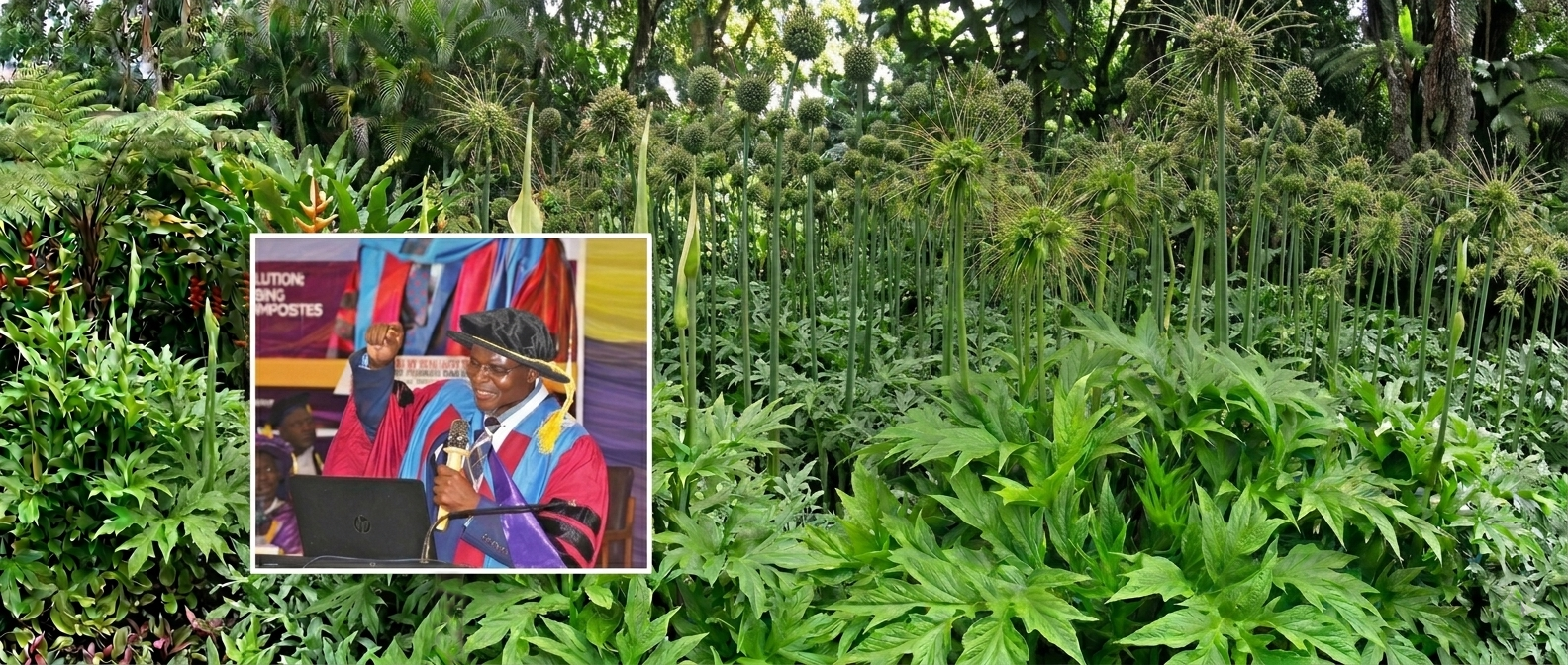
Stephen Shaibu Ochigbo on February 26, 2026 speaking at the 120th Inaugural Lecture of FUT Minna on the topic, “Waste Plastics’ Environmental Pollution: Proffering a Holistic Solution Using Biodegradable Polymer Blends and Composites.” The Taaca plant used for this solution is shown in the background.
Nigerian chemist tackles pollution with biodegradable plastics
He also wants to restore humans to their “original condition”
By John Adeolu
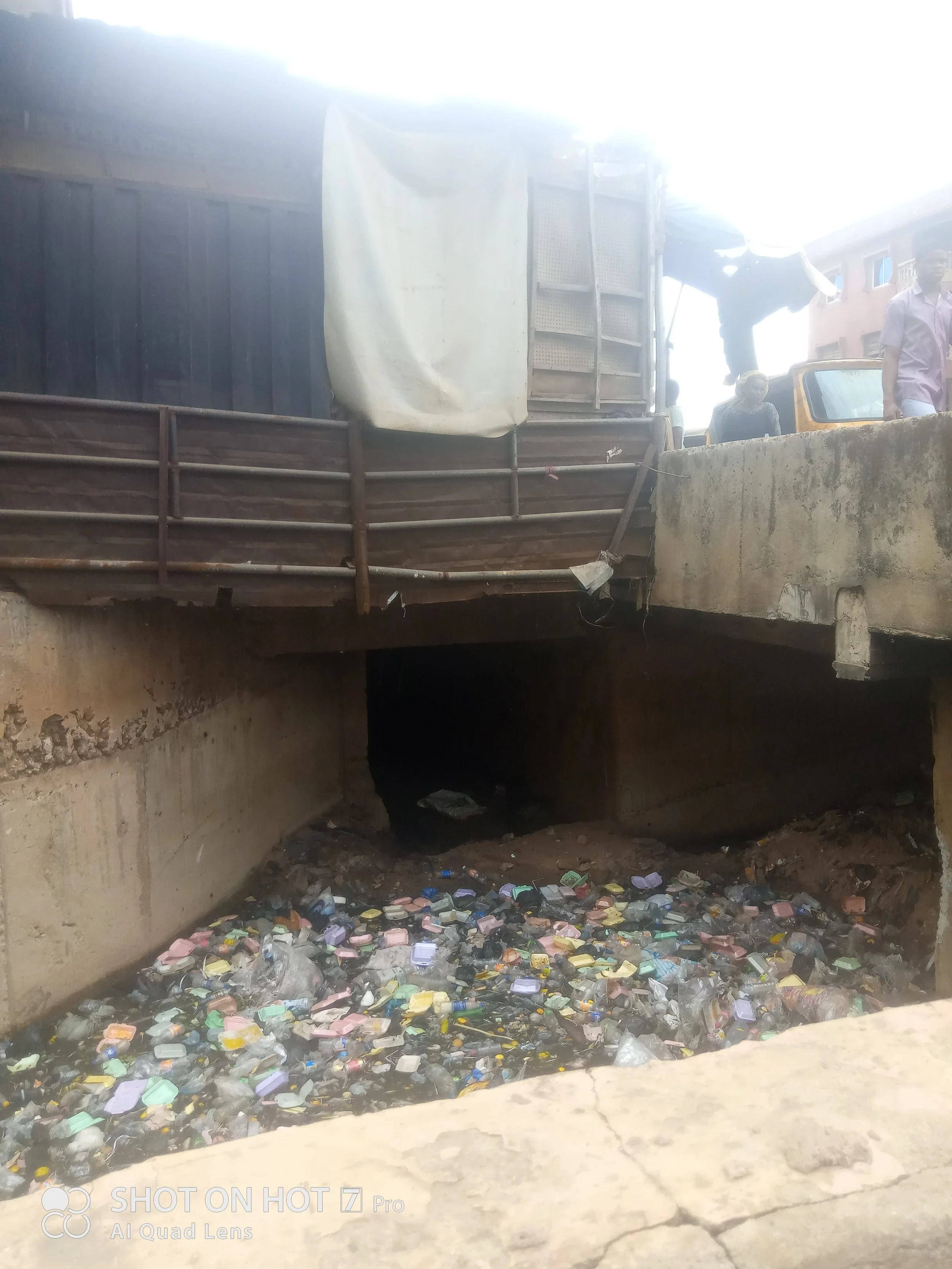
In the fast-growing metropolis of Lagos, the most populous city in Africa, the streets bustle with the energy of over 17 million people. Alongside this urban expansion lies a mounting environmental crisis. Every single day, an estimated 50 to 60 million used plastic water sachets are tossed into the streets. During heavy rains, they clog waterways, choke drainage systems, and inevitably make their way into rivers and oceans.
But at the laboratories of the Federal University of Technology (FUT) in Minna, Nigeria, Stephen Shaibu Ochigbo, a professor of polymer chemistry, is working on a holistic solution that doesn't just manage plastic waste but changes the material used for disposable product containers and has many beneficial applications for other uses as well as for environmental protection.
In March 2026, I interviewed Professor Ochigbo about this critically-needed research for the article that follows.
Prof. Ochigbo’s journey into environmental chemistry is rooted in his own educational history. A native of Ojakpama-Adoka in Benue State, Nigeria, his academic path took him across the continent, shaped by a forceful underlying philosophy.
"In 1987, I obtained a Bachelor of Science in chemistry from the University of Maiduguri, and in 1992, I obtained a Master of Science in pure & industrial chemistry from the University of Nigeria, Nsukka," Prof. Ochigbo says. "That institution’s motto is: 'To Restore the Dignity of Man' (referring to human dignity not just male dignity). This motto somehow got ingrained in my mind and has helped me to shape my research philosophy that seeks to restore human beings to their original condition."
That philosophy of restoration drives his work today. As he explains, the modern world is entirely dependent on plastics, making outright elimination almost impossible.
"The single-use plastics' environmental issues tend to significantly overshadow the many conveniences they provide in today's fast-paced lives," he notes, pointing out the practical realities of modern consumption. "Imagine how much inconvenience would result if diapers, shopping bags, nose masks, contraceptives, surgical gloves, food packaging, and plastic bottles and sachets for potable water were not available."
He points out that the current "circular economy" model (which advocates for the reduction, reuse, recycling, and recovery of energy) has failed to stop the accumulation of waste plastics. "Due to the fact that these single-use plastics are non-biodegradable, they last for hundreds of years. Eventually, they metamorphose into microplastics and nanoplastics, which are far more harmful to aquatic and human life than when they are in their bulk form."
The turning point in Prof. Ochigbo’s career occurred far from home. Due to facility constraints in Nigeria, he had traveled to South Africa to conduct his PhD laboratory work in 2006. Two years later, during a postdoctoral fellowship at the University of the Free State, he found his true calling. He assisted Prof. Vladimir Djoković, a visiting researcher from Serbia, in creating biodegradable thermoplastic films from starch.
"It was assigned to me as my postdoctoral project, and by the grace of God, I was able to complete it," Ochigbo says. "After I returned from South Africa, realizing the potential of biodegradable plastics as a promising solution to waste plastic issues, I settled on this aspect of research. I began to explore starch not being used as a human food source, instead of continuing with starch from staple crops as conventionally practiced."
This distinction is crucial. While standard biodegradable plastics often rely on corn or potatoes, potentially driving up food prices and competing with human consumption, Prof. Ochigbo’s innovation looks to overlooked and discarded sources.
"I have targeted those that are either rarely consumed by humans or found in biomasses, which are usually discarded as waste or reserved for animal consumption," he explains. "Amura starch, derived from Tacca involucrata, is an example of a starch species that is used in rare cases for human consumption in Nigeria today. I am focusing on Amura starch and starch derived from biomass to avoid competing with food-based industries."
The result of this research is a sustainable plastic alternative that, when discarded, breaks down naturally. Depending on the compounding constituents and processing, these materials can degrade in a natural environment in anywhere from 28 days to 12 years.
"When disposed of, biodegradable plastics will break down into other environmentally benign products as a result of microorganisms acting on them, such as CO2, water, methane, and biomass," Prof. Ochigbo explains. "The CO2 obtained from biodegradable plastics is reabsorbed in the process of photosynthesis by plants to rebuild carbohydrates. As a result, biodegradable plastics are carbon neutral, which means that they don't increase the greenhouse gases that contribute to global warming."
Despite the clear environmental benefits and the potential to create a massive new agricultural market for rural farmers cultivating starch-producing plants, the path to commercialization of the research is filled with hurdles. The primary obstacle keeping this innovation from moving out of the laboratory and into the hands of consumers is funding.
"My major challenge in moving this research from the laboratory to a large-scale production is the lack of finance that is required to procure the required equipment," Ochigbo says, citing the need for expensive industrial tools like extruders and film-blowing machines to establish a pilot plant.
As governments across Africa grapple with plastic pollution, a common reflex is to implement strict, immediate bans on synthetic plastics. Prof. Ochigbo, however, urges a more collaborative and economically mindful approach.
"Before imposing bans or legislation against non-environmentally friendly commodity products, policymakers and environmental advocates should consider the interests of the manufacturers," he advises. "It is important to consider the huge investments that have been made by manufacturers on the various machines used for processing these products. To strike a 'win-win' situation, manufacturers will expect certain support from those demanding change. Government should aim at mitigating plastic pollution by engaging manufacturers on mutual ways to find a workable solution, rather than outright bans which lead to huge losses and the attendant lay-off of employees."
Looking to the future, Ochigbo’s vision extends far beyond grocery bags and water sachets. He is already exploring how biodegradable plastics can revolutionize the medical field, specifically in targeted drug delivery and tissue engineering to help replace lost organs.
His advice to the next generation of African researchers is: "Engage in research collaborations. My exposure outside the shores of Nigeria started this whole research innovation that I am involved with presently."
“The further humanity moves away from nature, which is synonymous with moving towards synthetics, the greater the dangers.”
Besides their high-volume usage in various applications, waste plastics, as of today, pose an environmental threat mainly due to the raw material used in their production, petroleum. With this source, plastic production weighs heavily in favor of synthetic routes, which result in non-biodegradable products. With Prof. Ochigbo’s current research and innovation, an environment-friendly product that is close to nature is being developed. The closer our outcomes are to nature’s setting, the better for humans. The further humanity moves away from nature, which is synonymous with moving towards synthetics, the greater the dangers.
For this reason, in order to restore humanity to its ‘original condition,’ there must be an emphasis on research which results in products which are environmentally friendly. This is the thrust of Prof. Ochigbo’s research into making biodegradable plastics from renewable, environmentally-friendly and abundantly available starch that is either rarely used (Amura starch), or entirely not used (biomass starch) for human consumption.
John Adeolu is a farmer and agribusiness developer working to advance resilient ecosystems.
Editor’s note: the Ecollective is published on a platform that does not allow us to insert “2” as a subscript in “CO2.”
For more information
Hazards of plastic waste in Nigeria
Nigeria looks to industry in a bid to limit plastic pollution
.
Excerpt from March 2026 interview with Professor Ochigbo
In responding to the question, “Does your biodegradable plastic solution compare with conventional plastics in terms of cost, durability, and environmental impact?,” Ochigbo said:
Without being prejudiced in my answer/response, I imagine that this question can be answered with a question. Is petroleum, which is used to make synthetic non-biodegradable plastics, less expensive than starch, which is used to make biodegradable plastics?
It is obvious that petroleum is more expensive. In addition to the cost implications of petroleum, the health challenges resulting from environmental pollution after the disposal of synthetic plastics are unquantifiable.
Therefore, the use of biodegradable plastics, will no doubt, be cheaper and more sustainable in the long run than using synthetic SUPs.
Also, biodegradable plastic films can be as durable as the synthetic SUPs, depending on their compounding constituents and processing procedures.
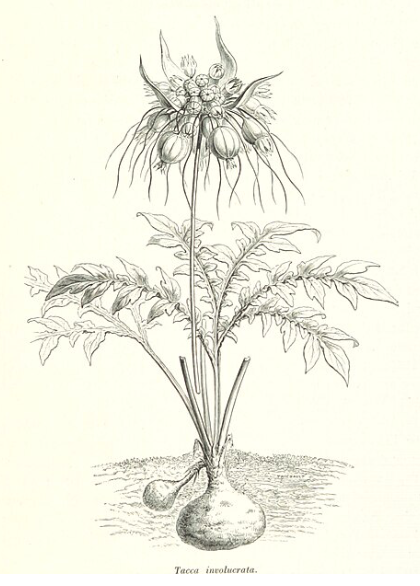
Tacca involucrata.
Tacca varieties include involucrata, leontopetaloides, and chantrieri). Taaca an herbaceous perennial, member of the yam (Dioscoreaceae) family, that is native to Southeast Asia and found throughout humid tropical regions.
Photo (via Wikimedia commons) was taken on the sea coast just southeast of Pemba town, Mozambique.
An abandoned drainage system at Nwangele Bida Onitsha, Nigeria.
By AmarachukwuEbo - Own work, CC BY-SA 4.0, https://commons.wikimedia.org/
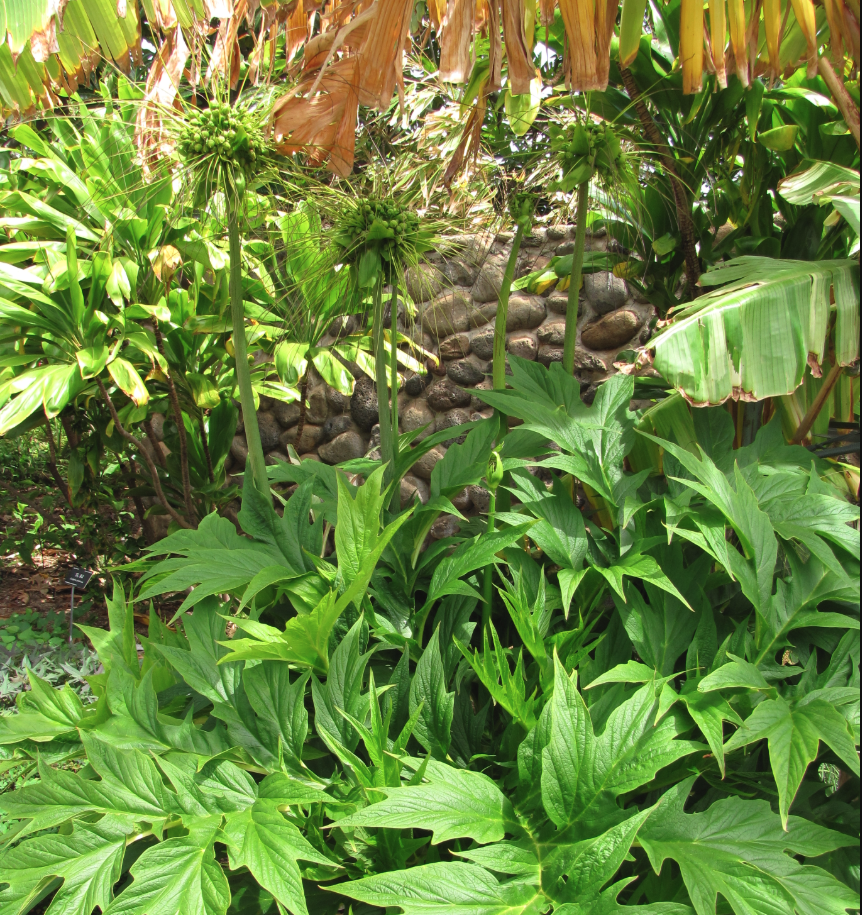
Prof. Ochigbo uses the tuber root of this Tacca plant in his research.
Tacca involucrata
1892 drawing from page 61 of Du Niger au golfe de Guiné e, par le pays de Kong et le Mossi …, Original held and digitized by the British Library.