
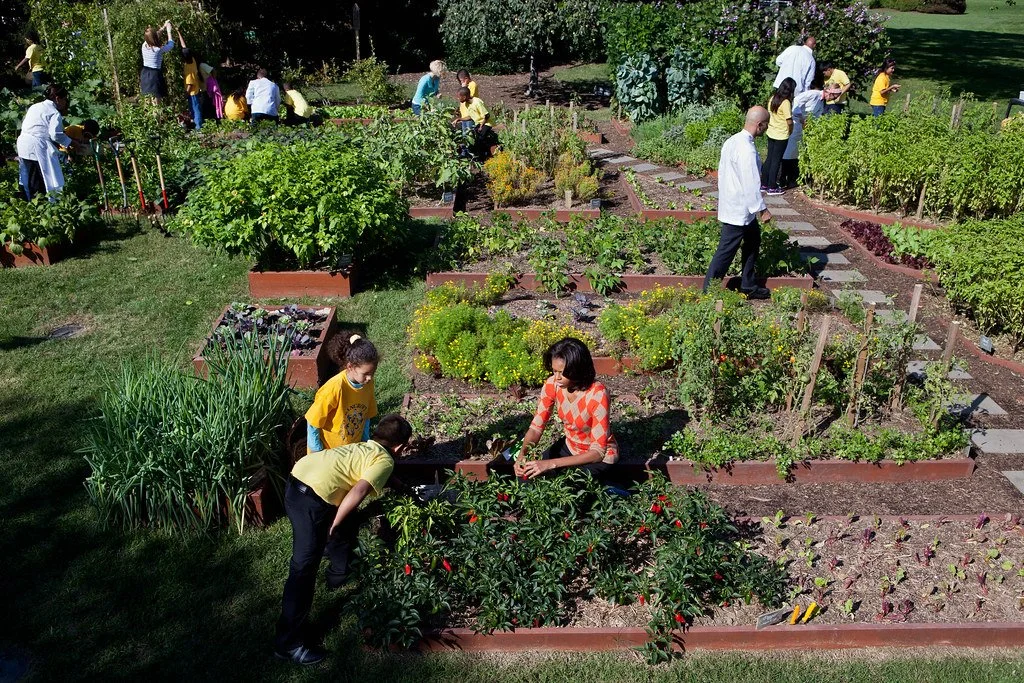
First Lady Michelle Obama and White House chefs join children from Bancroft and Tubman Elementary Schools to harvest vegetables during the third annual White House Kitchen Garden fall harvest on the South Lawn, Oct. 5, 2011. Official White House photo by Chuck Kennedy
The Fruit and Vegetable Garden is just one aspect of the masterfully designed grounds of the Obama Presidential Center. The Obama Foundation partnered with a landscape architecture team led by Michael Van Valkenburgh Associates, alongside Chicago-based Site Design Group and Living Habitats, to weave the new Center seamlessly into Frederick Law Olmsted’s historic Jackson Park.
The landscape design is both highly sustainable and deeply community-focused, featuring several notable outdoor spaces.
All photos in this section are architectural renderings from the Obama Foundation
Michelle Obama and Bo in the White House kitchen garden.
Official White House photo
The historic Women’s Garden at the Obama Presidential Center. Originally designed in 1937 to honor the Suffrage Movement, this sunken circular garden is being meticulously restored. The updated design improves ADA accessibility and adds an enlarged perennial garden that beautifully captures and treats rainwater.
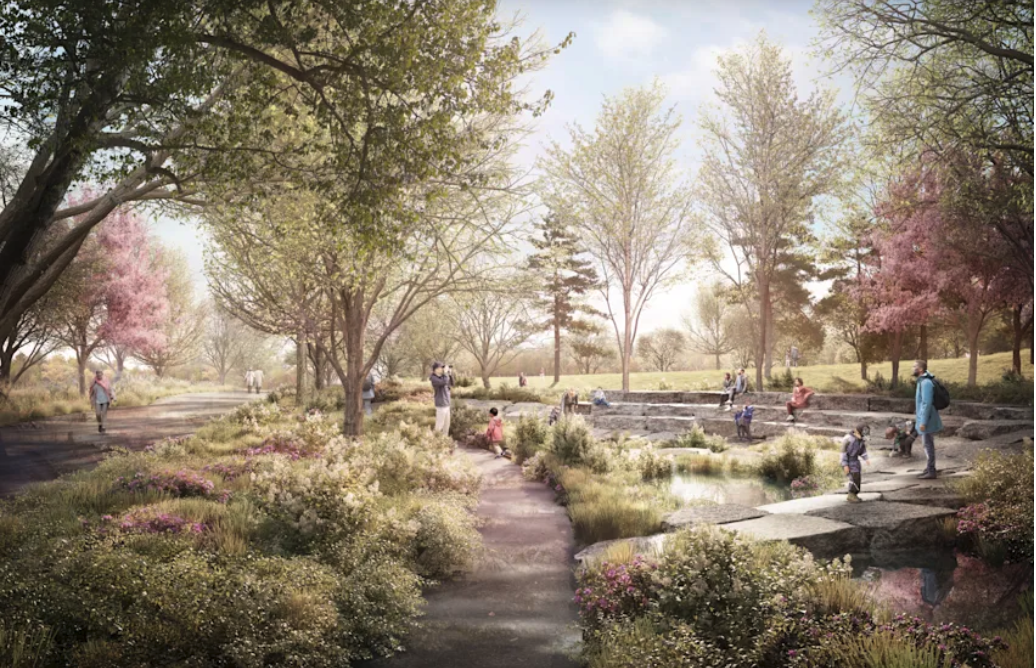
The Wetland walk. This one-acre wetland area will serve a dual purpose: capturing and treating campus stormwater while providing a serene, shaded boardwalk where visitors can walk among the tree canopy and observe local ecological systems.
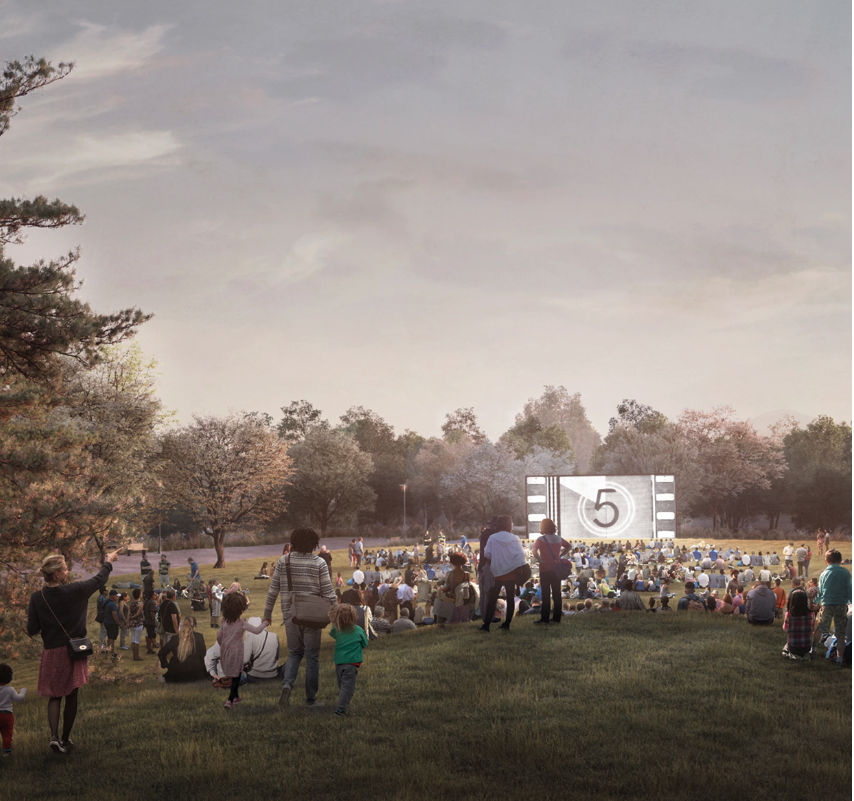
The Great Lawn. A sprawling 58,000-square-foot open space designed for joyful community exchange, perfect for summer picnics, reading, and even winter sledding.
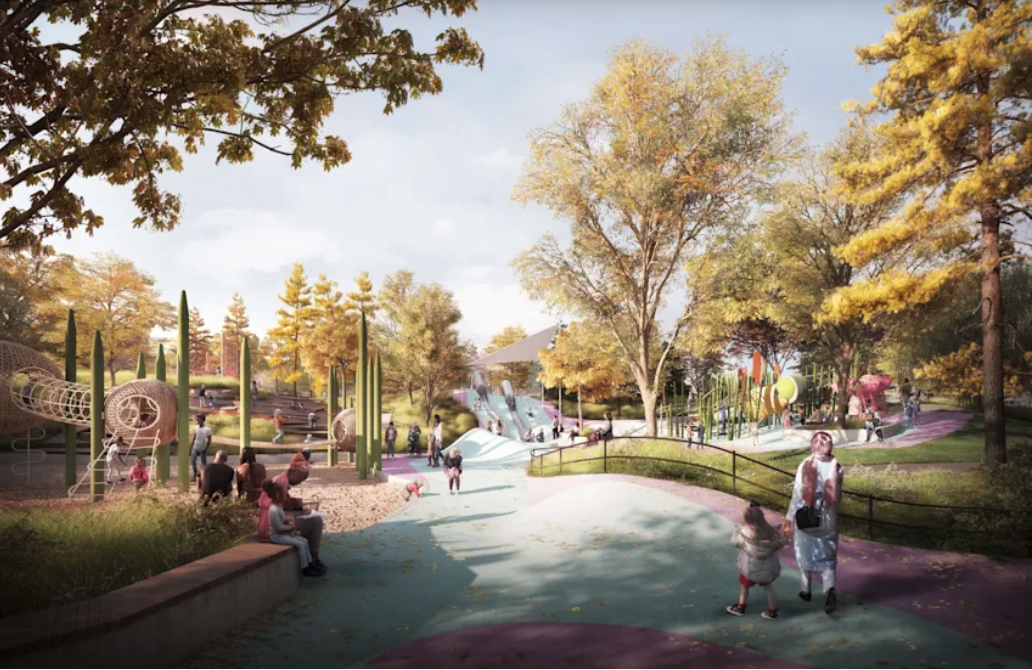
A World-Class Playground. Replacing an outdated facility, this new two-acre play area is themed around lagoons and woodlands. It features ADA-accessible equipment and imaginative structures inspired by local wildlife, like the endangered Hine’s Emerald Dragonfly.
Side shoots
The trajectory of Whitney Smith
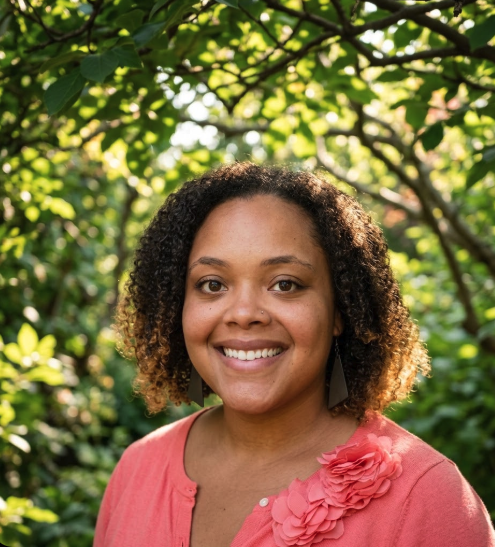
Whitney Smith, alumna of the sixth White House garden cultivation
In the spring of 2015, Whitney Smith received a mysterious, short-notice invitation requesting she clear two days from her schedule. At the time, she was serving her second term as a FoodCorps member with the Detroit Black Community Food Security Network. Her curiosity was rewarded when she found herself on the South Lawn of the White House, working alongside First Lady Michelle Obama and local students to plant the sixth annual White House Kitchen Garden.
Smith’s journey to that historic lawn began at Wellesley College, where she double-majored in environmental studies and economics. Driven by a commitment to food justice, she joined FoodCorps, an AmeriCorps-backed national service program focused on connecting youth to healthy, real food in support of the Let's Move! initiative. In Detroit, her service centered on empowering students through urban agriculture, hands-on gardening, and culturally appropriate nutrition education. Her dedication resonated deeply with Michelle Obama, who hugged the visiting Food Corps delegation at the planting event and praised their mission of teaching healthy habits as "brilliant" and "close to her heart."
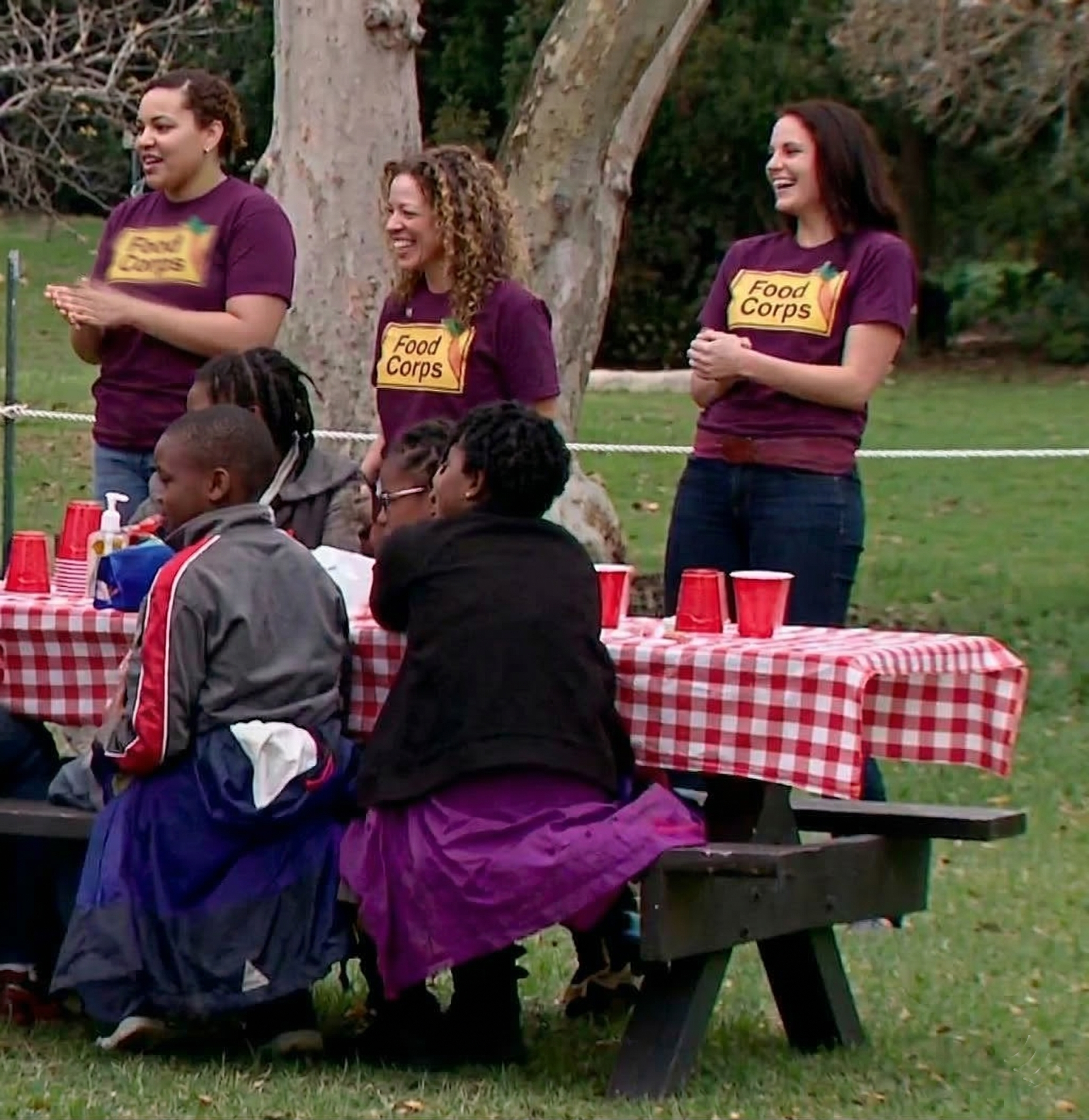
Whitney Smith (on the left, standing ) claps during Michelle Obama’s talk to the students about bees and biodiversity and why they matter for people’s health and the health of the planet. Photo: still from White House video on Youtube.
Following her work at the White House, Whitney Smith continued to increase her environmentalist involvements. She earned a M.S. in natural resources and environmental management from the University of Michigan, where she contributed to USDA-funded research on environmental justice and food systems.
Her career soon transitioned into municipal work for the City of Detroit. Through the Office of Sustainability, she led community engagement for the development of Detroit's first sustainability plan. She later stepped into the role of tree equity and canopy program manager, where she spearheaded city-wide urban forestry strategies alongside landscape architects and city planners to increase climate resilience and integrate trees into urban planning.
Today, Whitney Smith—who is married to a chef and raising a son—serves as a special projects and operations manager for the City of Detroit. In this role, she manages the end-to-end execution of high-priority municipal projects that include supporting the implementation of new housing initiatives.
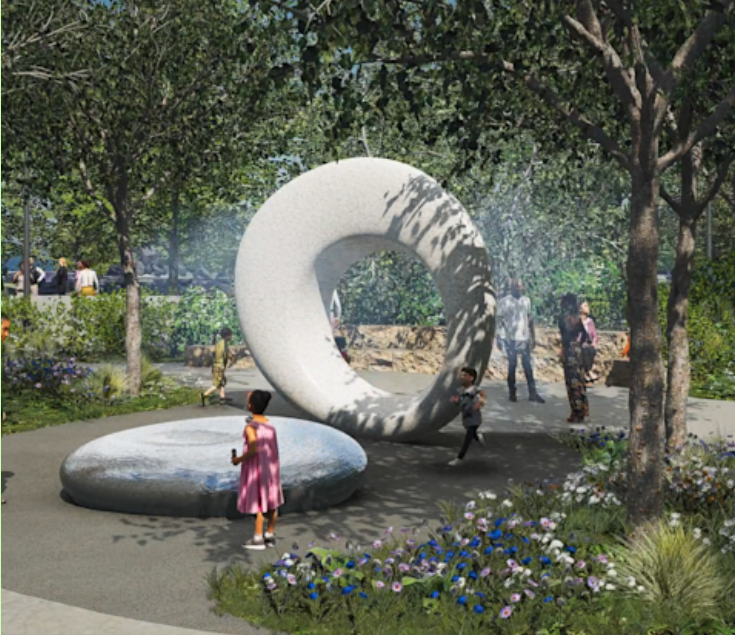
The Ann Dunham Water Terrace. Honoring the life and legacy of President Obama’s mother, this introspective space features a stunning sculptural water feature designed by the world-renowned artist and architect Maya Lin.
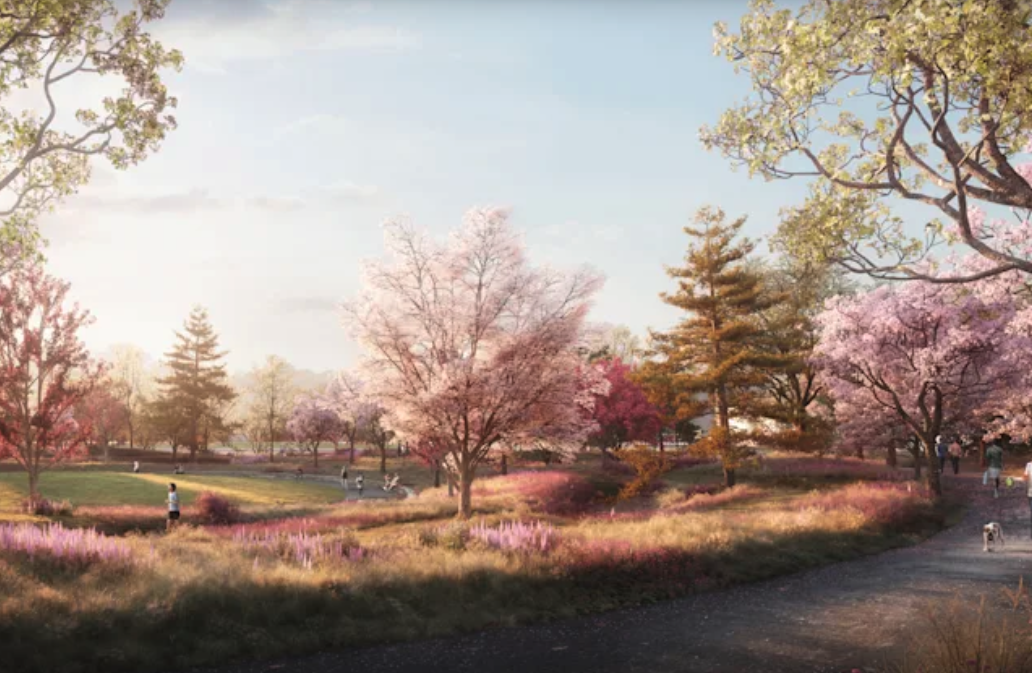
Beyond aesthetics, the entire Obama Presidential Center campus is an engineering marvel of sustainability. It is designed to capture and reuse 98 percent of onsite rainwater, source 100 percent of its electricity from renewable energy, and operate entirely without fossil fuels, aiming for LEED Platinum certification.
Except from the OPC sustainability statement
The Obama Presidential Center will source 100 percent of its electricity needs from renewable energy. All buildings and facilities will be LEED v4 Platinum , Zero Energy, and International WELL Health-Safety certified, ensuring that the campus maintains an efficient, sustainable landscape. No fossil fuels will be used in day-to-day operations and solar panels will be installed on the roof of the Garden Pavilion and the Home Court at the Obama Presidential Center.
The campus will have a comprehensive water conservation system that relies on recycled water resources. By capturing and reusing a significant amount – 98 percent– of rain that falls onsite, we will save over 1 million gallons of potable water use each year. This will result in an 89 percent reduction in building water use and a 75 percent reduction in overall irrigation demand.
In an effort to support water conservation, the Obama Presidential Center will feature a Wetland Walk, which will capture stormwater that will be treated and reused to irrigate the landscape. The Wetland Walk will contain walking paths that thread through the area, a tree canopy, and a place for children to play. Seating will be built out of large stone blocks that can be used for classes, small gatherings, or simply as a spot to stop and enjoy the park.
Michelle Obama’s gardens from DC to Chicago
When First Lady Michelle Obama broke ground on the South Lawn of the White House in the spring of 2009, she was planting much more than just a vegetable patch. She was seeding a national movement toward healthier eating, environmental consciousness, and community engagement. Today, that legacy is putting down permanent roots in Chicago’s historic Jackson Park at the Obama Presidential Center (OPC), which opens June 19, 2026.
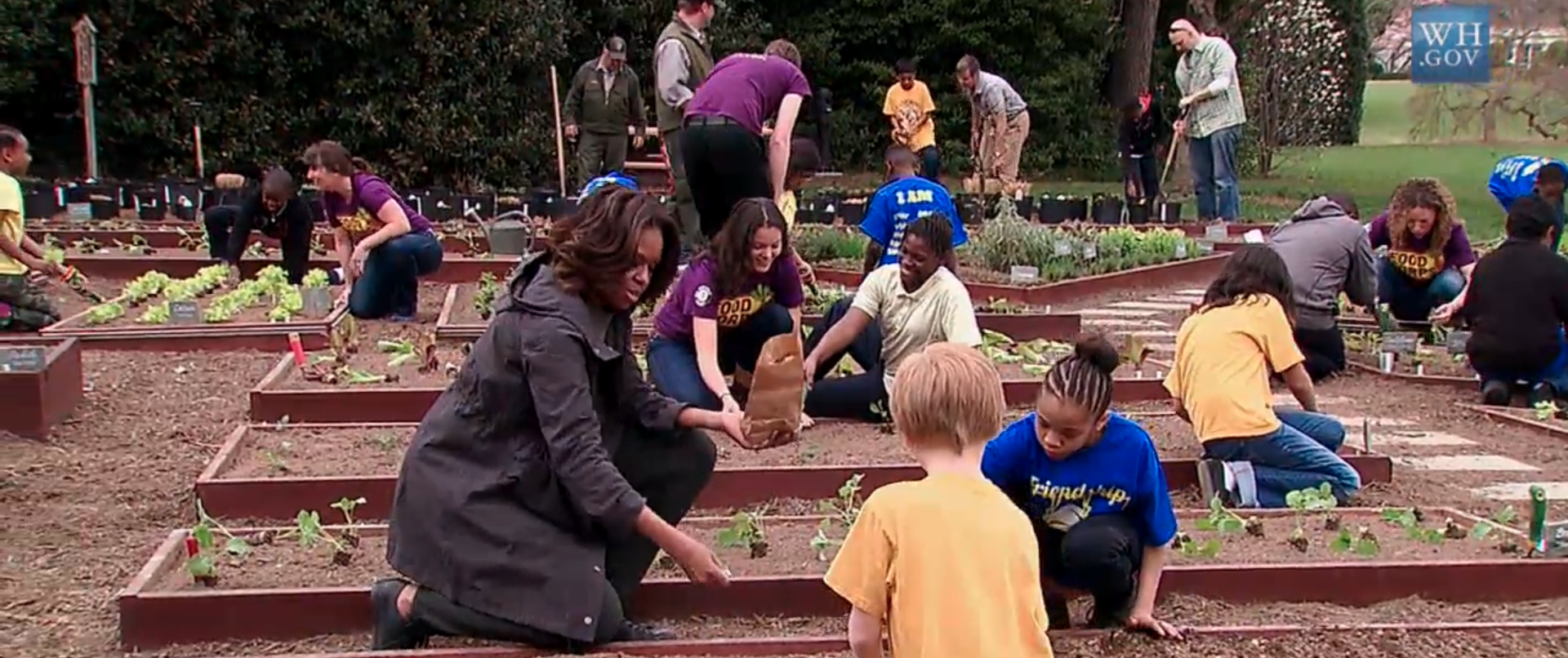
Michelle Obama and DC school children planting the White House kitchen garden in 2015. Photo: still from White House video on Youtube.
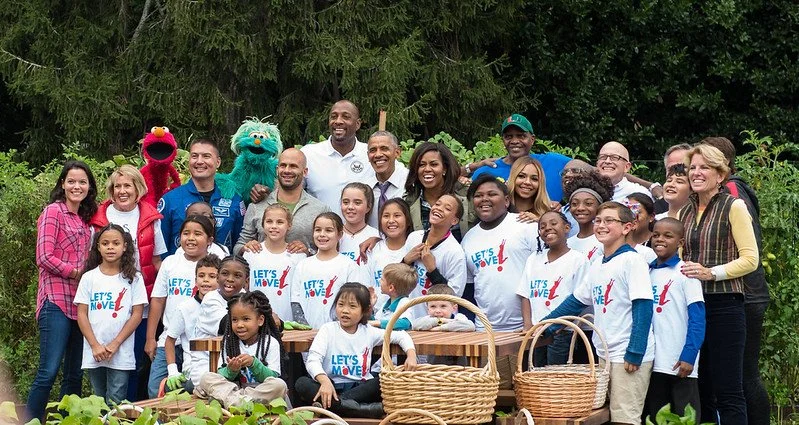
President Barack Obama and First Lady Michelle Obama pose for a group photo after harvesting the White House Kitchen Garden for the final time with students participating in Let’s Move programs at schools across the country, on Thursday, October 6, 2016 in Washington. NASA astronaut Kjell Lindgren, Al Roker, The TODAY Show, Alonzo Mourning, NBA All-Star and member of the President’s Council on Fitness, Sports & Nutrition, Ashanti, Grammy award winning singer and others joined the First Lady in harvesting the garden. In the Spring, NASA officials joined the First Lady in planting seeds in the garden, including seedlings of the same variety of lettuce that has been grown on the International Space Station as part of the Veggie experiment. Lindgren harvested the original crop of lettuce on the Space Station during his time on orbit. Credit: NASA/Aubrey Gemignani)
Located at the bottom of the White House grounds (the South lawn), the kitchen garden was spared the fate of the gardens that were cleared to make space for President Trump’s paved over patio and his monumental Trump ball room.
Mrs. Obama’s White House Kitchen Garden was the first major vegetable garden on the presidential grounds since Eleanor Roosevelt’s victory garden during World War II.
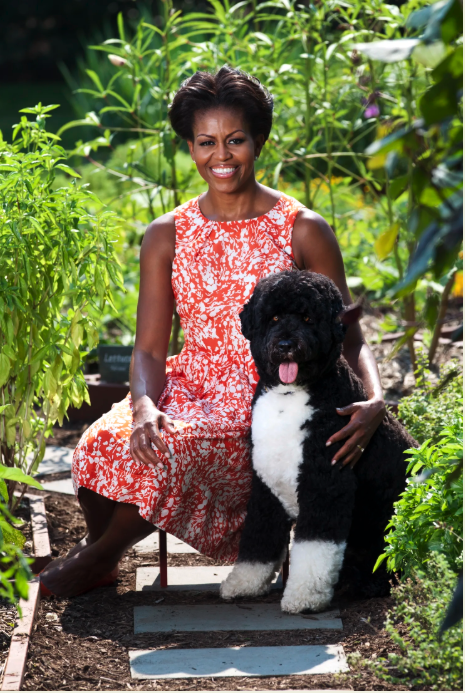
Michelle Obama started the garden in 2009 to initiate a national conversation about the health and well-being of the country, a dialogue that ultimately blossomed into her signature Let’s Move! initiative to combat childhood obesity. With the help of local schoolchildren, the White House groundskeeping staff, and chefs, the garden produced dozens of varieties of fruits, vegetables, and herbs. The harvests were used for First Family meals and official State Dinners, with surplus produce regularly donated to Miriam’s Kitchen, a local Washington D.C. soup kitchen.
Over the eight years of the Obama administration, the garden evolved to include a pollinator garden and the first-ever documented White House beehive. Before leaving office, Mrs. Obama ensured the garden's permanence by adding structural elements like an arbor and benches crafted from salvaged historical wood, leaving a lasting symbol of the importance of connecting with the food we eat.
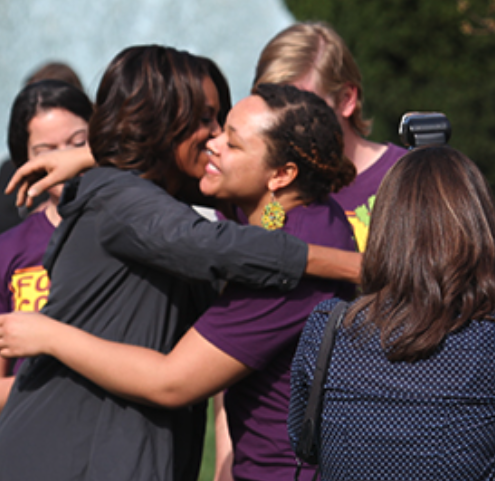
Michelle Obama embraces Whitney Smith. White House photo.
The spirit of the South Lawn is now being transplanted to the South Side of Chicago. At the heart of the 19.3-acre Obama Presidential Center campus is the new Eleanor Roosevelt Fruit and Vegetable Garden.
Honoring the legacy of two trailblazing First Ladies, this new garden is designed as an interactive, educational hub for the community. The tribute to Eleanor Roosevelt is very fitting; beyond planting her own historic Victory Garden, she was a lifelong advocate for youth agricultural programs. During the 1930s and 1940s, she actively supported New Deal-era initiatives that brought young people out to rural New York to work on cooperative farms and learn hands-on agricultural skills.
Visitors to the OPC will be able to explore dozens of garden beds featuring local plants and native vegetables. Like its White House predecessor, it is intended to be a teaching space where children and adults alike can learn about urban farming, composting, and responsible consumption. It stands as a living testament to Michelle Obama’s belief that teaching people how to grow their own food empowers communities and fosters lifelong healthy habits.
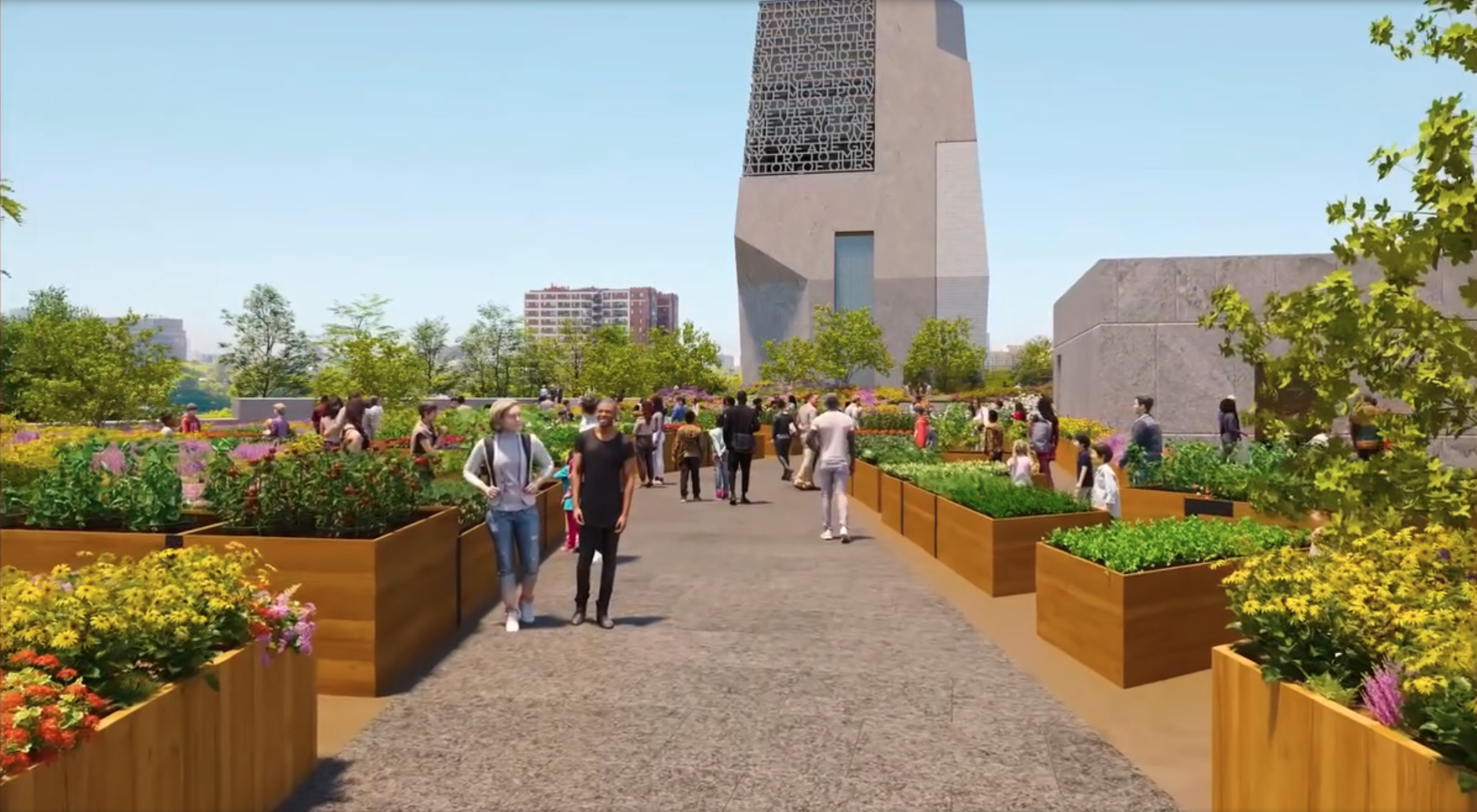
Architectural rendering of the Eleanor Roosevelt Fruit and Vegetable Garden at the Obama Presidential Center. The veggie produce will supply the Center’s teaching kitchen.