
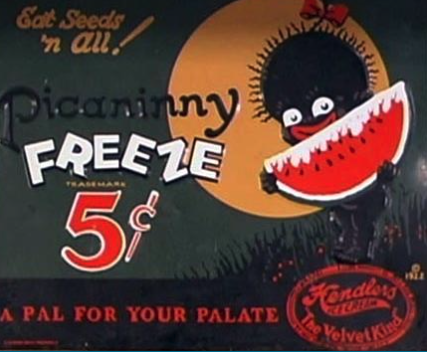
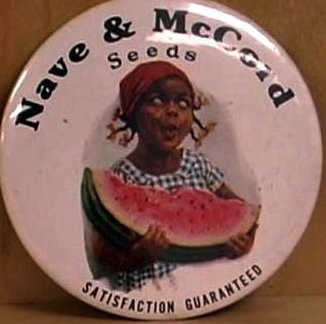
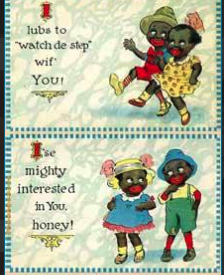
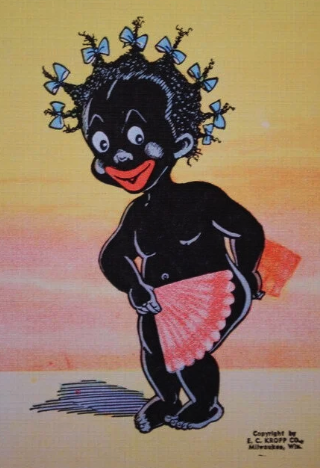
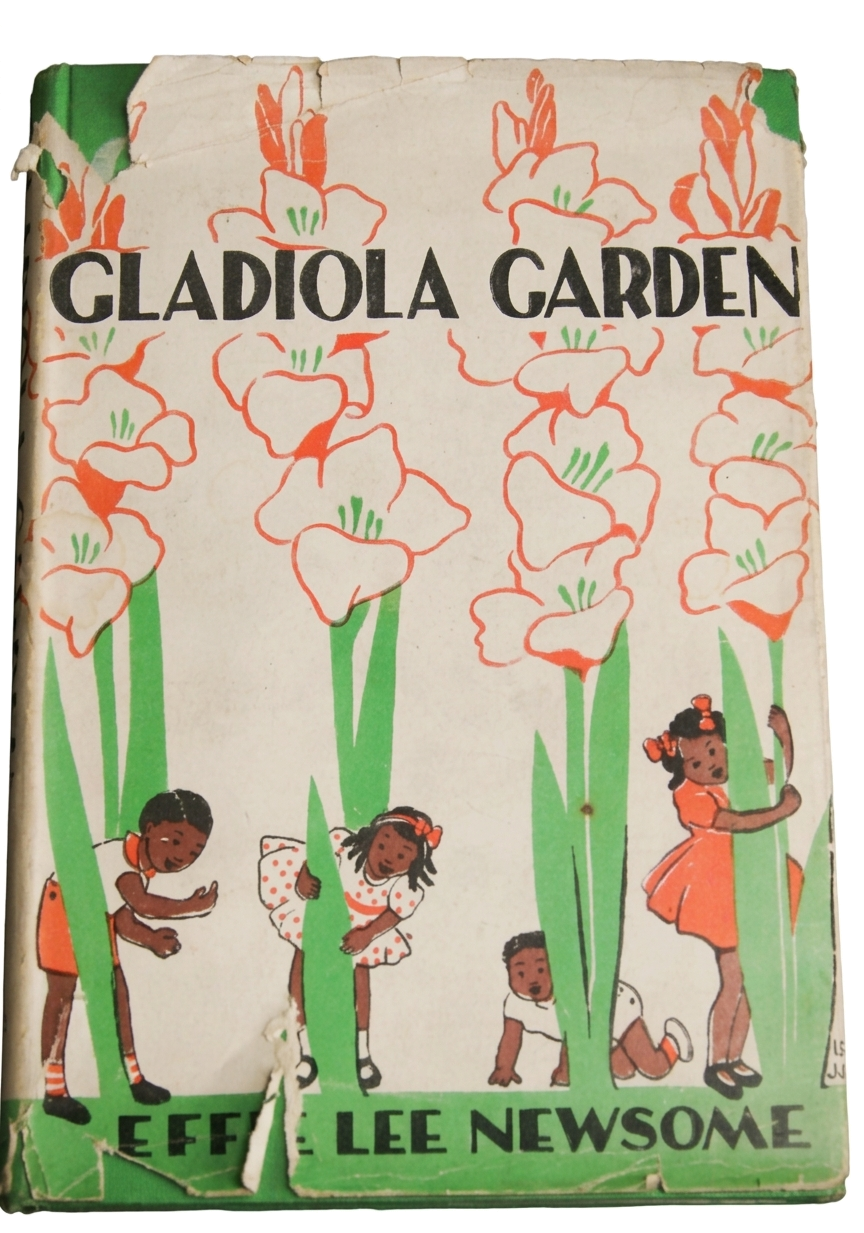
Published in 1941, Effie Lee Newsome’s Gladiola Garden book for young readers was a charming rebuttal to the racist caricatures of African American children that had wildly proliferated in U.S. print media and popular culture.
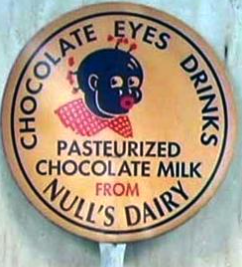
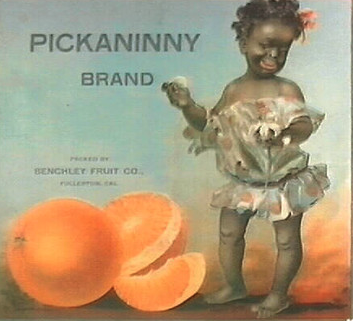
Effie Lee Newsome ((January 16, 1885 – 1979) was a “nature lover” in many ways: nature writer, nature-inspired visual artist, gardener, birder and commentator who often alluded to natural phenomena when referring to people and events in society. Listen and learn more about Newsome’s curiosity-and-wonder-filled-life in this February 12, 2025 Cultivating Place interview, The Poetic Garden Legacy of The Harlem Renaissance's Effie Lee Newsome with Reverend Jerri Mitchell-Lee, guest host Abra Lee. Jerri Mitchell-Lee is Effie Lee Newsome’s niece, and is, like her aunt, an author and naturalist. Abra Lee is a horticulturalist and historian of African American garden history.
Poetic Nature
The Art & Artistry of Effie Lee Newsome and Collaborators
By Jacquelyn Y. McLendon
Effie Lee Newsome wrote nature poems and stories especially for children, and her work, often accompanied by her own drawings, is found in major publications of the Harlem Renaissance such as The Crisis, Opportunity, and The Brownies Book. Her only published collection, Gladiola Garden : Poems of Outdoors and Indoors for Second Grade Readers. Although Newsome often illustrated her own work, the poems in Gladiola Garden are accompanied by Lois Mailou Jones’ lovingly-rendered, black and white illustrations with only the cover of the collection in color.
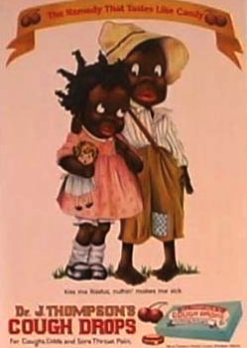
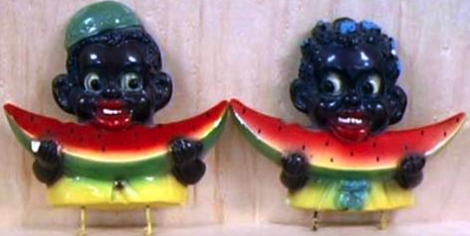
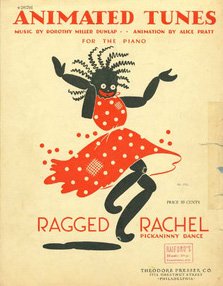
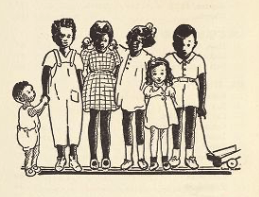
Newsome’s and Jones’ nature poetry and drawings demonstrate their view of African Americans’ close relationship with the environment and their positive views of African Americans themselves, especially children. Indeed, the book, in both words and pictures, makes comparisons of frequently referenced “brown-skinned” children to nature. The illustrations avoid stereotypical portrayals of African American children—the picaninny caricature, for instance—that often appeared in traditional American literature, but without sacrificing distinguishable African American features. Gladiola Garden is testament to a belief many blacks have long held and that bell hooks puts simply and eloquently into words in her essay “Touching the Earth”: “When we love the earth, we are able to love ourselves more fully.”
Gladiola Garden opens with the titular poem in two stanzas, one of six lines and the other of nine, that set the tone for the entire book:
In red and orange, cream and rose
The happy GLADIOLA grows
In slim green boots,
In tall green rows.
There are so many colors here,
So many tints, so much good cheer!
This first six-line stanza is a colorful personification of the gladiola flower. The sing-song rhythm, appropriately aimed at children, results from short lines of four, then two, then four metrical feet. The rhyming couplets—disrupted by line three that doesn’t rhyme with any of the other lines, mitigating monotony—create a tone of happiness, of the “good cheer” with which words the stanza ends.
The second stanza begins with the line “O little girl, O little boy,” as a direct address to, perhaps even an invocation of, little girls and boys collectively, and as the speaker goes on to compare them with the gladioli, it is clear the comparison is specifically to African American children: “In gardens of mixed shades, much joy, / One really has to think of you, / For you are many colors too” (8-10). The poem continues with images of children in “cheery” clothing and hats, with faces that show “light and gladness,” and acknowledges that the children “…make through earth / Gay garden places” (11-15). Jones’s accompanying black and white drawing of gladioli together with Newsome’s effusion of colorful imagery reinforces the poem’s overall message. The imagery and rhythm set the tone for the entire collection.
It is easy to see the appeal to children of this and other poems in the volume but also the appeal to someone who had “longed to see herself within the pages of a special book,” as Amber O’Neal Johnston states in an added Foreword to Gladiola Garden in the 2020 reprint. Johnston’s experience is a familiar one to many who know the importance of the environment in black people’s lives but too often find absent the voices of black people in traditional texts by or about nature artists. Johnston’s search for and discovery of a book like Gladiola Garden resulted from her belief in black people’ attachment to the environment. She writes, “feeling certain that poetry reflecting my children and their attachment to the natural world was somewhere to be found, I began a hopeful search.”
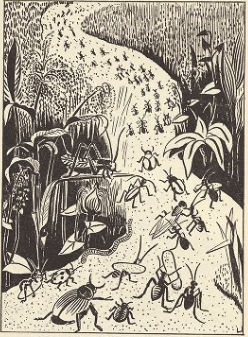
In Gladiola Garden, the search continues to pay off. The poems created by Newsome include almost every aspect of nature in existence: flowers and other plants, certainly, but animals, insects, birds, fish, crafts, food, holidays, various aspects of the universe and the children themselves—all combine, with Jones’ illustrations, to tell a culturally relevant story of what the environment means to black folks and to teach that relevance to children.
In the spirit of The Brownies’ Book (1920), a monthly magazine created especially for an audience the founders called the “Children of the Sun,” to which Newsome was a contributor of stories and poems, and in the column called “The Little Page” that she regularly contributed to The Crisis from 1925 to 1929, both of which included her own illustrations, Gladiola Garden was designed to teach African American children about themselves in relation to the rest of the world. Newsome’s poems were meant not only to delight but also to act as a force for social and political change. To that end, Newsome and Jones’s work embodies several of the goals outlined in W. E. B. Du Bois’s article “The True Brownies” published in The Crisis in 1919 to announce the arrival of The Brownies’ Book, especially the desire “to make colored children realize that being ‘colored’ is a normal, beautiful thing.” Implicit in the contents of Gladiola Garden are other ideas like those aimed at the intended audience of The Brownies’ Book such as the need “[t]o point out the best amusements and joys and worth-while things of life” like the beauty and wonders in the poem “Pansyland” and the accompanying illustration:
O Pansyland is all the earth
When purple shadows fall,
Far more than just some tiny bed
Beside a garden wall.
All evening’s dusk and gold of day
Color the skies in endless way,
And all the west is Pansyland.
We watch the colors as we stand.
Again, although the illustration is black and white, Newsome’s use of colorful images—"purple shadows,” “dusk and gold of day”—capture the splendor of the outdoors. These comparisons are also reminiscent of those made in the titular poem as described above and in a poem such as “To a Little Gold Daisy” in which the child speaker revels in the similarities of the “black-eyed Susan” and her own eyes and name.
Found throughout Gladiola Garden are poems and pictures designed, in accordance with Du Bois’ description in “The True Brownies, “to turn their little hurts and resentments into emulation, ambition and love of their home and companions” as in, for example, “playing quoits with father” or “the little shops” that “all have lollipops to sell” or in being “happy just to smell/ The steaming sassafras tea” made “In my white china cup, / So pretty I keep peeping in/ Before I drink it up” or “A Song of Home” that “My parents bought…with their toil, / Their honor and their worth.” These poems and so many more give young children a sense of pride and delight in their everyday experiences.
One of the fascinating things about Effie Lee Newsome’s poetry is that it demonstrates how in touch with nature she was herself, and it also demonstrates her racial and cultural self-pride—pride that she passed along to children. As she writes in “The Bronze Legacy (To a Brown Boy),” a poem that is not part of Gladiola Garden but speaks to the impetus for all of Newsome’s works, “’Tis a noble gift to be brown, all brown, / Like the strongest things that make up this earth, / Like the mountains grave and grand (1-3). The poem continues with nature imagery and its likeness to black people, ending on an unmistakable note of pride: “I thank God, then, I am brown. / Brown has mighty things to do.” In this poem, as in her poems in Gladiola Garden, Newsome gives to those of African descent nobility, grandness, strength, beauty, and purpose like their natural surroundings. Jones’s art reinforces this point of view as well in that her imagery often depicts African Americans in ways to appear almost indistinguishable from their natural surroundings, as if connected physically and spiritually.
Newsome and Jones’s eclectic and lyrical garden is full of fun, pride, joy, and, above all, God’s wisdom. Gladiola Garden ends appropriately in December in a section titled “Christmas Time,” beginning with the birth of Christ in “The Magi Call Him King,” followed by fun poems about peppermint candy and Santa Claus and ending with “Through The Holly Wreath,” in which the voice of the child persona describes Santa’s nose as “just a great bonbon, / His curls coconut shreds” and Santa’s “lips were smiling […] / In holly berry reds. The black and white illustrations notwithstanding, the words of the poems bring the colorfulness and splendidness of nature to life in fun, imaginative ways for all who immerse themselves in the pages of Gladiola Garden.
Decades after the end of the Harlem Renaissance renewed interest in Newsome’s life and writings—primarily through bio-critical articles and notes—has shed light on her as an important artist. Evidence of this renewed interest is the 1999 publication of the book Wonders: The Best Children’s Poems of Effie Lee Newsome, also with Jones’s illustrations, edited by Rudine Sims Bishop, who states in its introduction that Newsome was a “pioneer” as a children’s poet and that Jones’s “black-and-white Illustrations are treasures that will bring delight to readers young and old alike.” Newsome has come to be known as not only one of the first black writers to write specifically for children but also, according to horticulturalist Abra Lee, she has come to be known as a “naturalist, birder and garden lover.”
On April 21, 2022, in a podcast for the Joe Gardener podcast, Abra Lee states that Newsome is “one of the iconic figures in American horticulture that my students study,” and in that same year Lee’s students designed a garden inspired by Newsome’s poetry for the Philadelphia Flower Show that won five awards.
Newsome’s Gladiola Garden was the only collection she published, but she continued to receive requests to contribute to other publications and her children’s verse appeared in edited works such as Arna Bontemps’ Golden Slippers: An Anthology of Negro Poetry for Young Readers (1941) and Sarah Gross’ Every Child’s Book of Verse (1968), the latter of which is out of print. Poems that appeared in Gladiola Garden, “Quoits,” “Sassafras Tea,” “Sky Pictures,” and “Baker’s Boy” are reprinted in Bontemps’ Golden Slippers, but Newsome contributed three other poems in keeping with her focus on nature: “The Cricket and the Star,” “The Cotton Cat,” and “Bats.”
Newsome’s poems and the child persona of the speaker were influenced by her own childhood experiences growing up in Pennsylvania, Texas, and Ohio with her younger sister Consuelo who, as the contributor’s section of Golden Slippers describes, “learned to amuse themselves by hitching horned toads to match boxes. In nearby fields they discovered white poppies growing wild, and often they saw great droves of long-horned cattle being driven westward by men on horseback.” The sisters “began writing and drawing pictures to describe the things they saw and did. They sent their work to magazines, and before long they were winning prizes” (214). These experiences help to explain her knowhow in writing for children so that in addition to teaching them something about nature—for example, a bat’s unique manner of roosting—the poems were often whimsical and humorous:
I’d really hate to go to bed
Just swinging from some wall.
But bats, they say, do just that way.
I’d not wish to at all.
I’d hate to swing down from my toes,
All upside-down, and try to doze (Golden Slippers 193).
Many of her poems like “Bats” appeal to children’s sense of humor, and some of her poems appeal to their more somber emotions as well as to their curiosity. All of Newsome’s poems show her as a careful observer of all forms of nature.
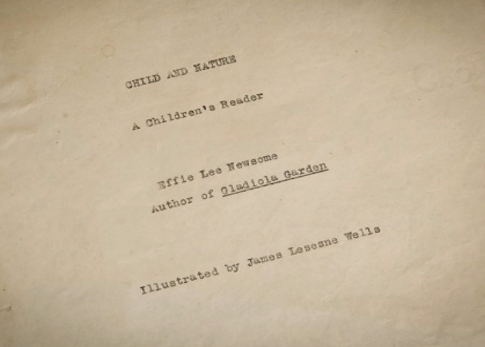
Although Gladiola Garden is Newsome’s only published collection, she collaborated with James Lesesne Wells, African American graphic artist, printmaker, and painter, on another nature book titled “Child and Nature, A Children’s Reader”:
The title page reads Child and Nature, A Children’s Reader, Effie Lee Newsome, Author of Gladiola Garden, Illustrated by James Lesesne Wells. One of Wells’s photos is titled “God With His Loving Eye” and a poem by Newsome titled “Morning Light” reads,
I like to pray at morning
As all the East is red
And lights from God’s
Great friendly sun
Touch me at my small bed
The manuscript was submitted to The Associated Publishers in 1941, but for reasons unknown it was never published. However, according to the Communications Department at Weschler’s Auctioneers and Appraisers the manuscript was sold at an auction on March 10, 2023, for $23,000. Weschler’s description of its contents, especially the chapter titles The Child, Many Creatures, The Trees, Insect Folk, The Birds, Flowers and God's Sky, indicate a continuance of Newsome’s dedication “to make colored children realize that being ‘colored’ is a normal, beautiful thing.” Newsome included 301 poems and Wells contributed 36 ink drawings.
Newsome’s choice of collaborating with Wells is further indication of her “mission,” as Donnarae MacCann in “Effie Lee Newsome: African American Poet of the 1920s” (1988) so aptly describes the poet’s aims as in line with those of other African American artists. In the special Callaloo issue on Wells, founder and editor-in-chief Charles Rowell describes him as, a dedicated “‘race man’… . [who] had the talent and the potential of becoming an international figure, but as a true ‘race man’ he made a profound and selfless sacrifice by dedicating his life’s work to uplifting African Americans” (1062). Rowell, goes on to say,
Here is an artist, James Lesesne Wells, who was committed to uplifting the downtrodden through his chosen work, and while doing so he never compromised the aesthetic quality nor the scope of his representations as he continued to give to the world his “reaction[s] to society.” Here is an artist for all times (1066).
So, too, is Newsome “an artist for all times,” and, although it is unfortunate that her collaborative work with Wells has gone unpublished, Weschler's Auctioneers & Appraisers makes possible a glimpse at their work-in-progress at the time. One can only hope that the person or persons who purchased the manuscript at auction will someday see fit to share it with the world to stand alongside Gladiola Garden. Whether publishing as Mary Effie Lee or Effie Lee Newsome, for children or for a general audience, her poems are those of the naturalist who understands the mutually nurturing interaction between nonhuman nature and human beings and who is deeply connected to the regenerative power and beauties of nature.
Jacquelyn Y. McLendon is Professor Emerita of English at William & Mary. A leading scholar of African American literature and the Harlem Renaissance, her books include The Politics of Color in the Fiction of Jessie Fauset and Nella Larsen (University of Virginia Press), Building on the Legacy: African Americans at William & Mary, An Illustrated History of 50 Years and Beyond, and Phillis Wheatley: A Revolutionary Poet. She is also the editor of Approaches to Teaching the Novels of Nella Larsen (Modern Language Association) and co-editor, with M. Giulia Fabi, of Nella Larsen’s Letters, 1917–1935.
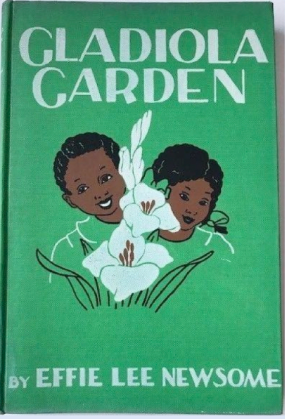
Illustration on hard cover of Gladiola Garden book.
The book’s dust jacket cover is shown above.
Frontispiece of Gladiola Garden.
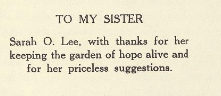
Newsome dedicated the book to her sister and companion on many childhood outdoor adventures.
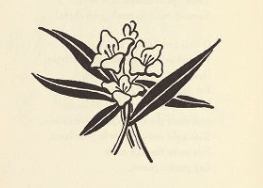
Gladiola illustration in the book.
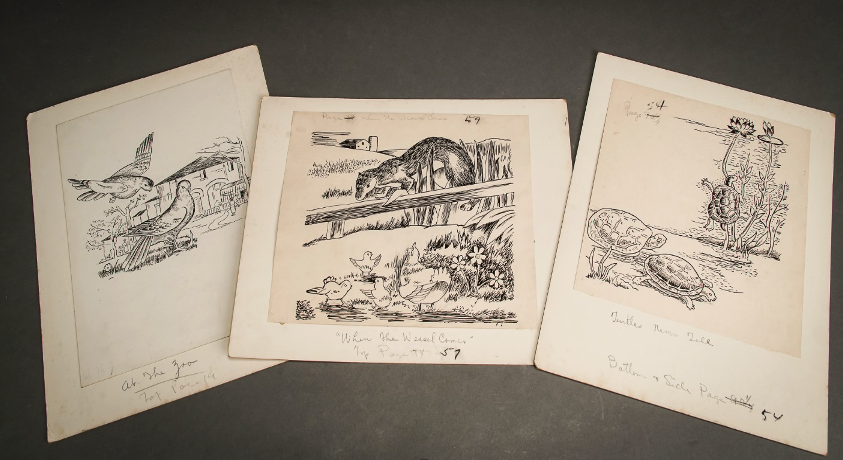
From the Child and Nature manuscript. Photos courtesy of Weschler's Auctioneers & Appraisers
Student Exhibit Celebrating Effie Lee Newsome Wins Five Awards
Views from the Auburn University July 1, 2022 announcement of the award-winning garden exhibition by students supervised by horticulturist Abra Lee.
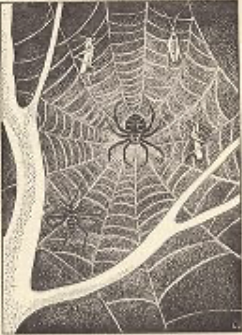
Ilustrations for the insect section of Gladiola Gardens..
Other section topics include: snow, rain, wind; birds, squirrel folk, trees, vegetables and fruits, the creek, skies, more flowers, and themes such as Christmas.
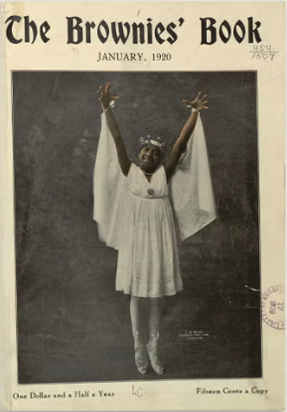
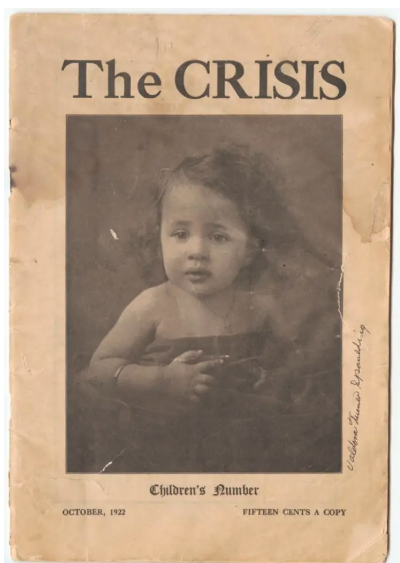
Effie Lee Newsome's poem "The Bronze Legacy (To a Brown Boy)" was published in the October 1922 "Children's Number" issue of NAACP’s The Crisis. publication. Newsome contributed other works to W.E.B. Du Bois' children's magazine, The Brownies' Book but that periodical had already ceased publication by late 1921.
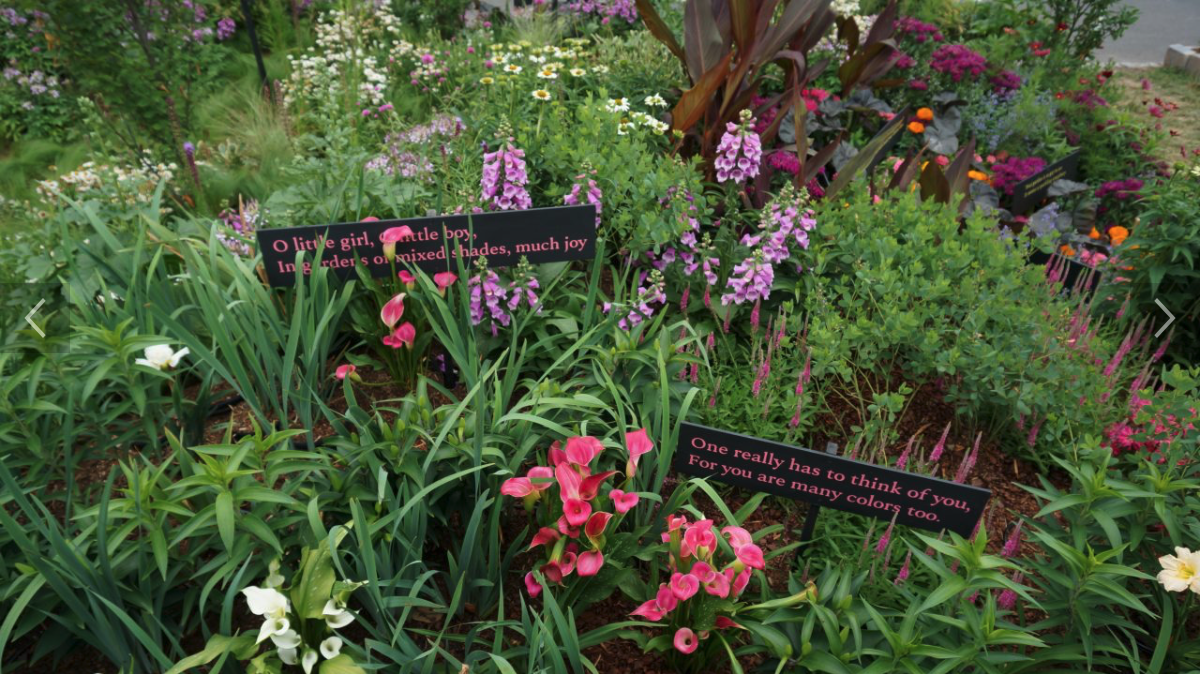
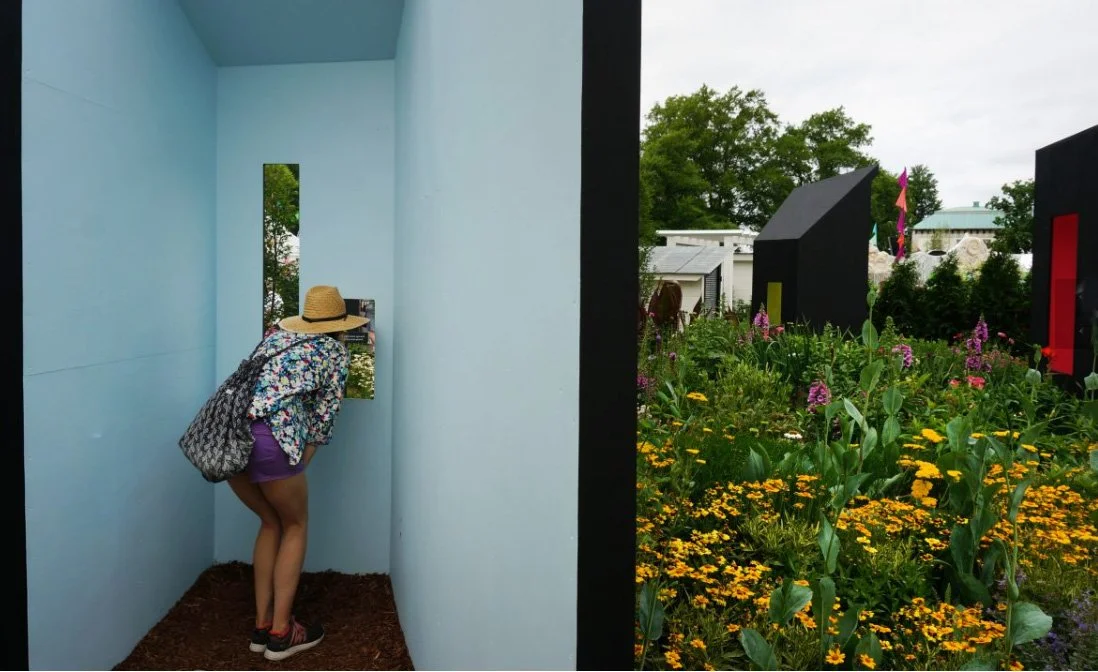
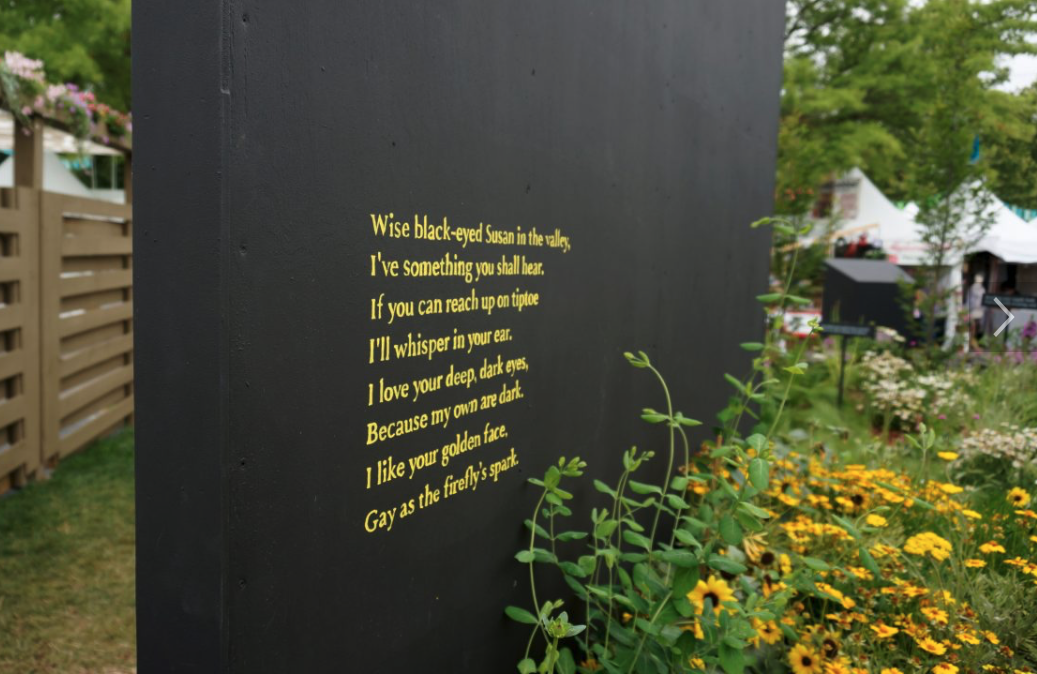
Read the full announcement about the fabulous Effie Lee Newsome garden exhibit and view a slide show of the garden here on the Auburn University website.
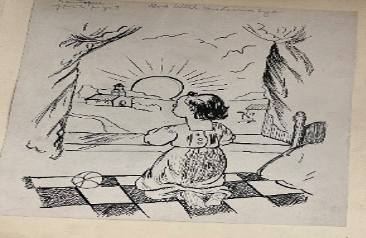
Title Page and Wells’ “God With His Loving Eye.” Photos courtesy of Weschler's Auctioneers & Appraisers.
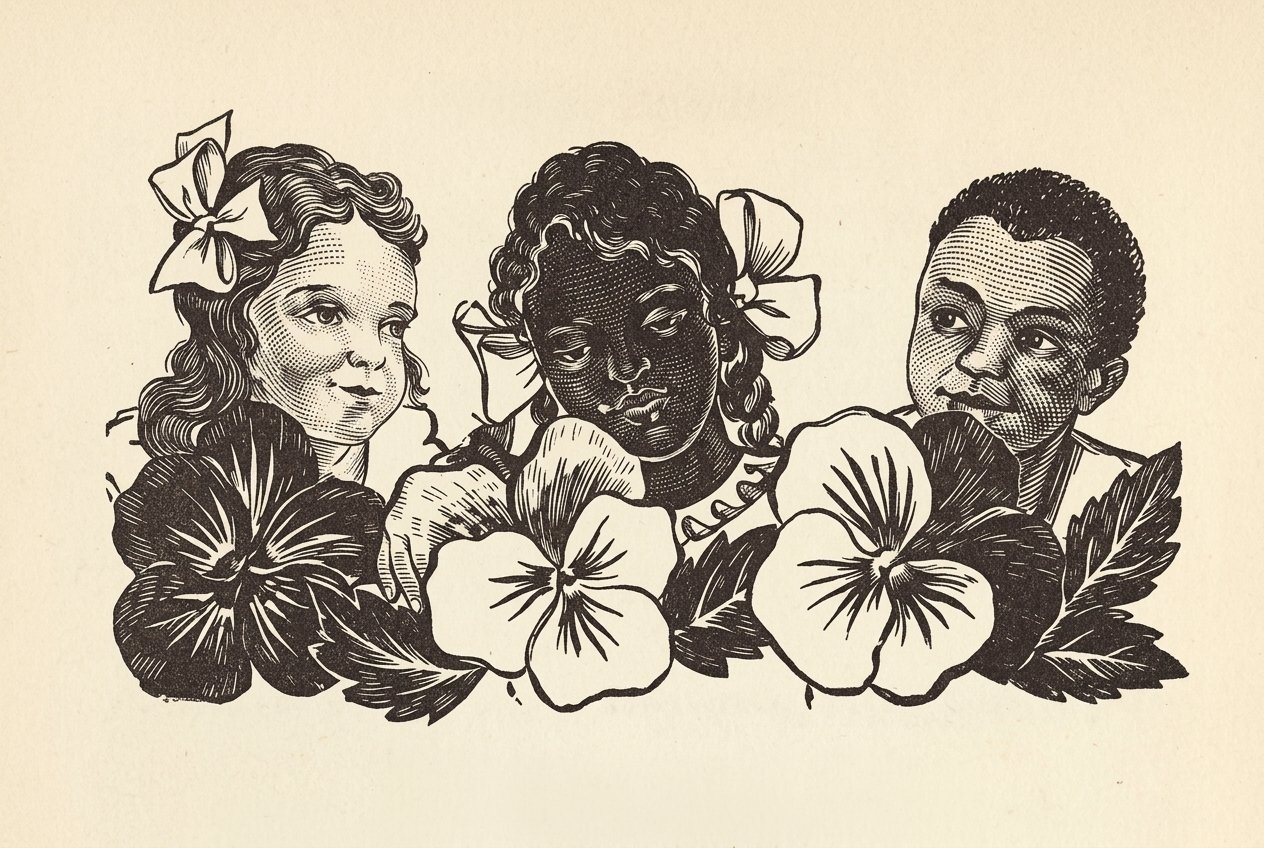
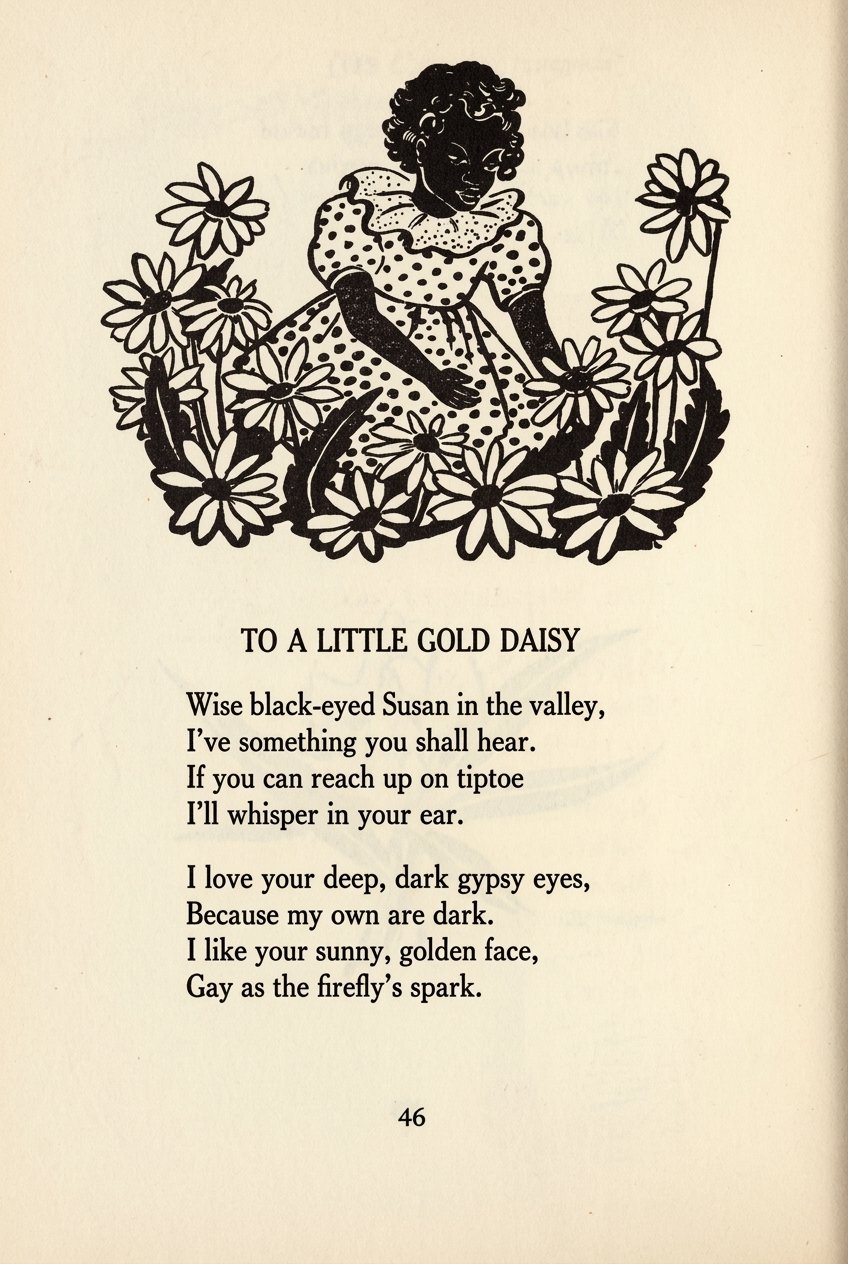
Panseyland illustration from Gladiola Gardens.
A full copy of Gladiola Gardens can be accessed here in the digital collection of the New York Public Library.
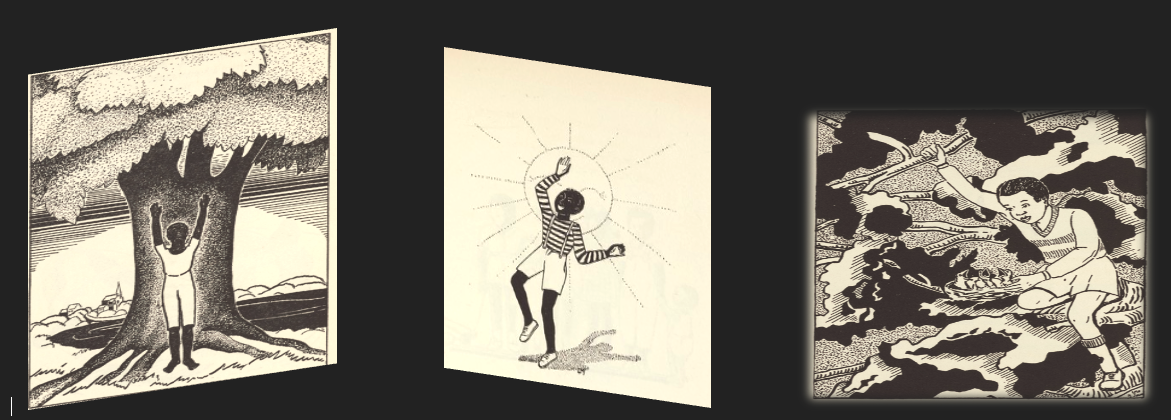
Below: Gladiola Gardens children romp in various environments.