
September 29, 2026
After we came down from the moat top walk last Monday, Margaret, Hermine and I searched for cicada shells on the sides of crepe myrtle trees at Fort Monroe. (Cicadas prefer landing there because they can cling to this surface easily yet securely as they emerge from their shells).
But none were to be found last Monday.
However, this Monday (yesterday) when I walked to through that section of Fort Monroe alone, I found one shell (shown in the photo). I took it as a sign, and not just an item for my ongoing collection of found items in nature for an art project.
The cicada noise had stopped about 10 days ago, subsiding in a low staccato, then faint hum.
The cicada sighting yesterday seemed like a sign because for the past six days, it had been rainy and cool. Flimsy carcasses without the winged bodies that recently shed them, the cicada shells detach from trees in inclement weather.
They should have been all gone by yesterday. So the cicada shell sighting seems like an encouraging sign. When the natural world seems to speak to you and when you concentrate on listening, she reveals more of herself.
So why should we be concerned about the black women’s beauty issues? It can feel like being mired in superficiality when the natural world is infinitely full of significance like a macro form of Arunachula hill.
After all, the topic of black women’s beauty has had a great run in Essence magazine, Chrissie’s YouTube channel, and other media. Enough said?
But the problem of the lack of a pluralistic black women’s aesthetic is superficiality in the sense of unquestioning, conventional, superfluous, over-commodified conceptions of beauty. And the Ecollective doesn’t categorically separate humans from the natural world. Keeping both in balance is the essential environmental action.
When we are listening to nature speaking, we affirm the wondrously textured and lively phenomena growing directly out of our scalps, the full ranges of our skin color, facial features and intrinsic body structures.
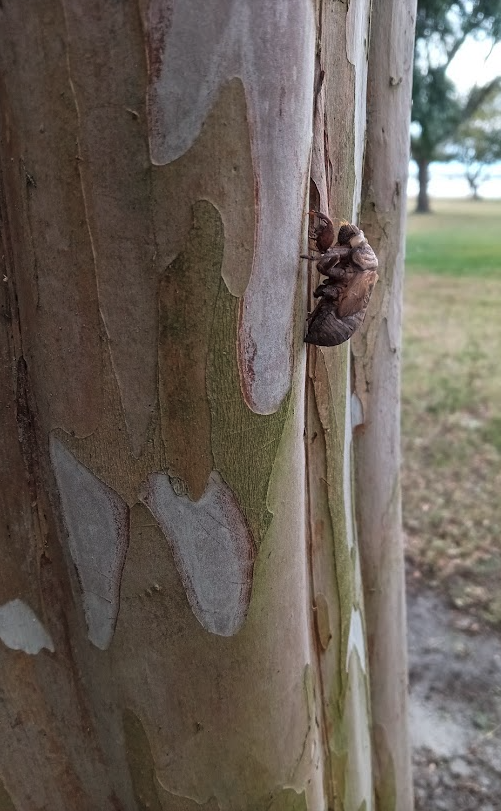
Author’s photo. Fort Monroe VA, September 28, 2026.
Notes and sketch board for future editorials and collaborative pieces

Commentary on the casting of the epic Oddessy movie swept though social media during the summer of 2026.
A dreaded sat-chit story
“sat-chit” is Sanskrit for “being-consciousness”
September 26, 2026
While shutting out the world to focus on what needs to come through here, I scanned the news and quickly perused an article about a Haitian-Canadian writer whose novel was shortlisted for a major literary prize before being withdrawn from nomination because AI detection programs indicated significant AI use. (The author, who insists the story is his own, did complete a draft of the novel in 2019 so he’s got some storytelling chops.)
The contested novel’s cover image of a black man in the wilderness reminded me similar imagery by Harlem Renaissance artist Aaron Douglas which further reminded me of the need to give up personal identity. That’s a big leap which must be explained quickly.
(Deep inhalation) Okay, here we go.
YouTube algorithms dropped a video of into my feed: Norfolk State University’s formidable marching band on the first night of the Battle of the Bay (NSU vs. Hampton Univ) weekend.
Took the bait, rooting for Hampton because I had worked there, but the vid was just of NSU including the “dancing girls” (at 3:24 into the vid) .
(Deep moan) Those NSU dancing girls all are wearing “lace-fronts,” shall we say, bc “weaves” sounds like a put down. Why should black girlz have to impersonate Rapunzel even tho, in this case, they share a “z”?
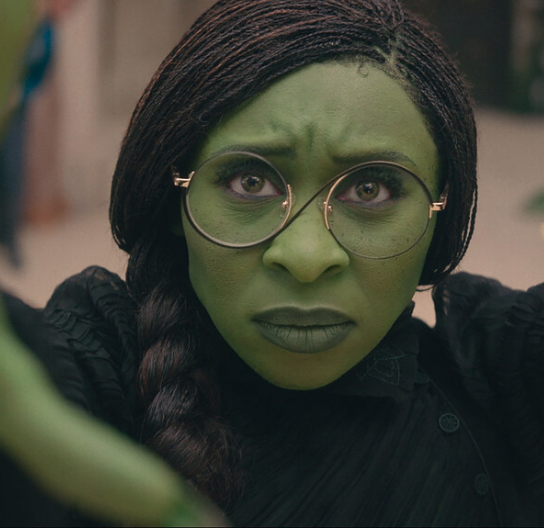
In other words, I stand with worldly directors with deep-pocket producers, Christopher Nolan and John Chu who respectively cast Lupita Nyong’o and Cynthia Erivo as beautiful women beloved by powerful men in The Oddessy and Wicked (1 & 2). Chu even cast Erivo before she chose to don braided extensions for the role. (The foregoing is not to imply that being loved by men is best.)
To the unjaundiced eye in a non-commodified world, there would not be more European women with long hair than African women with short hair regarded as beautiful. Period. Full stop. Let the church say “amen.”
Cut to the next vid: Hampton’s dancing girls beginning at 0:31.
Even though the Hampton girlz are throwing their hair around in an HBCU dancing girl/cheer leader, worn-out vanity that refuses to die, their hair looks like a younger generation of the kind of the length that Oprah Winfrey could grow from her own roots with the help of her expert, daily ‘hair care provider.’ (Part of the hair growing technique is the keratin treatment that helps prevent hair breakage when it is straightened.)
The Hampton vs. NSU brands are caught up in old bougie conventions as well as noble striving. Spelman, Howard, Hampton, Morehouse: the HBCU Ivy League. The aspiration of black people to be elite even though the wanna-bees get a very supportive leg up in the socio-economic hierarchy by doing well at HBCUs (both public and private) and from there, achieving in society. (The subtle yet clearly discernible distain of black folks in prestigious PWIs towards HBCUs is another discussion but not for here right now.) And aside from the narrow feminine aesthetics, the HBCU mighty marching band tradition is great wholesome fun for our young people.
Beyonce created one of her initial “theme” shows around the HBCU football game half time show tradition. Queen Bee Bey’s blonde ambition is a big, blinding part of the problem (excuse my alliteration but this point must be emphasized). Spike Lee’s School Daze tried to address the problem that’s tenacious as the devil.
As appearances become more manufactured in the converging histories of technology and black people, I’m increasingly motivated to shift from personal identity (which brings dread) to essential identity which is liberation.
Caught up in a morass of self-interrogation as one of destiny’s defenders of a pluralistic, aesthetic for black women that common sense deems right: personas that perfectly fit who we are from the inside out. Which led to Pop your Mind. Which led to Kali Ma. Which led to the quest for liberation from the personal self in favor of who we all essentially are. (Toni understands this crazy stream of consciousness explanation and this message is being written to her with cc: to the other four members of the Ecollective team.)
The morass of self-interrogation extends beyond hair to include angst about writing in the first person voice: ‘I this, I that.’ Such self-indulgence. Shut up! And questions about ethical means to an end: is the Haitian-Canadian novelist’s use of AI ethically any worse than my wondering whether to seek AI assistance in putting the Pop Your Mind screenplay back on course to tell the original story about black women’s natural beauty?
But hell I don’t need AI to write this screed, this polite literary screed, about being a defender of black women’s polymorphic natural beauty in a world that’s becoming more manufactured and manipulated in every way.
The backdrop
On Monday, Hermine, Margaret and I met to walk along the grassy top of the Fort Monroe moat, followed by a work session that included planning Margaret's article placing a 20th century North Carolina black woman herbalist into a broader historical and cultural context of black women herbalists, conjure women, root doctors and swamp women, real and fictional. Healers and outliers.
The work session began with Hermine reading a draft of her pitch to a literary agent. I encouraged Hermine to ditch the bland treatment and convey the raw emotion of domestic violence at the book's core. Not only affecting Hermine's family, the tragedy is symptomatic of larger issues of intergenerational trauma afflicting the nation and world. It ranges from from the emotional cruelty of Elon Musk’s father (from whom Elon became estranged) to the addiction and dysfunction that were a recurring pattern in J.D. Vance’s family, going back to his grandfather’s severe alcoholism. Family trauma contributes to the repressive ideology of some people with great influence and power.
The weighty sorrow of the talk with Hermine continued into the next day, September 22, the day before Toni's autumn equinox-adjacent birthday on the 23rd, when I began to work on Toni’s card. Monday's walk had not yielded enough interesting weeds for adorning the card so I needed another approach.
The dread of moving in a new creative direction without a clear sense of what or where, added to feelin’ the need of libration but resisting blues.
Pushing past psychological resistance, the birthday card-making eventually and serendipitously generated a new construction model: a note card on papyrus-like card stock that opens. The card stock is mounted on a larger piece of black felt (that does not open), providing a supportive frame that can be decorated around the edges.
Felt better ... for a minute... but Toni's reaction to the photo of the card-in-progress that I emailed her on her birthday generated another emotional precipice.
Toni wrote in her email message:
to me, Margaret, Kendra, Jacqui, hermine
Sista Word Women --
I love tree branches and white socks and kids! Thank you for designing and caring through assemblage and story. I don't care about the timing, Miss Juliette.
I've got one sizable tree that sits outside the two rear, north-facing windows of my little apartment. From April through mid-October I can't see my neighbors; the windows are filled with tree (and squirrels, and an array of visiting birds during migration seasons). A gift for sure in the city. I love its branches, too, when they're ice-coated or laden with snow.
My 72nd birthday was a string of joy-pearls. My third eye is finally open! Quite the late bloomer, I must be.
Love y'all.
--T
The precipice was the self-reported opening of Toni’s third eye.

Twenty years after Toni’s “Bobcat Ranch is a Box of Paints” poem was published in Ground, she took this photo of a bench at Bobcat ranch.
EXT. SCRANTON PA, MINOOKA MOTEL - Night, December 1970
A light snow is falling. Taxi cab pulls up to entrance. A young woman gets out of cab and enters motel.
Int. MINOOKA MOTEL, LOBBY - NIGHT
NIGHT CLERK has seen assorted weirdos since switching to the late shift but nothing like her. Dark skin, hair sprung like bed springs, no coat on this cold night, no suitcase, just a T shirt that says “See Like An Artist,” black trousers, and the frozen-tight grimace of a stiff who’s just been electrocuted.
Still mute from some ordeal, Rain Clark (25), dumps a wad of cash on counter.
Clerk counts bills and hands a few back to her with the key.
INT. MINOOKA MOTEL, HALLWAY - NIGHT
Rain unlocks door to her room. It opens to a vast, hellish yet beautiful scene. Cremation pyre fires glow in a large field as the sun sets.
Rain enters and wanders among the pyres. Human body parts snap crackle and pop, turning to ash.
Sweating in the blazing heat, Rain strips down to her underwear.
KALI MA approaches, dancing wildly. Her necklace of skulls and skirt of severed hands bounce gaily with each gyration. This ancient mother of tough love holds a severed head by the hair with one of her of four hands and swings a bloody sword with another.
RAIN
(tongue becoming unstuck)
Quite a lack of subtlety, Kali Ma, wreaking your lessons of slash. Withholding peace till you've tallied the battle in blood. Heads will be spinning.
KALI MA
Let 'em spin all the way off!
RAIN
How the hell did I get here?
KALI MA
Let’s see!
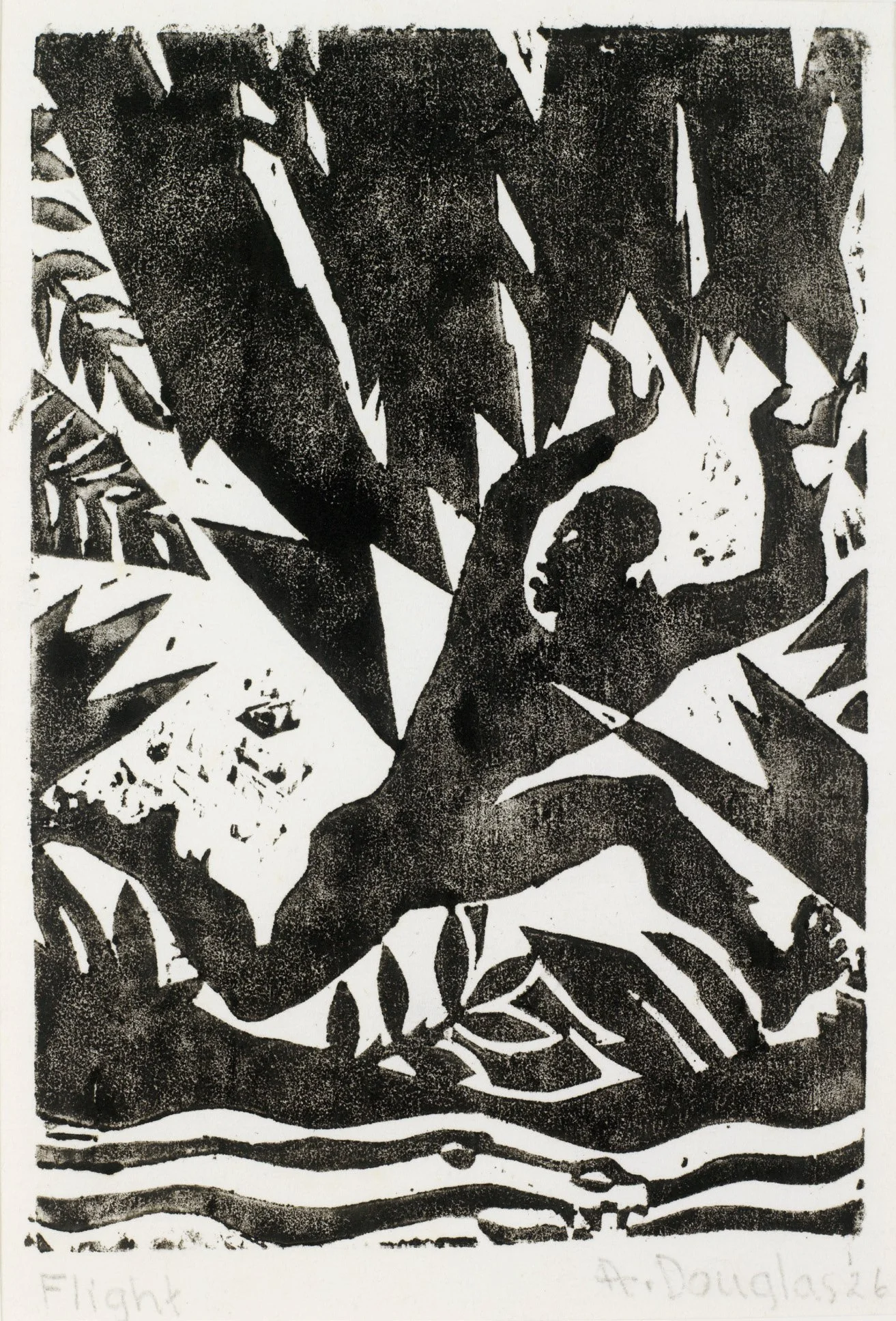
“Flight,” from Aaron Douglas’ The Emperor Jones series is a wood block print created in 1926. The image is in the public domain,

In Wicked, Cynthia Erivo plays Elphaba Thropp who is born with green skin and goes to witchcraft school. Unlike the other students who swoon over Prince Fiyero (shown here), Elphaba is unimpressed by him at first though the two eventually develop a deep and complicated romance.
Photos: Universal Pictures publicity.
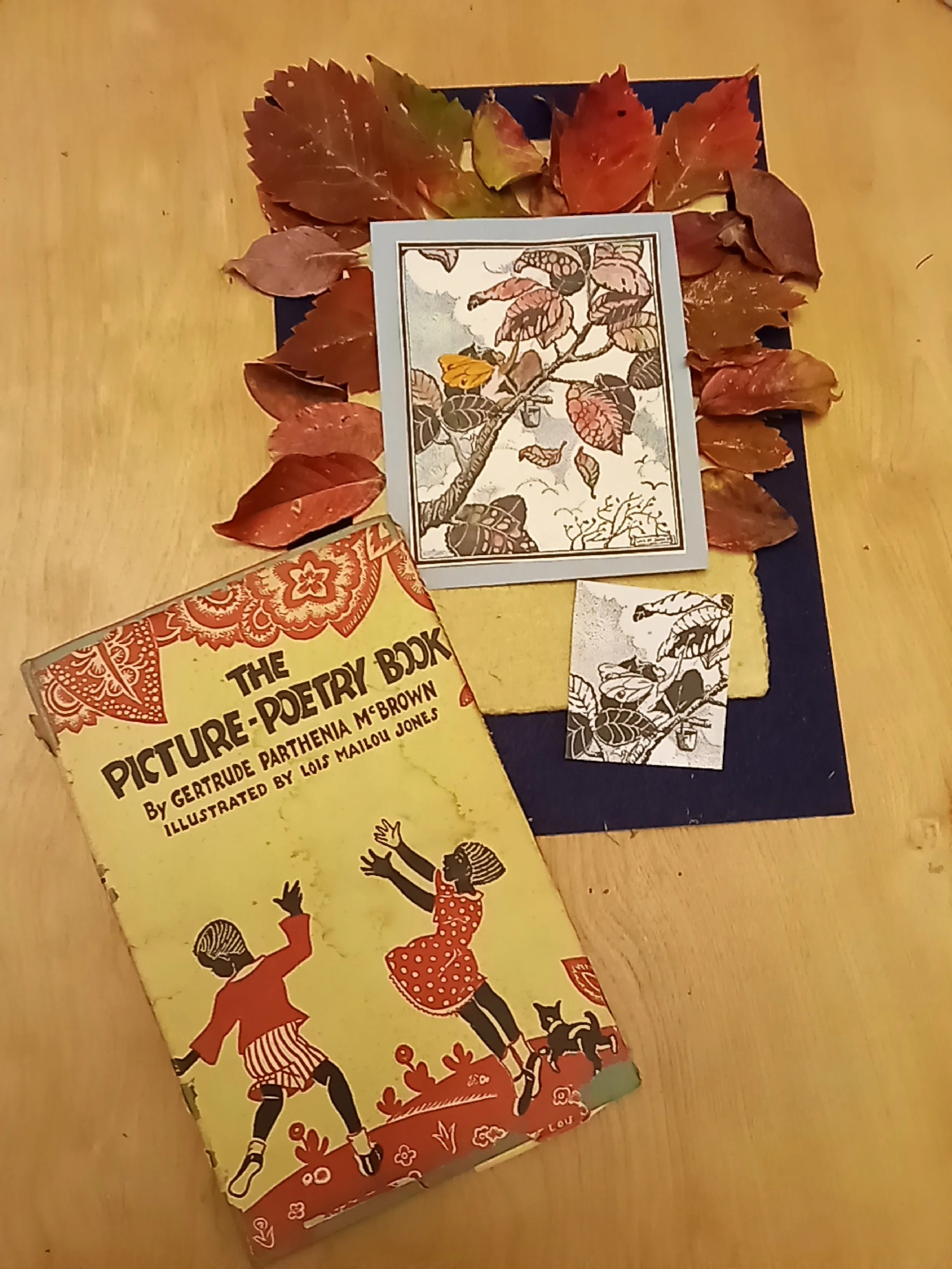
Toni’s card in progress.
Designed to counter pick-a-ninny stereotypes by portraying adorable black children, The Picture-Poetry Book was initially published in 1935 by the Associated Publishers affiliate of the Association for the Study of Negro LIfe and History, and in a revised 1946 edition. The above photo shows the cover of the 1946 edition along with photocopies of the illustration for the "The Paint Pot Fairy" poem. The black and white illustration appeared in the book and I colored the illustration on the card.
The illustration accompanies a poem which begins with these lines:
The Paint Pot Fairy
A fairy has a paint pot in that tree,
And she tints the leaves for you and me.
Photo of Toni’s girlhood princess bed room. This room was the prototype for the bedroom of the character Rain Clark in Pop Your Mind, a film allegory about a young woman in the late 1960s who was caught up and torn apart by the pull of her involvement in black liberation, feminist, anti-war and Earth Day activities.

Hampton University dancing girl with her own moveable hair.
Still photo from YouTube video
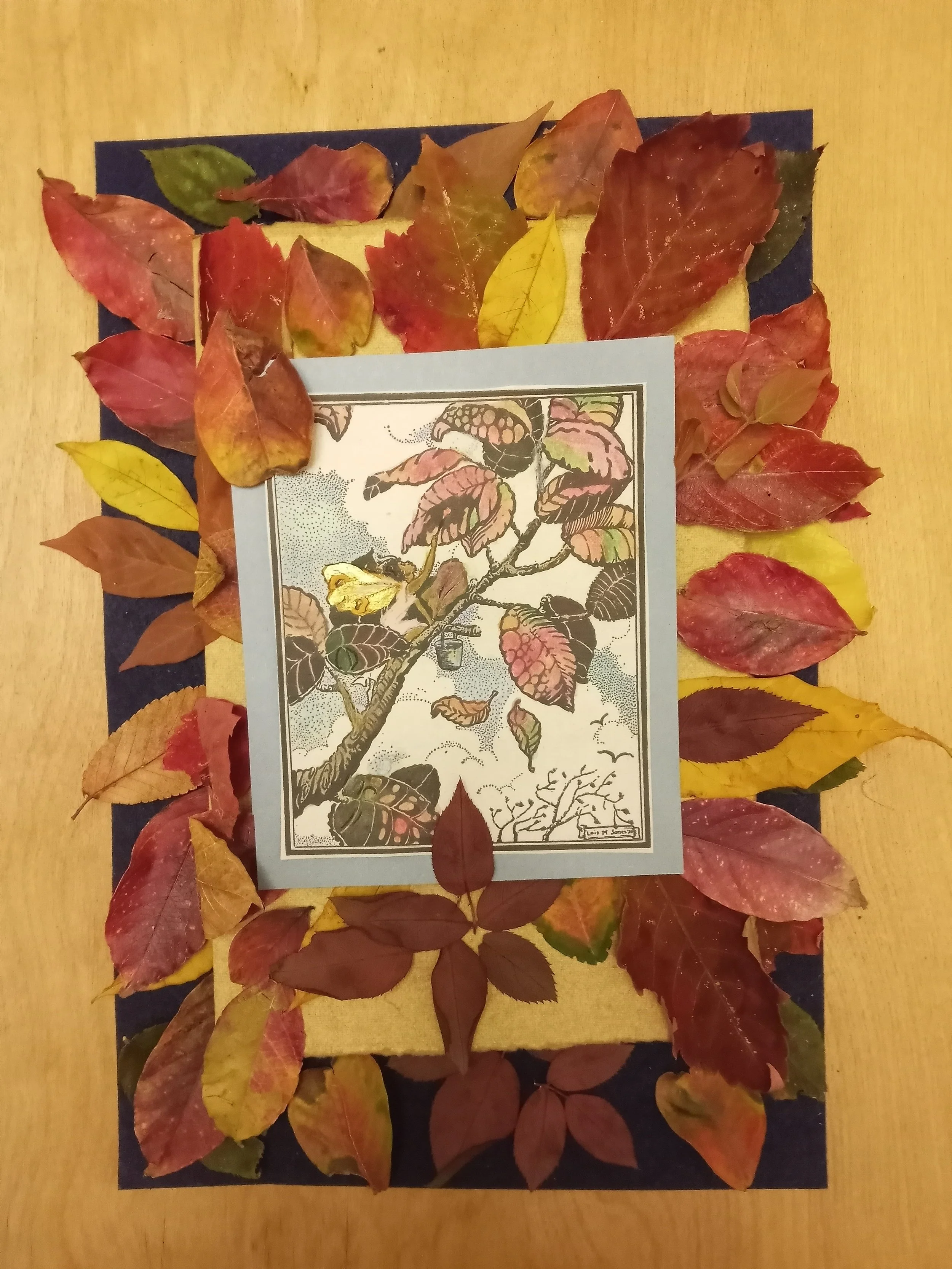
Toni’s completed card.
When we both were affiliated with Howard University, I knew Lois Mailou Jones, the illustrator of The Picture-Poetry Book. At the time (beginning in 1977), she was in her 70s and expressing a highly sophisticated and individuated black feminine aesthetic in her art.
Yet her medium-to-slightly-less-medium brown face with lighter powder and golden dyed, short straightened hair testified to the hazing that extended beyond Greek organizations and, in the instance of Lois, was applied though the parents of the major boyfriend of her youth, the boy who fell in love with Lois’ savvy, charming self but who acceded to the parents’ request that he break up with Lois because she was, figuratively speaking, right on the edge, the wrong edge, of the paper bag test.
Lois told me about the breakup in passing in a conversation we had at her home on Washington’s Gold Coast (the West African-inspired name for the affluent black community in the Northwest 3rd alphabet). The idea to refer to the paper bag test in this recollection is mine but it conveys the reason she stated for the break up.
Photo of Toni and her mother, Loretta, in the hotel lobby where the debutante ball that Loretta organized was being held.
Toni’s mother, Loretta, was a partial prototype for Rosalie Clark, Rain’s mother, in Pop Your Mind.
View from contemporary Toni’s apartment window.
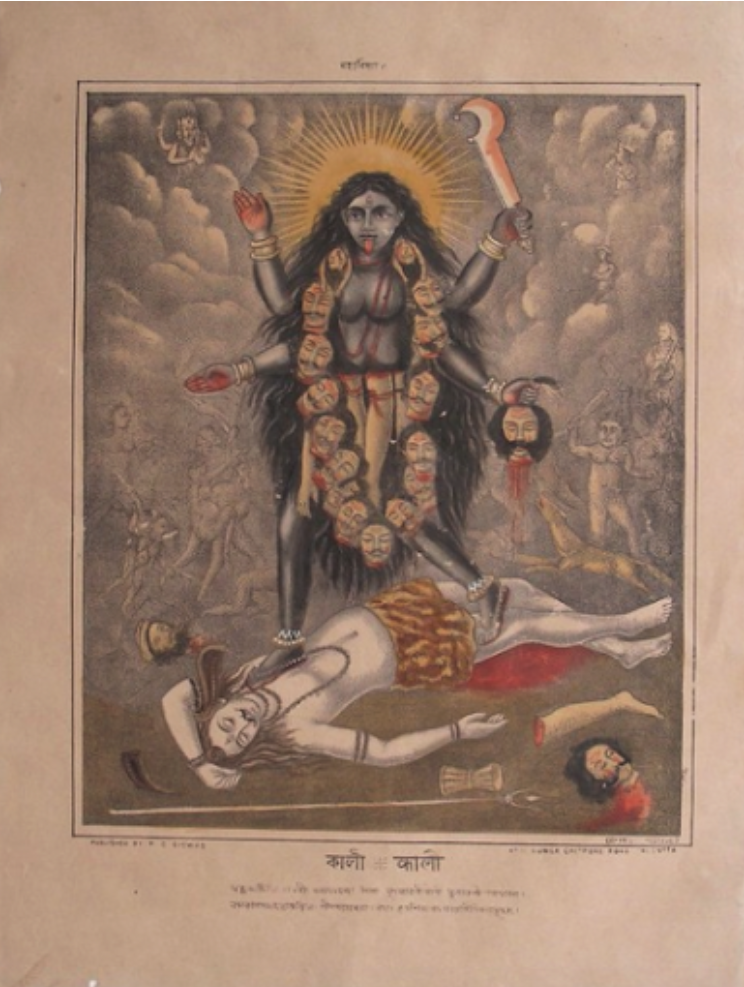
Kali Ma, ancient Vedic (spiritual) archetype for the Divine Mother who is ruthless in her nurturing love. She severs her children’s heads, strings them onto her necklace and slashes their arms and legs to separate them from the ego’s attachments and hardwired deviation from the path to re-awakening.
Rain Clark’s father, Les Clark, became a Kali Ma devotee the hard way. Read about Les Clark’s experience in this story.
Excerpt from Toni Wynn’s peom:
Bobcat Ranch is a Box of Paints
for Rosa
Your ranch stretches vibrant-alive.
Eucalyptus trees peel like spindly brown
bananas. You say, I just want to be here.
Fuzzy-fingered lion’s tail impersonates
an orange flower: mini-flame
in the purple haze of morning glory,
alvia, statis, buddleia,
lavender, thistle, ice plant.
I face west on the purple bench.
The aloe’s arms are crazy over here.
It looks like a serpent,
like maybe at night it eats mice.
You and mother nature and your cans
of paint. You two with some time
between freeway and ocean… .
— fromGround, Friends of Shakespeare Press, 2006.
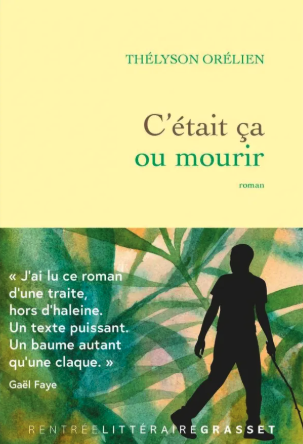
The contested book: Haitian-Canadian author Thélyson Orélien’s C’etait ca ou mourir (Was either that or die), a novel about the harrowing escapades of a Haitian migrant who travels north through Latin America and the United States to Canada.
Most appropriate: was going to email Alice Walker’s August and September 2026 entries in her garden journal to the group but decided to link them here.