

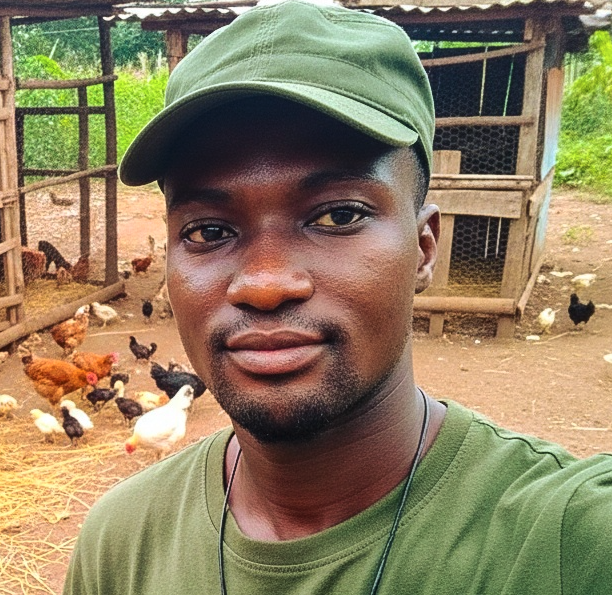
John Adeolu’s multifaceted strokes of genius draw from ancient to advanced sources
When Adeolu submitted an article to the Ecollective that reflected his academic achievement and prodigious tech skills, we wondered how a small holder farmer became so savvy and got to know him better.
Here’s what we learned.
Venturing into the realms of agriculture, sustainable systems, technology, business management … and orishas … with John Adeolu is a masterclass in contemporary, spiritualized pragmatism. He is tackling the absolute bedrock of human survival—food and shelter— with expert project management and advanced tools like GIS and IT and respect for the ancestors
At just 32 years old, Adeolu’s multifaceted career is astonishing. Over the past four years, he has operated as a manager at GPS Limited, delivering information technology services; business management consulting; and general equipment supplies. He has managed complex construction projects, utilizing his tech acumen to negotiate materials, maintain 100% compliance with safety and regulatory standards, and improve reporting efficiency by 40% through seamless software integration.
He is the co-founder and program manager of the Smartlife Initiative, an NGO building momentum for youth in education, healthcare, and environmental conservation.
As editor of the Naija Agric Insights newsletter, he writes on specialized topics such as how “Nigeria’s agricultural sector is facing a deepening structural crises driven by massive post-harvest waste” and “When prices move in opposite directions: what falling cocoa prices and easing food inflation reveal about Nigeria’s agricultural economy.”
And, we still haven’t gotten to John Adeolu’s primary ongoing work. He’s CEO of Givare Farms, a poultry enterprise specializing in indigenous breeds.
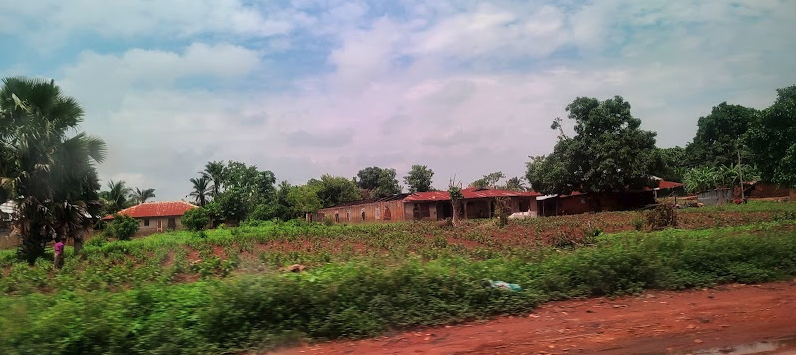
Adeolu’s home region of Ogbomoso in Oyo State, Nigeria Photo: Adventure Collective
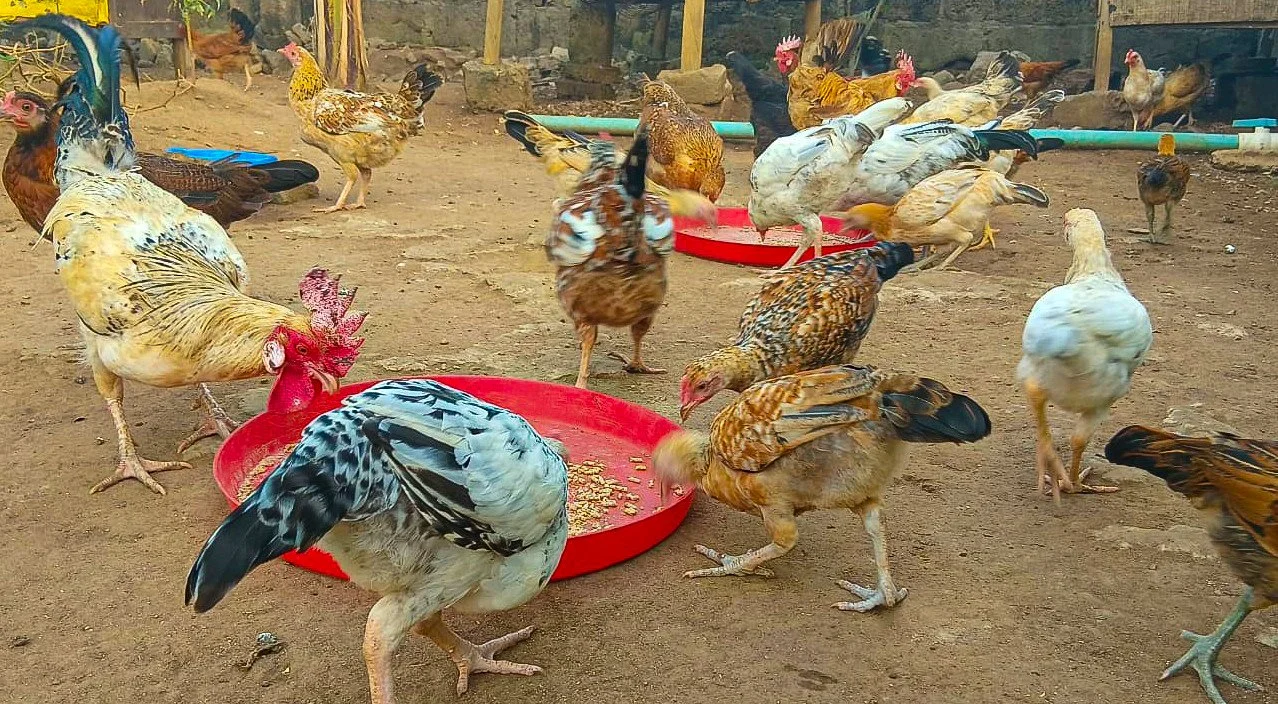
Beautiful chickens of pure bred ‘ethnicities’ at Givare Farms.
This multi-tasking young professional is from Ogbomoso, an agricultural region in Oyo State, Nigeria. “I watched my grandfather go to the farm every day,” Adeolu’s recalls:
He owned several hectares of land where he cultivated mainly yam and maize, some of which were traded to the northern part of the country. My father was also deeply involved in farming, so agriculture naturally shaped my upbringing. At home, we reared poultry, local chickens, goats, and other livestock.
Our way of life was mostly traditional. We lived within Nigerian cultural traditions, from our daily routines to what we wore. However, our exposure to urban life came through trade. My family transported farm produce especially eggs and live chickens to Lagos. Through this connection, we gradually encountered more modern influences, including improved farming practices and mechanized methods.
Nature itself was a big part of my childhood. Our home compound had many trees, coconut trees, mango trees, and other plants. As children, we spent our days playing outdoors, climbing trees, and exploring. I especially loved climbing mango trees; the local mango variety we had was incredibly sweet. There was also a river not too far from our house where we went to swim, which made nature feel like an everyday companion in my life.
I developed a strong personal connection to farming because I watched my parents devote themselves to it. I discovered that whenever I spent time with poultry or other livestock, I felt joy and fulfillment in caring for them.
The farming Adeolu family could afford to send their children to college. John chose the Federal University in Minna where he earned a BT (bachelor of technology) in project management. He went on to earn a post graduates diploma and certificates in specialized management and international transport and logistics.
Adeolu’s entry into the urban tech sector solidified his agricultural philosophy. While working as an IT Project Manager for a World Bank-assisted agricultural project, he developed digital solutions for farmers—tools that improved market access, tracked transactions, and provided vital climate data.
Through this data-driven perspective, he looked back at the indigenous farming systems of his youth and recognized their unparalleled value. Before terms like "agroecology," "regenerative agriculture" and “free range” became trendy buzzwords in the West, traditional West African farmers—like his grandfather—were already mastering crop rotation, cover cropping, and minimal tillage.
This realization birthed Givare Farms in 2017. Named after a Scandinavian root word associated with generosity, the farm is a testament to Adeolu's mission to contribute to food security while preserving local genetics. He works closely with distinct ecotypes—the active, prolific Yoruba chickens with their sweet, rich flavor; the calmer, taller Fulani strains; and the Hausa ecotypes. He advocates for these indigenous breeds not just for their resilience to local diseases, but for their deep cultural significance.
"The broader challenge is that many people have become overly reliant on modern hybrid breeds, neglecting traditional agricultural practices and the cultural knowledge embedded in them," Adeolu explains, noting the difficulty of convincing local farmers to prioritize long-term sustainability over the quick cash of fast-growing commercial hybrids. "Yet, culture and agriculture are inseparable: there is no culture without agriculture, and there is no meaningful agriculture without respecting cultural heritage."
When I was completing production of the article on artist Daniel Minter and was beginning work on the article on John Adeolu, that consecutive order seemed serendipitous. Minter had recalled his mother’s beloved guinea fowl which he depicted patterned with the Adire print indigo textiles of the Yoruba people, and a human and chicken form beautifully, almost hauntingly, enmesh in a panel of Minter’s Quantum Exchange triptych.
Both Minter’s visual art and Adeolu’s agricultural science are inextricably linked by the spiritual influence of the indigenous chicken.
In detailing the role of the indigenous chicken in Yoruba culture, Adeolu describes rites that might initially raise the eyebrows of our more Western-centric readers. He speaks of a priest who decapitated a live chicken with his mouth. It's the kind of raw imagery that historically fueled racist, colonial notions of African "primitivism."
But let’s be entirely frank about the relativity of that word, “primitive.” At this writing, President Trump is into the second day of waging unilateral military action against Iran without congressional approval or a clear strategy and killing innocent civilians including more than 100 people at a girls elementary school. Meanwhile commentator commentators likem Mohamad Bazzi in The Guardian and organizations like Citizens for Responsibility and Ethics in Washington are pointing out how the Trump family stands to gain financially from Trump’s war of choice.
When weighed against the ancient, universal human tradition of appropriating animal attributes to channel courage, seek justice, or bring peace to a troubled mind as in the rite Adeolu cites, contemporary oligarchic geopolitical savagery feels infinitely more dangerous and primitive.
This brings us to the core of how John Adeolu operates in the pragmatic present and the spiritual past.
"Many people have become overly reliant on modern hybrid breeds, neglecting traditional agricultural practices and the cultural knowledge embedded in them," Adeolu explains, noting the difficulty of convincing local farmers to prioritize long-term sustainability over the quick cash of fast-growing commercial hybrids. "Yet, culture and agriculture are inseparable: there is no culture without agriculture, and there is no meaningful agriculture without respecting cultural heritage."
Here’s how he explains how indigenous chickens are a vital spiritual and cultural bridge within the Yoruba heritage:
From what I have seen, these birds are central to how we appease the Orishas to seek protection, justice, or prosperity.
I’ve observed that for followers of Ogun, the god of iron, an annual sacrifice of a chicken is essential. It’s done to ensure that one is shielded and empowered throughout their daily life. Similarly, with Sango, I’ve seen how chickens are used to calm the temperament of those from his lineage. There is a powerful ritual where the priest decapitates a live chicken with his mouth and drinks the blood; this is a deep, traditional way to appease Sango’s spirit and bring peace to the person’s mind.
One of the most striking roles of the indigenous chicken is in the delivery of justice. With Orisha Ajangbila, I know that a male chicken is used to fish out a liar between two people. It is believed that the person lying will not survive beyond seven days after the ritual. We also have Orisha Aro, where a laying hen is used in rituals to confirm a child's true parentage, to know for sure if a child is a 'bastard' or not.
In the area of family and livelihood, the indigenous chicken is indispensable:
I’ve seen women seeking the 'fruit of the womb' go to Orisha Olomoyoyo. They use a hen that has already hatched chicks, sacrificing both to ensure they can conceive and give birth safely.
During the planting season in June or July, farmers perform rituals to Orisha Oko with chickens to ensure their crops produce a bountiful harvest.
In places like Ogbomosho, specifically in the Ile-Otun house, they appease Alaso-funfun. Because this deity forbids anything red, I’ve seen them strictly use white chickens, white bean cakes, and salt during the dry season rituals.
Having observed agricultural systems in Canada and the United States, Adeolu recognizes that the key to unlocking West Africa's agricultural potential lies in systems thinking. While 40–60% of the African farming population consists of smallholder farmers, many still view farming as isolated tasks. Adeolu is on a mission to change that, integrating production, processing, logistics, and marketing into a coordinated framework.
In these ways, John Adeolu seems entirely at home in both the traditional realm of Yoruba culture and the leading-edge, universal realm of science and technology as both realms synergistically benefit from his multifaceted sources of wisdom.